
We at Card Kingdom are obsessed with all things spooky as Halloween approaches and it has us thinking about our favorite spooky setting in Magic: Innistrad. The best way to get into the spirit of Innistrad might just be to build an Innistrad cube. Here’s why that’s a great choice.
WHAT IS A CUBE?
Cube is the best way to play Magic’s best format, Booster Draft. Why is it the best? Because you can play it over and over again, without buying fresh Booster packs. You also have full curation rights over your Cube environment. Don’t like a card? You don’t have to put it in your Cube. One archetype overperforming? You can nerf it by editing what it has available, or you can buff other archetypes to help bring them up.

Most arrive at 360 cards as a minimum for the support of an 8-person draft with traditional 15-card packs. That said, the average 8-player cube probably ends up closer to 450 cards, to create variety between drafts – nobody wants to draft the exact same set of cards every time. There are different varieties of cube, like the 180-card “Twobert”, or four player options like Rochester, Winchester or Grid Draft, and you can always just adjust packsizes of an 8-player cube for fewer players. Cube is anything you want it to be, and the true breadth of different ways to cube can be found over at Lucky Paper.
So, why choose Innistrad for your Cube?
MASSIVE CARD SELECTION
First up, if you choose to build an Innistrad cube, you have over 1800 cards to work with, which is more than enough to come up with your own perfect idea of an Innistrad draft environment.

You have the main sets of Innistrad: Innistrad, Dark Ascension, Avacyn Restored, Shadows Over Innistrad, Eldritch Moon, Midnight Hunt, and Crimson Vow. You have the Innistrad Remastered set of reprints with some great art treatments (and for that matter, Double Feature). You also have all of the other cards with Innistrad art that have been released in various Commander products, Secret Lair Drops, and Bonus Sheets and Masters sets as reprints.
CLASSIC DRAFT ARCHETYPES
An Innistrad cube can balance the best of multiple deck archetypes that have some crossover.
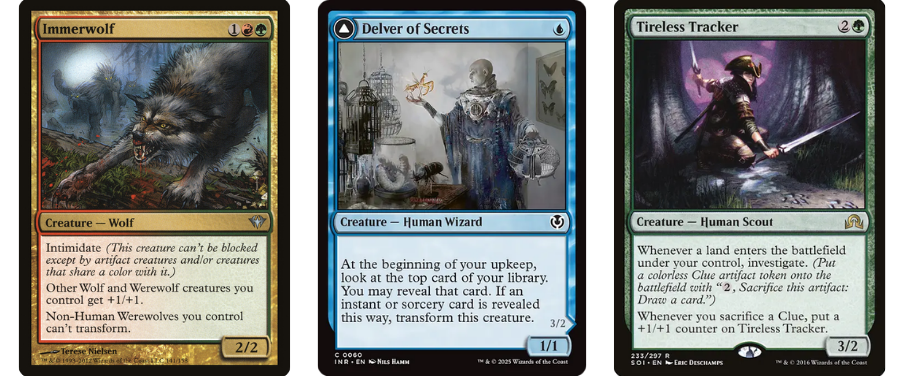
Typal decks are a big draw, with Werewolves, Spirits, Zombies, Humans, and Vampires in Allied colors, and Enemy colors represent broader themes, like Sacrifice, Flyers, Spellslinger, Tempo/Control, Graveyard/Delerium, Aggro/Tokens and Self-mill/Clues. When you have this kind of room to play with, you can easily favor typal or general archetypes more or try and create a healthy balance of both.

Because Innistrad sets feature recurring draft archetypes and creature types, there are also plenty of hate cards available. Removal spells can often specify creature types, and Protection from certain creature types also occurs throughout these sets. If an archetype is proving to overperform, putting these kinds of effects in can be a good way to temper its power.
ICONIC STORY MOMENTS

Many things make Innistrad such a fan favorite, but one of those things is the story. From the breaking of the Helvault, releasing Avacyn and Griselbrand’s demonic host (and Nahiri!), to Nahiri’s revenge on Sorin, bringing Emrakul to the plane, to Thalia’s solemn goodbye to Odric as he is taken by Vampirekind, there are plenty of moments that stand out in Magic’s canon story. The opportunity to bring your favorite of those into a cube is not to be missed.
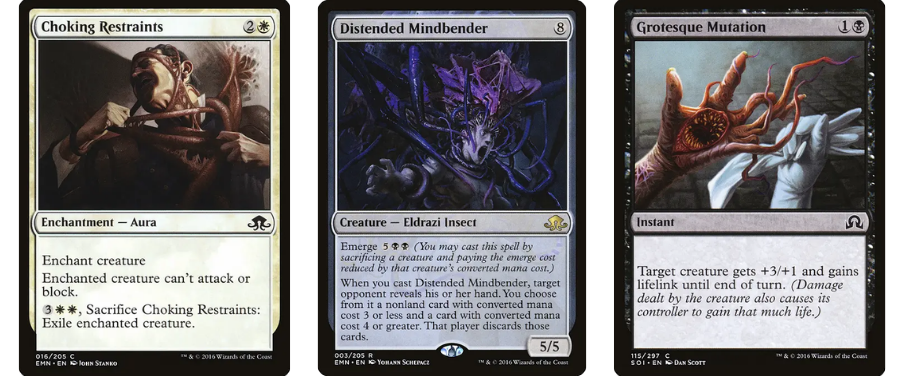
That said, if you aren’t so keen on the Eldritch Horror side of things, and would rather not include Eldrazi and Eldrazi-adjacent cards, that’s also completely within your power. You can stick to the Gothic Horror and still have more than enough cards to build a cube with.
CARD POOL WIDENED BY NEW ART TREATMENTS
Even with such a wide pool of sets to draw from, there are yet more viable Innistrad cards you could add to your cube when you consider ancillary sets, Bonus Sheets and other forms of reprint.

You have the Stranger Things Universes Within Reprints that feature Greymond, Avacyn’s Stalwart, among others. You have the classic Hermit Druid, reimagined as an Innistrad card and ready for graveyard synergies. There’s Dread Return, an oldie from Time Spiral, adorned in Innistrad livery for the Duel Deck Blessed vs Cursed.

From Modern Horizons 3 to Reality Fracture to Mystery Booster Commander Edition, there are always new Innistrad-cube eligible cards dropping, which makes this cube one that is likely to be malleable over the years, with plenty of room to try out new cards.
SOME OF THE MOST LOVED MAGIC CARDS OF ALL TIME

Above all else, Innistrad as a Cube stipulation gives access to some truly beloved Magic cards. From the limited all-star Spider Spawning to Jund mainslay (and yes, I said mainslay) Liliana of the Veil to everyone’s favorite Snapcaster Mage, an Innistrad Cube lets you gather some iconic and ultimately fun cards together in one place to enjoy.
END STEP
While the opportunities for Cube are limitless (and bound only by gathering enough people to enjoy it), sometimes it’s better to narrow your focus and choose a specific theme to help cut down on the sheer number of cards you might have to choose from. An Innistrad Cube is one such narrow focus, and in our opinion, it’s one of the better ones to try for anyone from a beginner to cube to a long-time Magic veteran.

The beauty of cube is in your power to curate the experience. Tentative about all of the different ways to flip Werewolves? You could just errata all Werewolves to follow the same Day and Night mechanic and print some Errata reminder tokens to hand out.
If you want to get started with Cube, check out Cube Cobra, or Ryan Overturf’s podcast.

Kristen is Card Kingdom’s Head Writer and a member of the Commander Format Panel. Formerly a competitive Pokémon TCG grinder, she has been playing Magic since Shadows Over Innistrad, which in her opinion, was a great set to start with. When she’s not taking names with Equipment and Aggro strategies in Commander, she loves to play any form of Limited.