

Lorwyn is a fan-favorite plane despite not being well received on initial release. The hype for the revisit is building, but what about if you weren’t around for original Lorwyn / Shadowmoor sets? Here’s a quick rundown on inspiration and references in Lorwyn, from the original set through to the new Lorwyn Eclipsed.
LORWYN IS CELTIC
Let’s get the main one out the way: Lorwyn is at its base Celtic folklore inspired. Much of the previous articles about Lorwyn were lost due to purges of content on the Magic website, but check the Mtg Wiki and you can see a lot of the previous cited sources. Celtic spans much of Scotland, Ireland and Wales, and though Lorwyn is supposedly based mostly on Welsh folklore, you can see the influence of all parts of the British Isles on the Celtic-ness of the plane and sets.
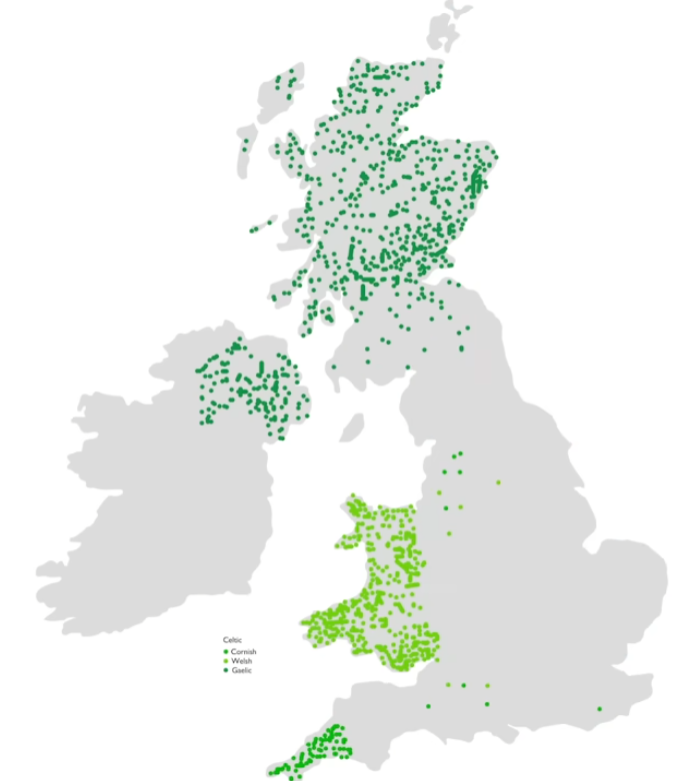
One reason for this is that the roots of “Celtic” are spread quite far across the British Isles. The Map Men do a great video on the differences and origins of place names in Britain. Just as place names were informed by prevailing cultures and peoples over time, so too were fables and folklore – at least until Christian Imperialism sought to wipe out much of pre-Christian myth and superstition. Fun fact: that’s one of the motivations Tolkien had in writing Lord of the Rings – to give Britain back that early-history in fable and myth.
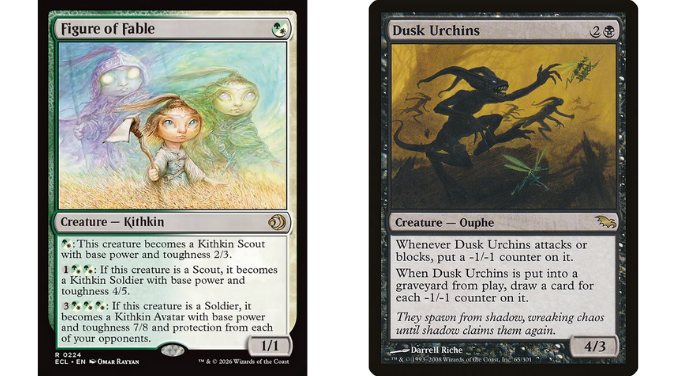
Lorwyn’s classic aesthetic is that of Pastoral fable, with the plane locked into eternal midsommar until The Great Aurora shifts the plane to Shadowmoor, based on 80s Dark Fantasy and the darker more horrific side of folklore. In Lorwyn Eclipsed, the two states intermingle, with travel between the night and day pockets of the plane possible in multiple regions.
KITHKIN

Kithkin are the closest “legally distinct” Hobbits you could imagine, and they inhabit the plane of Lorwyn alongside more fantastical creatures like Elves, Faeries and Goblins. Kithkin do obviously have heavy ties to Tolkien’s Hobbits, but those same Hobbits are based off of “precursor” races thought in folklore to have inhabited the British Isles long before the many years of settlement and invasion from overseas – gradually pushed into the mountains and forests before disappearing from all thought and knowledge. The similarities and crossover with what is thought of as the Fae, or Small folk, is notable.
THE FAE
The “Fae”, “Faeries”, “Small Folk”, “Little folk” or in the Irish language the aos sí/aes sídhe, Scottish Gaelic daoine sìth, or Welsh Tylwyth Teg, are all names used to describe the ornery, mischievous and sometimes spiteful creatures that usually control a domain beyond our comprehension, accessed commonly at the threshold of faerie circles, burial mounds or strange paths in the woods. These real world entities that some might even call cryptids are a big part of European folklore, and tales of their ways and how not to get on the wrong side of them have even made it over with colonizers to America.
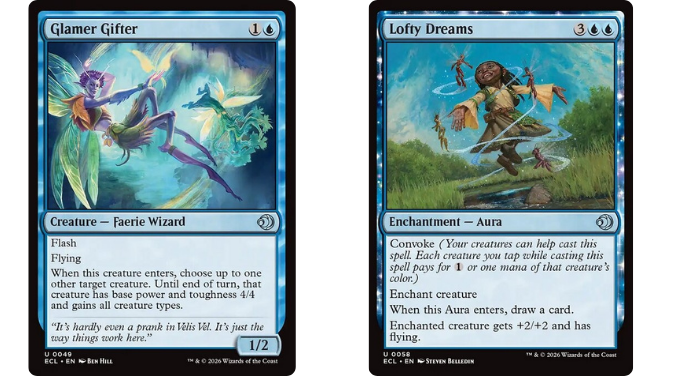
In Lorwyn, the Fae are represented quite literally as Faeries, but also in the many unique and strange creatures, elementals and incarnations that inhabit the plane. You could even count the Elves, the Boggarts and the Goblins as different kinds of “Small Folk” (and, quite literally, the Kithkin) by real-world definitions.
CROSSING THE THRESHOLD
The Fae, or Small Folk, often live in a slightly different world or dimension, and this aspect of their lore is shown in different ways.

Back in the original sets, cards like Dolmen Gate show the Threshold that can be crossed to end up far from home. In Lorwyn Eclipsed, the fact that Lorwyn has no native Humans (much like the world of the Small Folk) is played with when the Strixhaven Students end up more or less isekai’d into Lorwyn.
CHANGELINGS

Changelings are a big part of real life folklore, with their mysterious origins in literal Crib Swaps masked by Faerie Glamers. Stories abound, and are speculated to be based on neurodivergent behavior or other developmental divergences in children. If you think about it too much, that’s problematic af – but when haven’t people been known to reject those who are different? Rather than accepting differences, folks in the past were quick to blame Changelings, and assert their child had been taken.
PUCA/POOKA
Puca, or Pooka/Puck/Pook, is a famous being from Celtic folklore. It takes many forms, is feared and respected in equal measure, and commonly took the form of a raging wild horse or a huge dog.

We can see both these forms through each visit to Lorwyn. As similarly capricious as Faeries, Puca is know for being a difficult creature to appease, let alone to tame. Still, it’s known to also warn of Faerie hosts on the prowl.
To read more about the Puca, head over here for a tale from County Kildare.
THE SELKIE
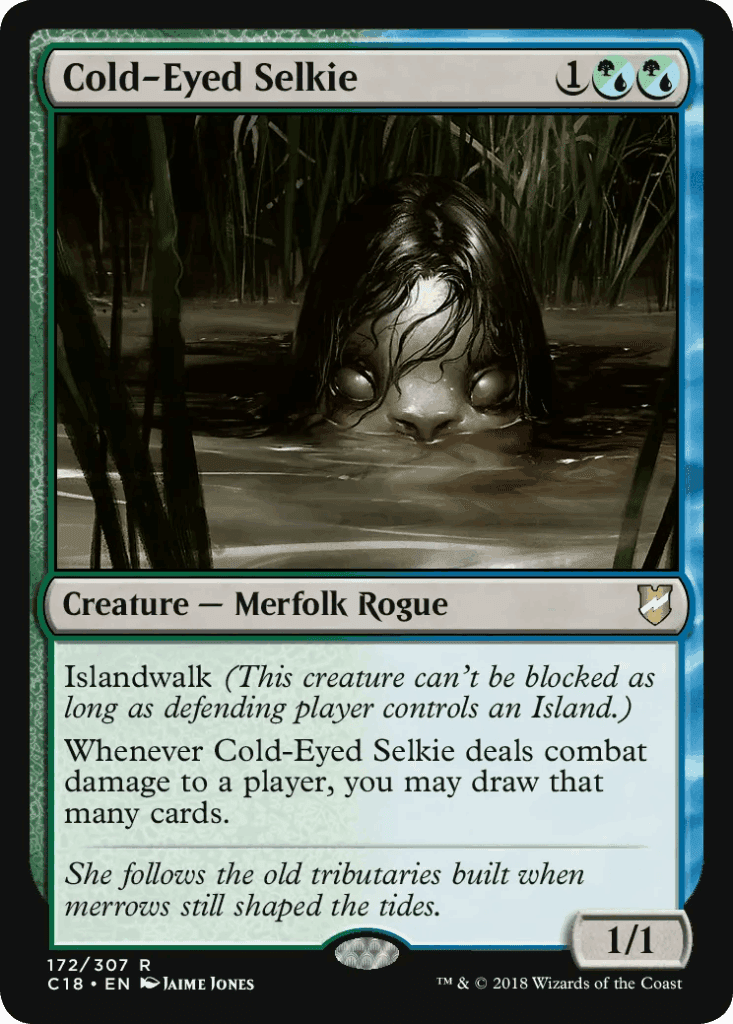
Selkie are mythological creatures that can shapeshift between seal and human form. They’re most associated with the Northern Isles of Scotland, but like all Celtic folklore, tales spread and mingled across the British Isles. Selkies have a dual nature: they can be friendly and helpful to humans, but they can also be dangerous and vengeful.
The reason they’re depicted as Merfolk is simple – they have counterparts in other cultures, like Mermaids or Finfolk. There are many interesting tales of Selkie, from forced marriages to conflict with shepherds.
CONFLICTING ACCOUNTS
Encounters with the Fae in Celtic folklore are numerous, and as varied as the mushrooms that grow in faerie circles. No two encounters are the same, and there are many types of Small Folk in Celtic folklore (with not all actually being small).
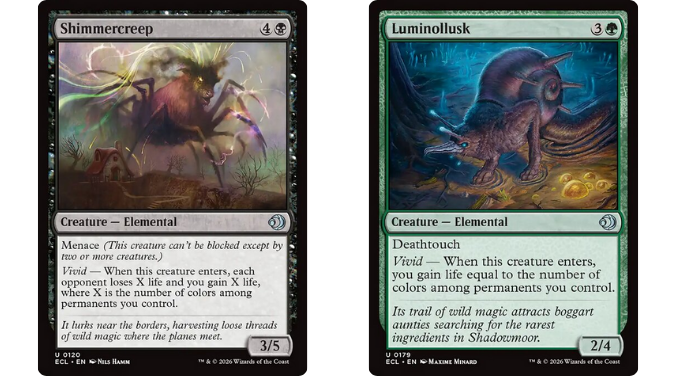
One way that the art direction of Lorwyn Eclipsed and the previous sets capture this is in the bizarre and often nonsensical depictions of Elementals. They exist almost as Tulpas – manifestations of beliefs – taking different qualities and behaviours from the conflicting accounts of their existence.
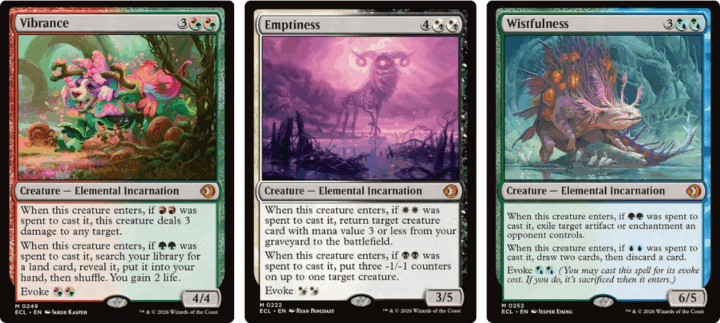
The incarnation cycle of Evoke creatures in ECL take this to another level, with their primal incarnation as though drawn purely from emotion and inspiration. What are our encounters with the unknown if not encounters with that which we can’t describe? Often in these tales, people only came back with descriptions of how they felt, and so this cycle captures such whimsy, wonder and terror in equal measures.
END STEP
And that’s the basis of many of the major inspirations from Celtic folklore in Lorwyn. We’ve only really scratched the surface though, and there are always deeper cuts. For those feeling like this set is familiar, magical and a little 20th-Century British Literature adjacent – well, you now know why. What’s an inspiration we missed here? Let us know on socials.
Kristen is Card Kingdom’s Head Writer and a member of the Commander Format Panel. Formerly a competitive Pokémon TCG grinder, she has been playing Magic since Shadows Over Innistrad, which in her opinion, was a great set to start with. When she’s not taking names with Equipment and Aggro strategies in Commander, she loves to play any form of Limited.