

Dockside Extortionist was banned in Commander in September 2024. It’s a busted little Magic card, and while many were sad to see it go, it was simply too powerful for the format as written. What would a “fixed” Dockside Extortionist look like, and does The Hobbit’s Dragon’s Desire fit the role?
DOCKSIDE EXTORTIONIST
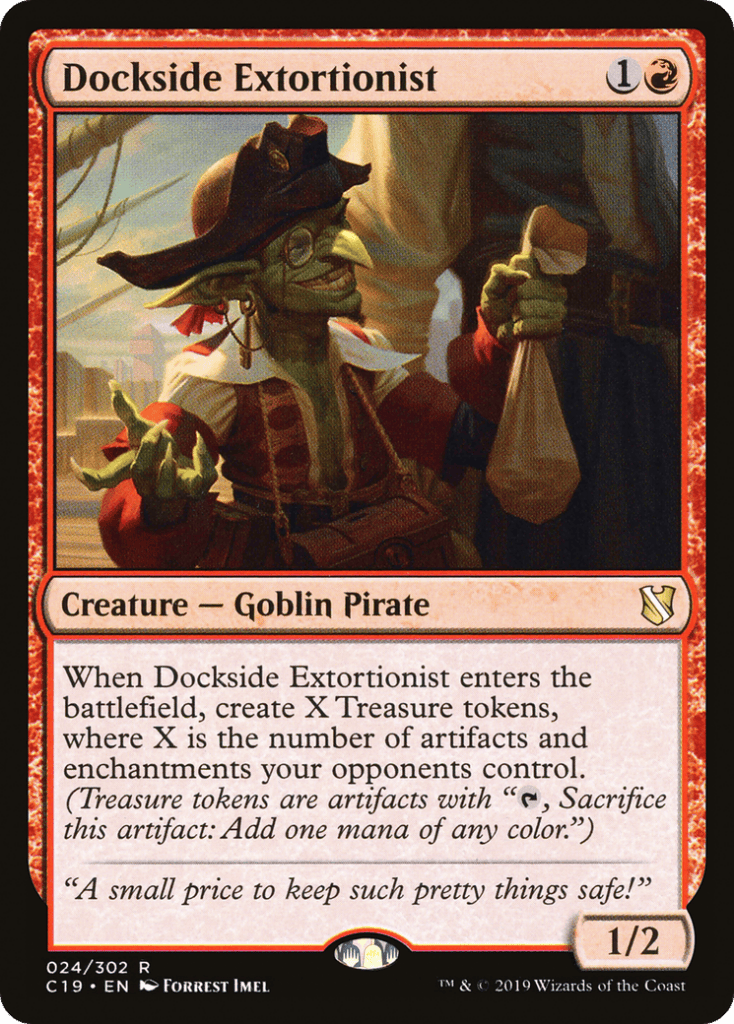
Dockside is a two-mana creature that enters and makes treasures for each artifact and enchantment your opponent’s control. It’s intended as a catch-up card, but overwhelmingly it became something of a menace of the format – to say the least. It was objectively correct to always run this card, and as early as Turn 3, you could be net positive on mana, with upwards of six treasures a reasonable expectation in the average game.
Why did Dockside push past the bounds of fair catch-up card and into “most busted ritual effect in the game”? Well, it’s because it took a snapshot of multiple opponents’ boards, and for just two mana. If it hard only made treasures because of one opponent, or the treasures came in tapped, or it only snapshot artifacts or enchantments? Well, we could have still had this wily little goblin in the format. It just frankly did too much, and games revolved around it in much the same way (or perhaps moreso) that tends to happen with Primeval Titan.
IS DRAGON’S DESIRE A FIXED DOCKSIDE?

The first thing I thought about when I saw the Scene Box Hobbit card Dragon’s Desire was how it just might do a reasonable job as a post-Dockside ban ritual. While it won’t come down nearly as early (and also asks two red, which is harder in multicolor decks), it does come down sooner than the other big rituals in the game – and crucially, has the potential to add a lot of mana.
For one thing, it counts each opponent. That means that if everyone has a few rocks, tokens, and other paraphernalia, you could reasonably double your outlay for casting the spell. If folks are playing artifact focused decks? Well, it’s all upward from there.
That said, it straight up isn’t as good as Dockside. It doesn’t hit enchantments, and it’s four mana to get going. I’d say that’s pretty decent without being busted in half, and could easily fulfill the criteria of a “fixed” version of Dockside. It’s a lot harder to recur, too; you can’t flicker or reanimate it.
THE STATE OF RITUALS IN COMMANDER
Rituals are one of the most powerful kind of effect in Commander, as they let you burst ahead on mana and effectively play at a point further in turn-count than the rest of the table. Most rituals are one-shot effect, but some are repeatable – like creatures that hit and make treasures. Others leave something behind, like Sol Ring or Thran Dynamo (and yes, a mana-negative spell that leaves a resource is still a ritual, in my book at least – and that’s before you start discounting it or copying it).
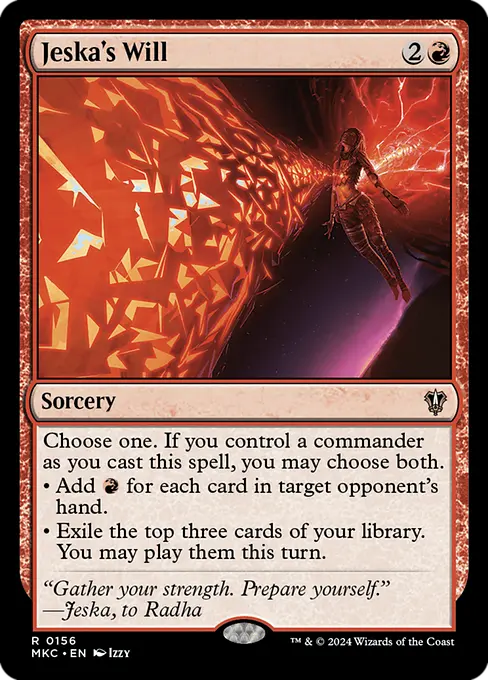
Commander decks love to play big splashy spells, and rituals help you get there. While Dockside is straight up banned – and Dragon’s Desire is a lot fairer – we already have the “line in the sand” when it comes to rituals, and that’s Jeska’s Will. Three mana to get six or seven mana (and sometimes more!) and potentially also see a few extra cards is enough to make it a Game Changer, suitable only for Bracket 3 and above.
While the value is the main selling point here, it’s arguably how low on the curve Jeska’s Will is that makes it so powerful. Being one mana less than Dragon’s Desire make it that much better, game to game.
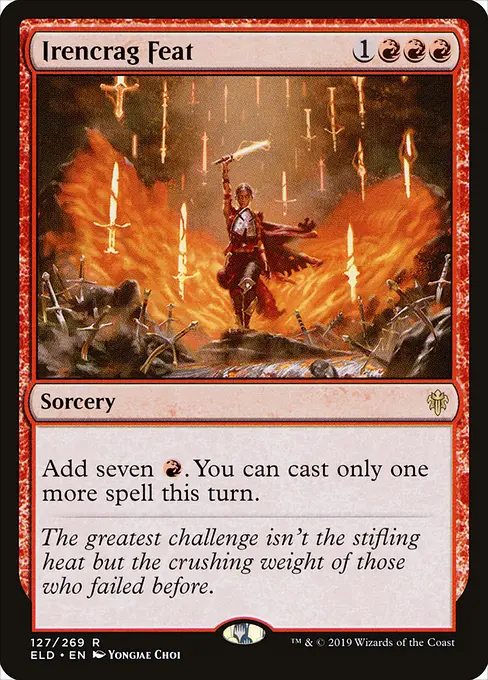
When you look at four mana rituals to compare Dragon’s Desire to, one comparison point could be Irencrag Feat. It comes down on four and adds seven mana with a stipulation: you can’t cast more than one more spell that turn. It’s best used to get a big Commander like Themberchaud out early, or for an equipment or artifact deck that has a mana sink for that leftover mana. It’s way less flexible than Dragon’s Desire, that’s for sure.

Red isn’t the only color that can do rituals, and some of the most-used cards in the format tend to be rituals, as they can provide a massive tempo swing in Commander. Mana Drain is one of the only versions of this effect outside of High Tide in blue, and when you consider it as a way for blue decks to try and take big turns, it seems a lot more reasonable as a tool in its toolbox. Culling Ritual only hits smaller permanents, but it does so in a way that helps you burst ahead. Even Burnt Offering exists as a way to take a longer, bigger turn, helping you to chain cast creatures and use the graveyard.
Rituals must be constrained, though – too cheap, and they threaten to take over a game early. Too rewarding, and they risk upending a game in the mid to late game, too. What happens when they’re deployed a little later, though?
MANA GEYSER MIGHT BE A BIT GOOD
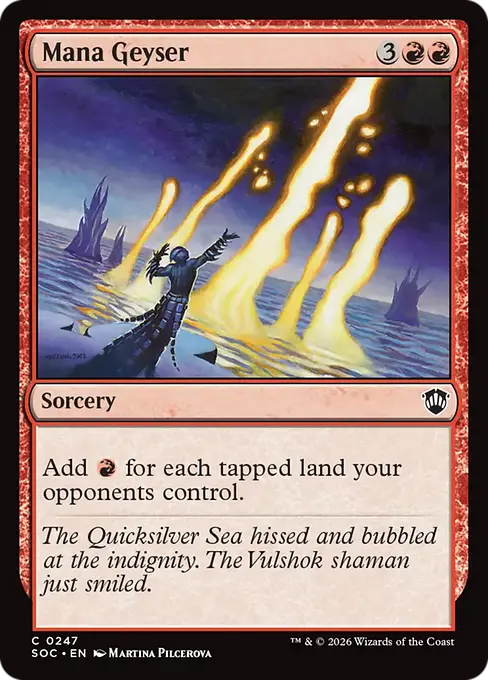
The better comparison point for Dragon’s Desire is probably Mana Geyser. You’re not casting Dragon’s Desire early, so why not wait a turn and cast a Mana Geyser for a more reliable burst of mana?
Dropping Mana Geyser on T5 can easily lend 12-14 mana, if not more – and the later you go in the game, the more chance it’ll net you twenty mana or more. While it is balanced by not coming down too early (cost reduction means an earlier Geyser, but a weaker one), it does tend to swing games. It’s a card I heard talked about a lot at the last MagicCon, and though I’m not convinced it should be a Game Changer, I am convinced it’s the current top-end of where rituals should be.
END STEP
So, in that sense, is Dragon’s Desire a fixed Dockside? Absolutely. I’d also say it’s better to play over Mana Geyser when you’re in Bracket 2, as Mana Geyser might still be a bit good for B2. Remember, Brackets aren’t only about Game Changers – they’re about the whole vibe.

Kristen is Card Kingdom’s Head Writer and a member of the Commander Format Panel. Formerly a competitive Pokémon TCG grinder, she has been playing Magic since Shadows Over Innistrad, which in her opinion, was a great set to start with. When she’s not taking names with Equipment and Aggro strategies in Commander, she loves to play any form of Limited.