

Sometimes, the last way you want to build a Commander is with combos you’ve already played with countless times before. Celes, Rune Knight is a popular B4 and cEDH Commander because of the many Persist infinite combos you can play with her – but what if you want to play her as a more relaxed Reanimator build? How can you win with her without playing infinite combos?
ON THE HUNT FOR A NEW REANIMATOR COMMANDER
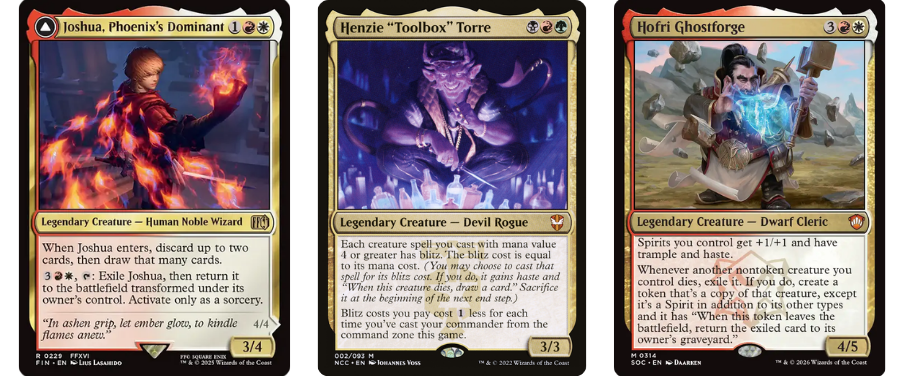
Recently I’ve been hankering to build a new Reanimator deck. Right now, I have my more relaxed Joshua deck, my consistently powerful Henzie build, and my combo-oriented Hofri deck. All of them have different playstyles, and allow me to play some of my favorite cards. That said, I was feeling like Joshua was beginning to get a little old.
His gameplay was pretty linear – discard stuff and reanimate it. Baked into the deck was a flicker sub-theme, and a burn sub-theme. Both of these themes allowed the deck to win games, but the games I won recently all tended to play out similarly; I gained a big life-swing from Joshua (often in conjunction with Chandra’s Ignition or Nibelheim Aflame) and then basically won by having a life buffer and attacking. It won games, but it didn’t feel that engaging – and the games it lost felt decidedly dull, as he’s a pretty slow Commander even for Bracket 2, and stumbling on an opening and losing out on our first flip tends to nullify the deck’s potential.
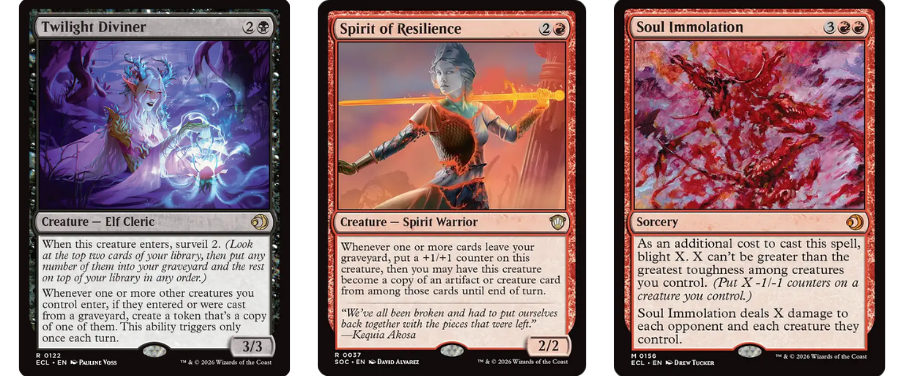
I also found myself wanting to run some reanimator cards that didn’t fit into any of my current decks, and a Soul Immolation I was desperate to try out. This had me embarking on a search to find a new Commander. Given I’d played everything from Meren to Chainer and most things in between, something recently printed ended up at the top of the shortlist: Celes, Rune Knight.
CELES, RUNE KNIGHT IS WHEELY GOOD FUN
I had my reservations going into brewing Celes, namely that she’d encroach on some of the play patterns I was already using with Joshua and Hofri (the latter of which already uses wheels as a primary form of card draw and graveyard filling). After a little deliberation, I came to the conclusion that the best thing to do was to retire Joshua for now, and take the flicker and burn engine, and make the Celes deck distinct from Hofri by running plenty of different cards, and also by not using combos as win conditions.
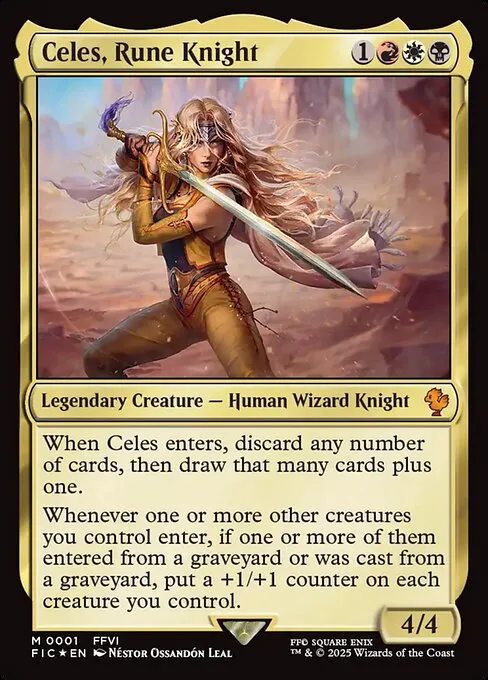
Celes is a really strong card, giving a self-wheel on EtB, and coming with a way to add counters to your whole team whenever you reanimate a creature. It’s easy to see why she’s so popular, especially at Bracket 4 and cEDH tables, as she enables combos from the command zone while fixing your hand. Despite this being the main draw for a lot of the playerbase, I was much more interested in using her to fill my graveyard and play some of my favorite reanimator effects, and win with good old fashioned burn and combat damage – taking the deck no higher than a Bracket 3, realistically, especially without Game Changers or playing numerous efficient Tutors.
So, the question then becomes: how do you win with Celes, and what does your engine look like?
NON-COMBO WIN CONDITIONS
The first thing I needed to bake in was plenty of ways to win the game that aren’t just swinging in for combat damage. Don’t get me wrong – this deck is more than capable of doing just that, with plenty of flying creatures and all of the counters from Celes – but you need more than that to consistently win games against all manner of effects that’ll seek to stop you swinging for free.

Given we’re in red, I opted to add a burn suite. Terror of the Peaks and Flayer of the Hatebound trigger when we have creatures entering or entering from a graveyard, and Fear of Burning Alive not only deals damage to face, but turns the rest of our face-melting from the former two creatures into burn removal for opposing boards. By playing into burn, this also lets me run the Soul Immolation I was wanting to run, as it should be able to deal a good chunk of damage in this build.
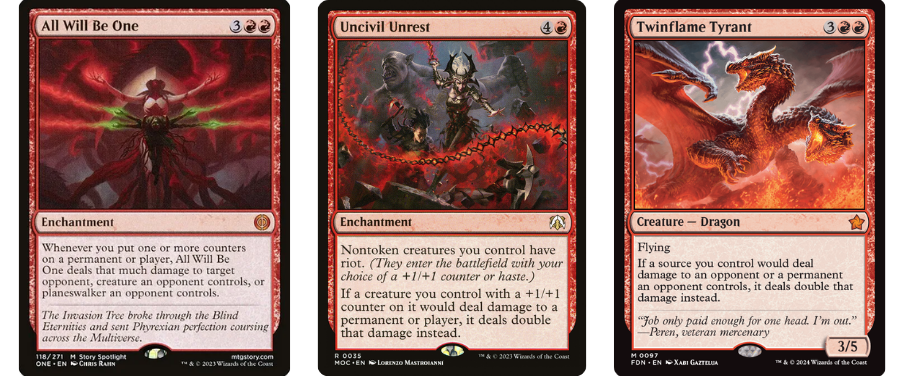
The focus on burn allowed me to run more cool cards I don’t get to run often enough: All Will Be One and Uncivil Unrest. All Will Be One turns every Celes trigger into increasing burn damage, while Uncivil Unrest allows all of our creatures with counters to deal double damage – and potentially haste, too. Add in Twinflame Tyrant, an aggressively costed flying damage doubler for all of our sources, and we are starting to cook up a storm.
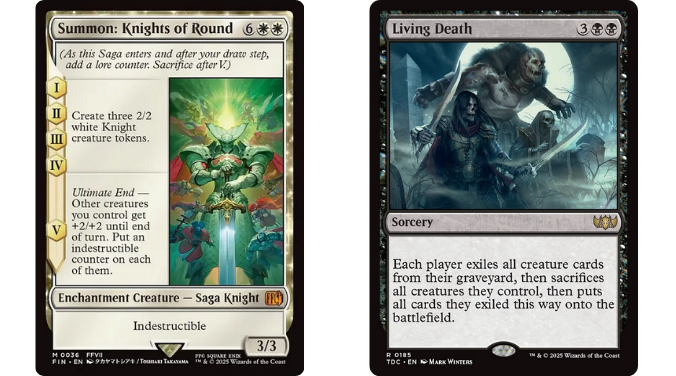
Of all of our reanimator targets and reanimator spells, the ones most likely to snowball to a win are Summon: Knights of Round, which combines really nicely with our EtB burn and +1/+1 counters, and Living Death, the undisputed king of reanimator spells.
THE ENGINE TO GET US THERE
In order to fill the yard as quickly as possible, we want to be wheeling as often as we can. While it might seem like adding plenty of wheel cards into the deck is a good plan, it’s actually going to end up taking away slots from reanimator spells and the creatures we want to run.
You might be familiar with the concept of “as-fan”. Used classically, it’s a term which dictates how often you might see something when you open a booster pack, and helps R&D decide how many of a certain effect they want to have in a draft environment. It’s also applicable to building decks – swap the booster pack for opening hands, + a reasonable amount of draws, calculated in a hypergeometric distribution.
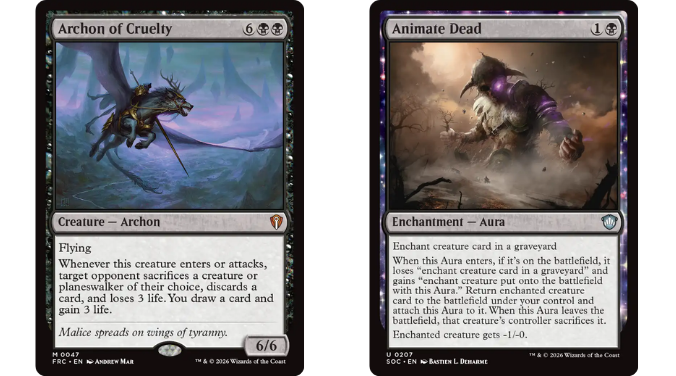
Without getting too into the weeds with the math here, the point is that when Celes is our wheel in the command zone, we want to be able to find multiple cards in our starting hand and in our first wheel: a creature to put in the yard, and a spell to get it back to play (there’s also a secret third effect which I’ll go over in a moment). We want to dump a fattie like Archon of Cruelty, and then draw into (or decline to discard) a spell like Animate Dead. Simple, right? Well, to ensure that happens, I’m running 35 creatures and 20 reanimation effects (some of which are stapled to creatures).
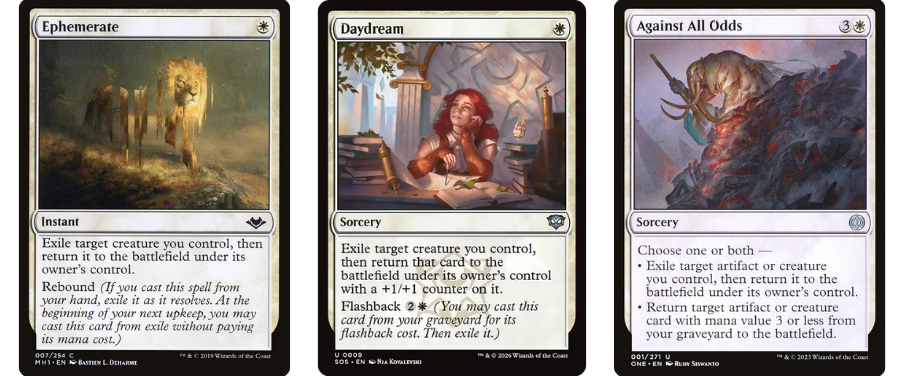
What’s the secret third effect we want to see? Well, it’s cheap flicker spells and other low-cost ways to get another go at Celes, so we can keep digging through more cards. Some of the best effects we have access to are Ephemerate for double flickers, Daydream which we can wheel away for later, and a niche pick in Against All Odds, that lets us wheel with Celes and reanimate something for four mana (though remember you have to pick a target before you wheel).
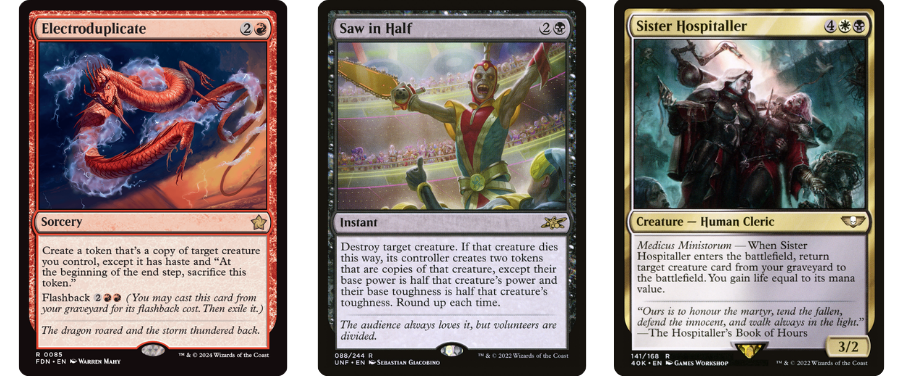
We’re not limited to flicker spells, though – Electroduplicate and Saw in Half can achieve the same thing, allowing us to get another wheel with Celes, while also performing a flexible role when it comes to the rest of our deck. If our creatures are as good as Sister Hospitaller, we want to flicker, copy, or saw them in half, too!
Even our choice of protection spells are considered: Eerie Interlude is way more synergistic for us than other similar effects.
TYING IT ALL TOGETHER WITH A NON-LEGENDARY FOCUS
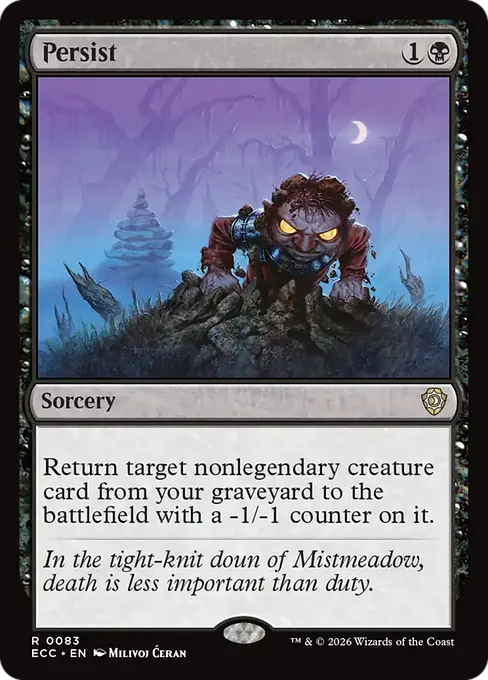
While building the deck, one thing stood out to me: to make the deck perform as optimally as possible, we needed to run the cheapest versions of effects. That meant that we had to look at the likes of Cursed Mirror, Twinflame, and Persist. What makes those cards so good is how flexible they are, and in the case of a card like Twinflame or Persist, we only really get maximum value out of them if we stack our deck with non-legendary creatures.
That means that the few Legendaries in the list really have to pull their weight – and they do. Eirdu/Isilu provides a way to ramp out our expensive creatures with Convoke, and later keep our board coming back through removal and wraths. Chainer, Nightmare Adept provides haste, discard, and reanimation. Sheoldred, Whispering One gives big tempo shifts while reanimating our stuff, and Lotho provides early game ramp and fixing.
There’s also a non-gameplay bonus to not running a pile of legends – we get to not run a pile of legends. I don’t know about you, but I’m kinda tired of so many legendary creatures.
THE NON-LEGENDARY SECRET SAUCE PAYOFF
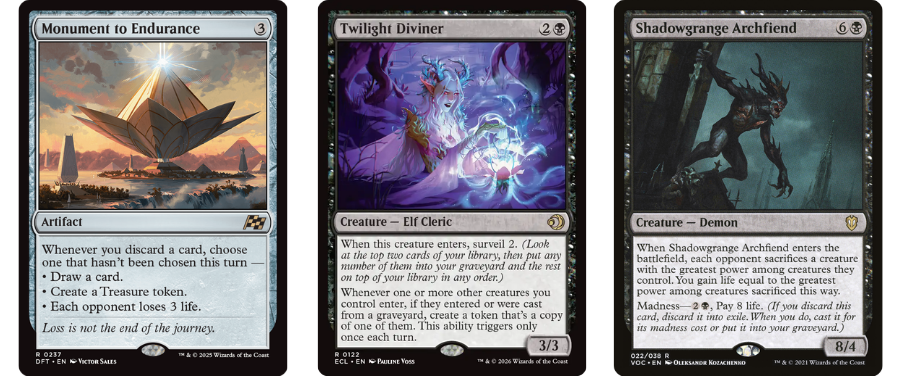
There are many cards that feel like “pay-offs” for choosing Celes as a Commander; from getting maximum value on Monument to Endurance, to Twilight Diviner playing into our non-legendary focus and giving us extra creatures and EtBs for free, to a cheeky three mana Shadowgrange Archfiend via a Celes discard. There are none more powerful and appealing as the Siege Chicken, though.

Mardu Siegebreaker is the ultimate payoff for our deck, offering a way to tuck one of our strong EtBs and then turn sideways to get up to three more chances at that value, for free.
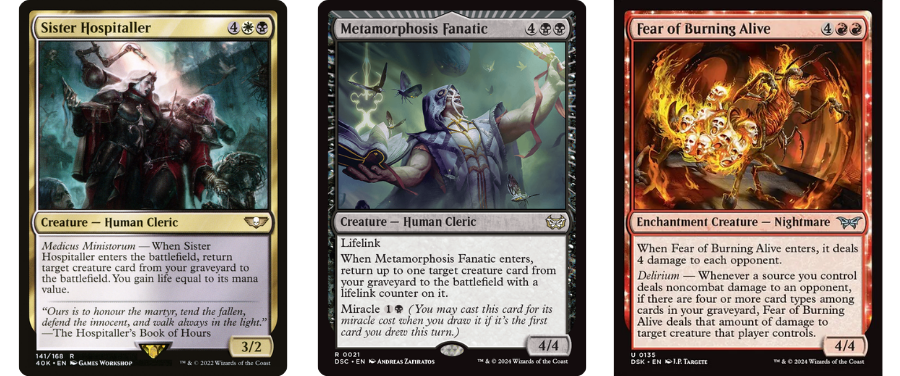
Our strongest play with this is undoubtedly to stick a Sister Hospitaller or Metamorphosis Fanatic underneath it and go to town, but it also works well with Angel of Indemnity, which can bring it back too. If we’re in the late game, we can always just tuck Fear of Burning Alive under it and hit face for twelve a pop.

The sheer unbridled joy of running Mardu Siegebreaker had me quickly searching for an adjacent effect, and luckily due to our disciplined approach to staying as non-legendary as possible, Duke Ulder Ravengard fits the bill perfectly. Which it can tuck a legendary creature like Siegebreaker, the maximum value comes in tucking something that stays around to beat face during the combat step.
THE DECKLIST
I’ve been playtesting this list quite often recently, and with a good number of games and goldfishing sessions behind me, I’ve arrived at a build I’m happy to call the 1.0 version of the deck. Does it still need further refining? Well, it doesn’t need it, but it will for sure see some more changes as time goes on. The first thing to do will be to look at the manabase and figure out if I can squeeze a few more utility lands into it, as right now it’s focused largely on mana fixing.
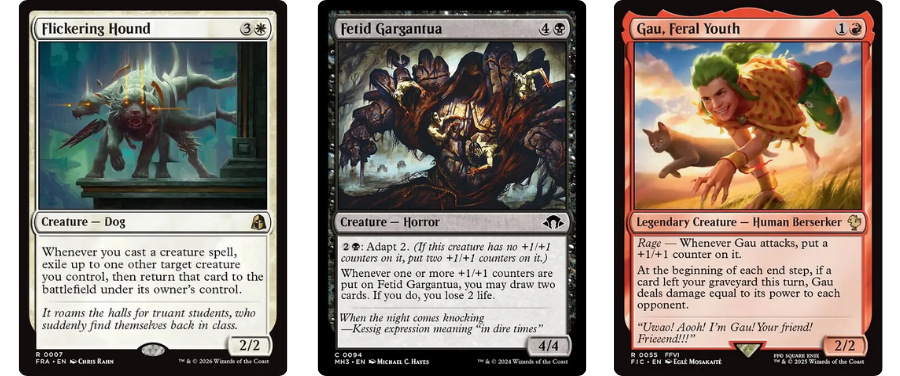
Reality Fracture brings Flickering Hound, a card I absolutely need to make some space for. I also am heavily considering Fetid Gargantua as a way to move a little of my repeatable draw away from Magus of the Wheel and Celes herself. As for Gau, I don’t feel like I miss having access to him, but I can’t deny he fits the overall win conditions of the deck really well.

The main takeaway for me from this deckbuilding experiment is that Celes can be a really fun Commander to head-up a reanimator deck, without feeling like you have to be playing Persist combos. In fact, I went as far as to make sure any of my free sacrifice creatures (Benevolent Bodyguard, Selfless Spirit et al) all had a toughness of one, which stops me from doing a burn persist combo with a flipped Eirdu. While this might seem like a silly restriction for Bracket 3 – because flipping Eirdu and having two other creatures in play to combo with is perfectly reasonable – it helped me to focus my deckbuilding and stick to my thesis. Is this something I might change in future? Perhaps, but I’m really happy with the way the deck plays right now.
I hope you enjoyed this deck tech for my most recent build, Celes Reanimator – let me know if you’ve tried a non-Persist combo build too.

Kristen is Card Kingdom’s Head Writer and a member of the Commander Format Panel. Formerly a competitive Pokémon TCG grinder, she has been playing Magic since Shadows Over Innistrad, which in her opinion, was a great set to start with. When she’s not taking names with Equipment and Aggro strategies in Commander, she loves to play any form of Limited.