

Part of the fun of the Commander format is being able to pick a unique Commander that speaks to you. Often, we’re repulsed by the Commanders in the format, as it’s well-trodden ground. Sometimes, though, there’s nothing wrong with building the popular Commander – especially if you have some cards you’d love to try out.
THE MOST POPULAR COMMANDERS IN THE FORMAT
The most popular Commanders of the format – which you can check on EDHRec – can tell us a lot about why people pick a certain Commander.
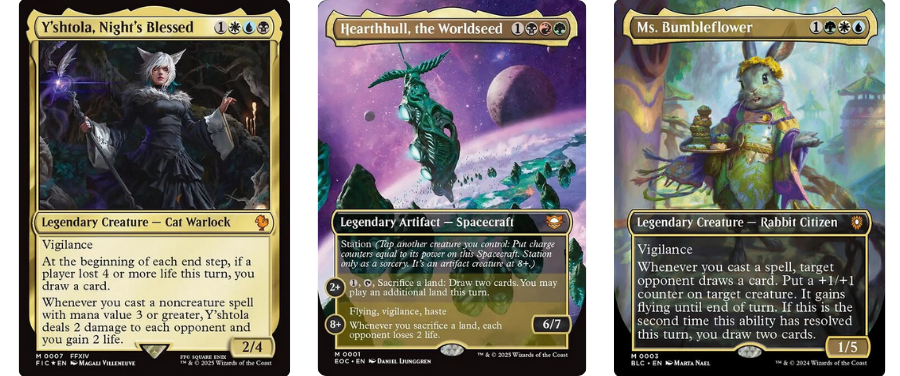
In the case of Y’shtola, Night’s Blessed (the new No.1 Commander) or Hearthhull, the Worldseed, they’re Commanders that solve your gameplan and your win condition in one card, while also giving you card advantage. Another similar example is Ms. Bumbleflower, who drives one of the most aggressive and unassuming Group Hug strategies in recent years.
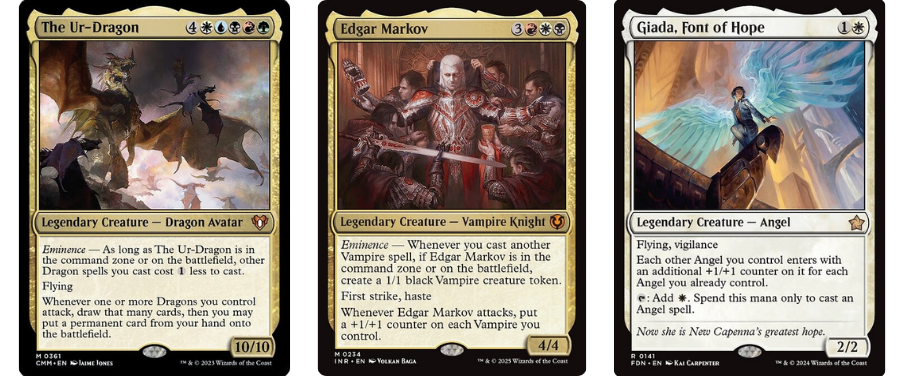
These aren’t the only type of Commander who end up enduringly popular. We also have typal Commanders that end up being the more powerful and consistent options for iconic creature types: The Ur-Dragon and Miirym, Edgar Markov, and Giada, Font of Hope. They all helm the most popular creature type focused decks for a reason.
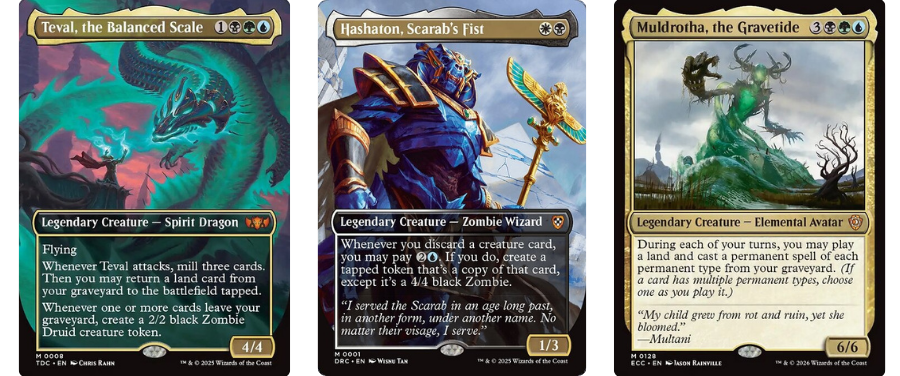
And then you have the “best in slot” Commanders for certain archetypes. While they don’t necessarily draw you cards, they’re popular because they are doing whatever that archetype wants to do in the most efficient way possible. Teval, Hashaton and Muldrotha are great examples. They are some of the best options for Reanimator, giving you three colors and enabling the strategy in the command zone across multiple vectors.
While these Commanders endure for good reason, plenty of players will gravitate away from them on to lesser-trodden paths.
WHY DO PEOPLE PICK LESS POPULAR COMMANDERS?
Overwhelmingly, the reason pick less popular Commanders is because they don’t want to play a deck that shows up all the time at their LGS or within their playgroup. If your friends have already built the deck, then it’s a pain point. It can be less interesting because you feel that space has already been explored, with a stock kind of list or shell being mostly solved. It can also be a situation where you don’t want to provide a comparison between decks. If one player is a better deckbuilder, or has a bigger collection (or budget), then that comparison can become the thief of joy for both players.
Commander is also, for a lot of players, a format about self-expression. Having a Commander that nobody else runs can be rewarding in it’s own way, providing you a unique experience, a more interesting deckbuilding challenge, and the ability to surprise people when you sit down to play.
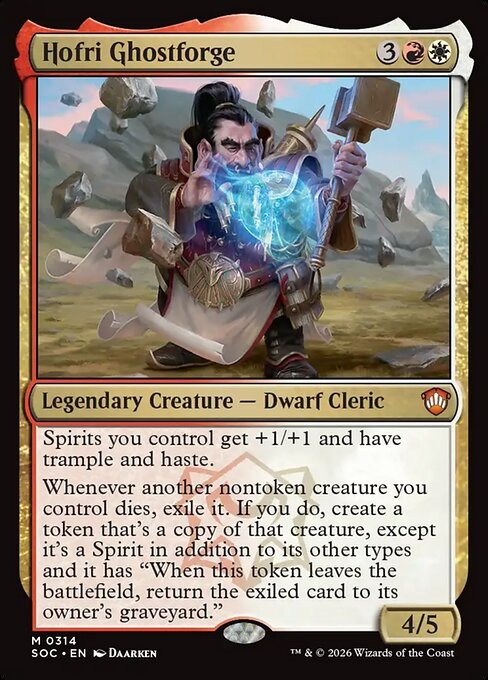
Hofri Ghostforge has been my chosen Boros Reanimator Commander for a good five years now. I can count on one hand the amount of times I’ve seen another Hofri deck in the wild in those five years, and the ones I have seen have been geared more towards Spirits, or playing many Act of Treason effects, than the deck I’ve built. Hofri is ranked a lot lower than popular Commanders at Rank #1183, and isn’t even in the top 50 Boros Commanders. I can’t pretend that that isn’t one of the reasons I’ve kept him built for so long.
The other reason is that the puzzle to making the deck work is engaging and requires some hoop-jumping. It’s not easy as just playing the Commander early and building off of that, and it’s in colors where the easiest draw and mana advantages are through attacking, which is something the deck just doesn’t do all that often.
Hofri was chosen for me as a Commander to helm a very specific deck – one that involves wheels, reanimation, and ramping lands. There aren’t too many Commanders in RW you can pick for this. But what if – rather than a strategy or card type – you have a selection of cards you really want to build around, and you need to pick a Commander that’ll let you enjoy them?
FINDING A COMMANDER FOR CARDS YOU WANT TO PLAY
I found myself with a conundrum recently.
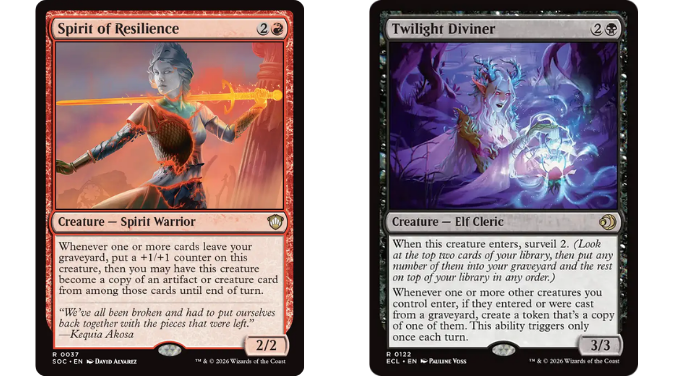
I had two new three-drops I was really interested in playing, and ideally, I wanted to play them in the same deck. On their own, they’re kinda “do-nothing” cards, meaning that to get the most value out of them, you need to play them with a Commander that directly synergizes with them, ensuring you always get some value out of casting them.
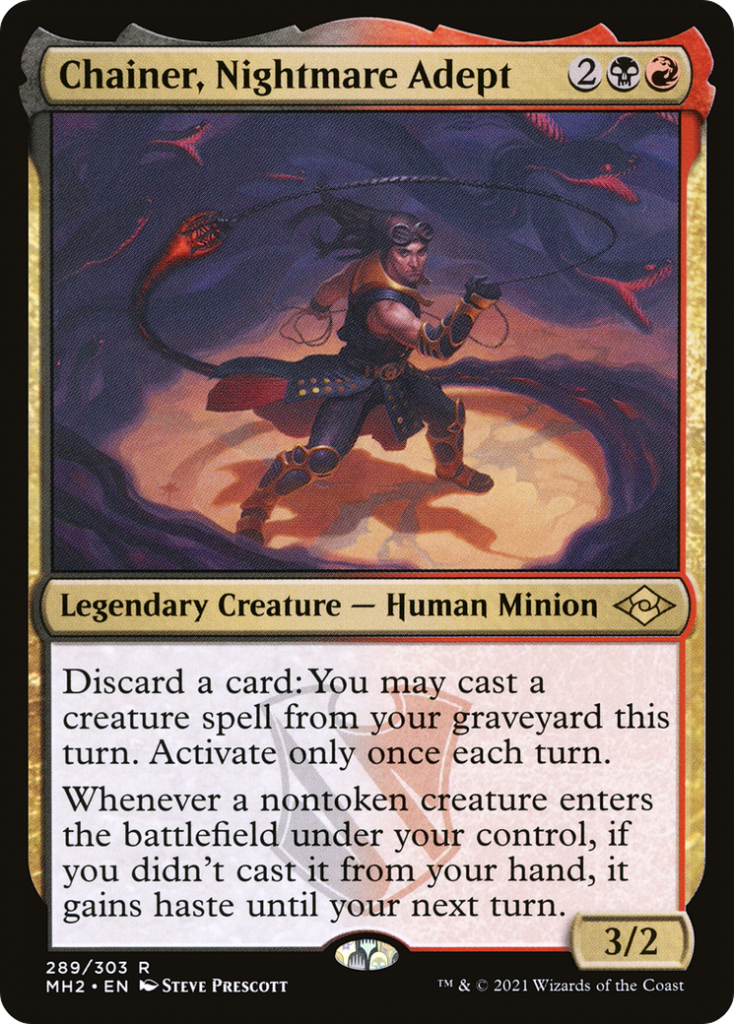
The obvious choice was Chainer, Nightmare Adept. I wrote recently how Chainer is an excellent choice for a Dragon Reanimator build, and in general, I still rate Chainer very highly. For me, I could dilute my Dragon build more, or re-tool Chainer back to a generalist build, or I could look elsewhere.
Turns out there aren’t too many Commanders with a R/B/x color identity that are Reanimator specifically and also enable that strategy from the command zone as a primary strategy – at least not as many as you’d think.
Compounding the issue for me was picking something that didn’t already overlap heavily with a deck I have built. I have Henzie built in Jund, and these Spirit of Resilience and Twilight Diviner don’t neatly fit into a Henzie deck. There are other Jund options that might work, like Slimefoot and Squee or Coram the Undertaker, but given I already had one Jund deck, I wanted to look elsewhere.
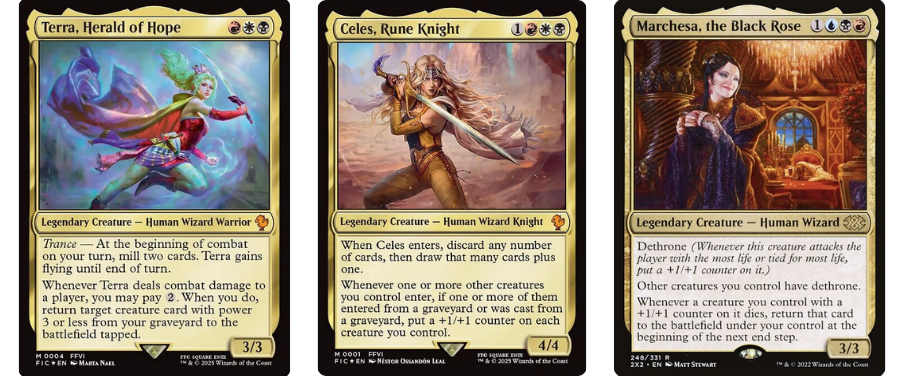
After deliberating over a number of options in Grixis, Jund and Mardu, I had three Commanders on my shortlist. Celes, Rune Knight shared too much space with Hofri and Joshua, two of my other decks. That left Terra and Marchesa as leading candidates, and I felt an all too familiar feeling: these Commanders have been done to death.
The thing is, that shouldn’t stop me, and it shouldn’t stop you.
WHY NOT JUST BUILD THE POPULAR COMMANDER?
If you’ve shortlisted a Commander because it satisfies a bunch of parameters for your ideal deck, then what’s stopping you playing it?
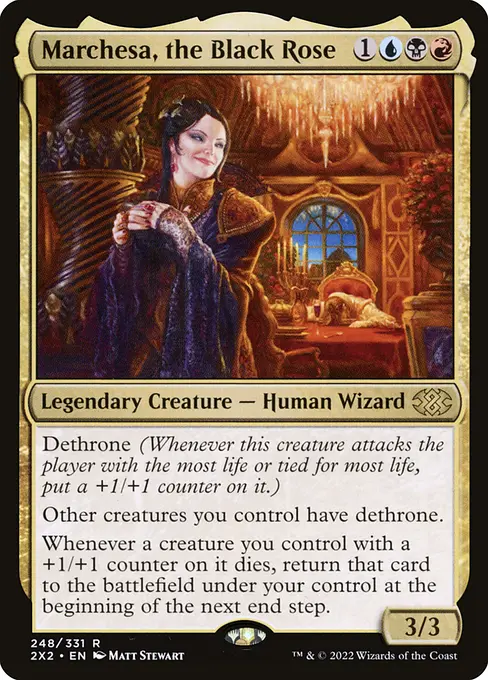
Marchesa, the Black Rose may well be done-to-death. She may well have high threat-memory for being a spooky surprise combo Commander that likes to steal your stuff. All of those things might be true… but that shouldn’t be a barrier to entry, especially if you’ve never built her before.
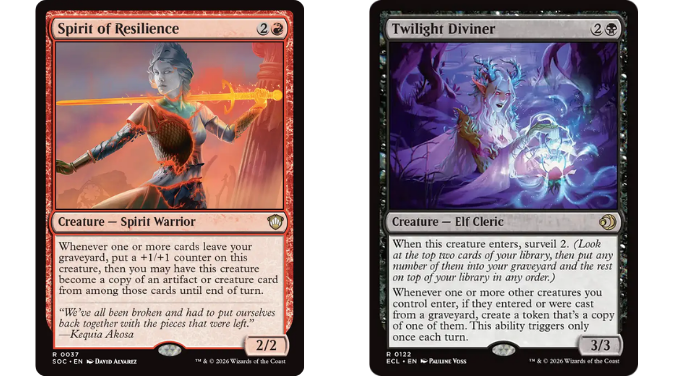
Spirit of Resilience and Twilight Diviner both fit really well into her general strategy, and as a Grixis Reanimator Commander, she actually has a lot of room for experimentation. While the narrow and well-trodden route is to use Undying combos and a bunch of tutors and counterspells to try and pop off in higher brackets, there’s nothing stopping anyone from diverting from that build pattern to build something with a little more texture than can still play well in Bracket 3 or even Bracket 2.
For me, too, she offers a chance to play some blue, a color which I feel is often playing second fiddle to a main color or pair of colors, and can’t really stand as well on its own.
I’m excited to pull out some cards and synergies I haven’t played as much with and seeing what I can come up with – and that’s one of the best parts of Commander.
END STEP
Piloting highly customized and personal brews is a great part of Commander, and one of the reasons people love it as a format. That same self-expression can still be found when choosing a popular Commander, and indeed some of the coolest decks in the format use popular Commanders as a jumping off point – just think of Ur-Dragon Changelings.
There are so many cards legal in the format, and there’s no reason to play the same 100 as everyone else. We could also all stand to be a little more accommodating of players – particularly new players – picking up Commanders we might have played against many times before. Let people discover the same things you did without bemoaning the experience you guess you might have. You might even be surprised at the spicy brew they come up with. And if it is a stock list? Well, your threat assessment pays off, and they can learn why that Commander gets no breathing space.

Kristen is Card Kingdom’s Head Writer and a member of the Commander Format Panel. Formerly a competitive Pokémon TCG grinder, she has been playing Magic since Shadows Over Innistrad, which in her opinion, was a great set to start with. When she’s not taking names with Equipment and Aggro strategies in Commander, she loves to play any form of Limited.