
Building a new Commander deck is always a fun time. You get to pick out something that speaks to you, pull out some cool cards you want to play alongside it, and see how to glue it all together. You might have some ideas of staples and templates that can inform the general make-up of a deck, and you might have experience building a similar Commander before. Still, it’s worth really understanding a Commander before you sit and build it, because you could fall into avoidable deckbuilding traps.
COMMON COMMANDER DECKBUILDING TRAPS
When you think of deckbuilding traps in Commander specifically, you might think of some of the more obvious ones: not running enough removal, running too much removal, not running enough draw and ramp, or not running enough win conditions. Those are universal traps, and don’t really speak to the card evaluation you should be running on a chosen Commander. Let’s take an example.

Giada is a popular Angels Commander. She gives you a mana dork to cast your Angels ahead of curve. She grows your board, the more Angels you drop.
The biggest pitfall I see when I look at the average Giada list is that the mana curve trends way too high. Just because you can play a bunch of six, seven and eight mana Angels doesn’t mean you should.* Giada encourages you to get as many Angels into play as possible, because for every one you have in play, the next comes in with even more +1/+1 counters. So, by this merit, your deck should be geared more toward playing lower-mana Angels in order to get more power on the board for the minimum mana investment possible.
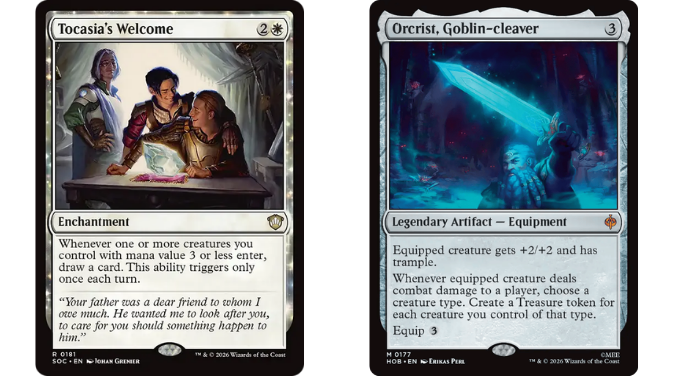
What’s more, if you’re looking to keep your hand topped up in white, you’re playing lower mana value and lower power creatures. If you want to play Orcrist, and make a boat-load of treasures? Well, you want to go as wide as possible, not as tall as possible. Giada has you covered for going tall.
* It’s possible to cram more high mana value creatures into a given list, but you need to be running a reasonable amount of ways to cheat them into play – whether that’s reanimator cards and discard, ways to make big bursts of mana, or a Quicksilver Amulet. Even still, unless you’re literally a reanimator deck, your curve should likely still be lower than you think.
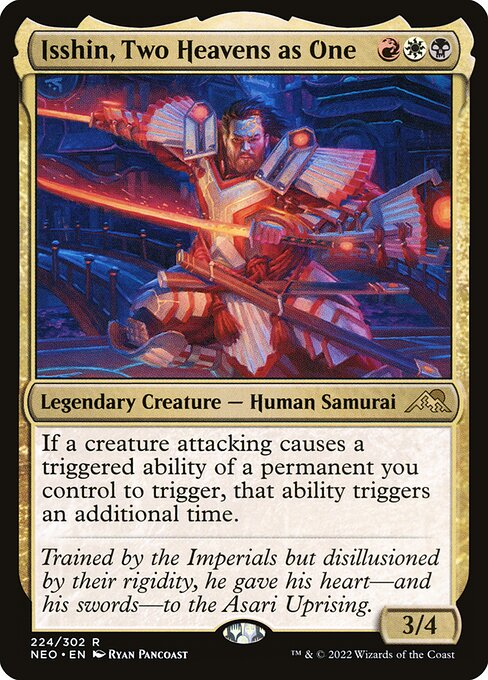
Another example of this is when you look at a card like Isshin. There are a bunch of sweet three mana cards that you could include in a deck like this, from Windcrag Siege to Raph & Leo. While three drops are no doubt amazing, you have to be careful about how many you play and picking the right ones.
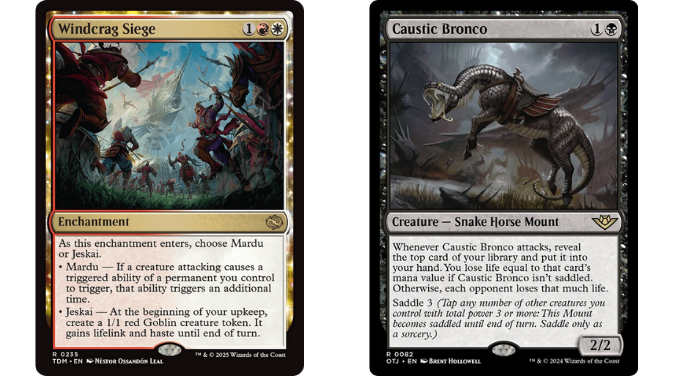
Windcrag Siege is redundancy for your Commander, and can come down at any point, which is solid. Anim Pakal cares about you attacking with any creature, so again, doesn’t have to come down on Turn 3, when you want to play Isshin. I’d be wary of playing something like Audacious Thief, though, because you want to cast it the same turn you want to cast Isshin (or earlier), and it’s quickly walled off. Same for Peerless Samurai – why attack alone with Isshin when you have a bunch of other creatures to go wide with?
You want to be playing more two drops that matter – like Caustic Bronco – and then following up Isshin with a four or five drop that does something big. Isshin is a classic case of “don’t overload your deck with spells that cost the same mana value as your Commander”. It’s a useful thing to keep in mind to avoid a huge deckbuilding trap.
NICO MINORU, RUNAWAY – A POTENTIAL TRAP?
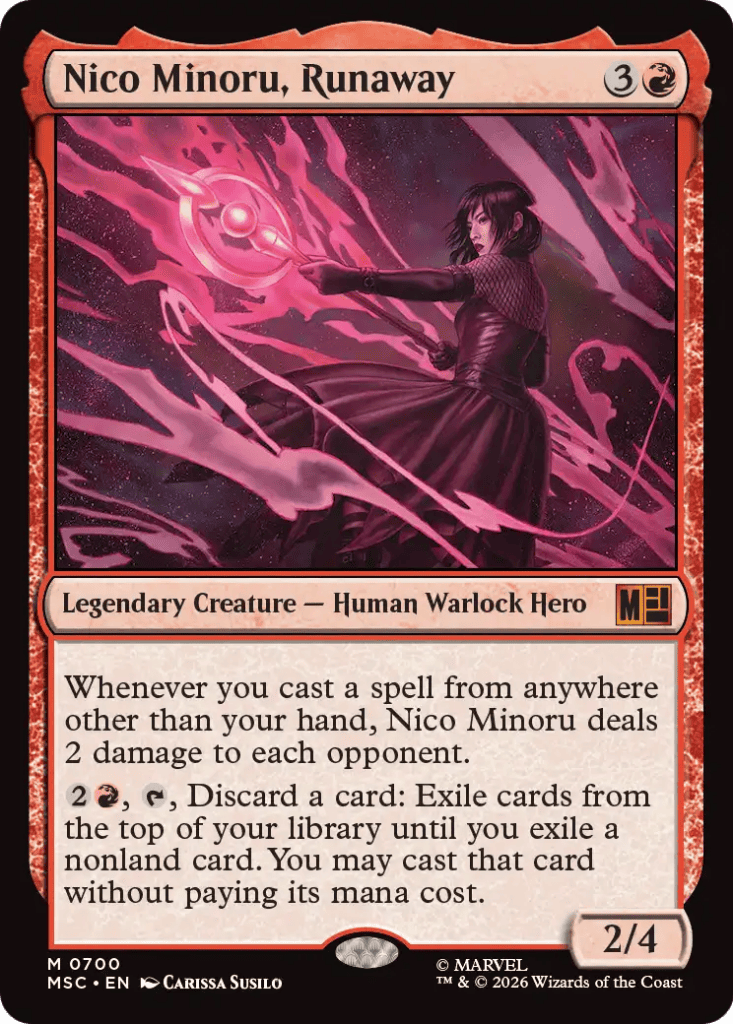
Recently I sat down to build Nico Minoru, and in doing so, identified that part of her rules text is basically a trap for the average build of the deck. I picked Nico because firstly, she’s got really cool art, and secondly, she has a pretty fun win condition, with a “spin the wheel” button for good measure. It also helped a lot that though she’s a Marvel card, she doesn’t feel so distinctly Marvel, and feels pretty on-brand for Magic as a Warlock.
On first read, it’s easy to be drawn to the pitch-a-card aspect of the card. You get to hit the random button and transform that card into something crazy like a Soulfire Eruption or Call Forth the Tempest. You’re immediately thinking about discarding a Shenanigans, or a Squee, or using Crackdown Construct to turn those discards into temporary cards you can play.

For my initial draft, I aimed at Bracket 2, knowing I wasn’t going all-in on Storm and Game Changers, and wanting to embrace the “spike a big spell” aspect of her text box. After some goldfishing and playtesting with the deck, it was clear that certain cards weren’t pulling their weight (the damage enhancers/doublers; cheap discard fodder like Squee) and that the deck was about as consistent as any other mono-red deck in Bracket 2. For all intents and purposes, I’d built the deck I’d aimed for as my first goal: a B2 deck that isn’t too spikey and can do some fun showboating.
That said, I’d also uncovered a truth about Nico Minoru: the second half of the card is a trap and designed primarily for UR or big-spell decks when she’s in the 99, and you have access to way more ways to sculpt your top decks. If you’re building her as a mono-red Commander, you really can’t half-ass either section of her text box if you want to play her in Bracket 3+.
For some players who have played these archetypes before, it’s a pretty straightforward conclusion when reading that textbox that there are two entirely different directions you could build her. For the more casual player, both elements sound awesome, and it’s easy to just play “cards you think are cool” in Bracket 2 and call it a day. If you do want to figure out an optimal build, though, where do you go from there?
AVOIDING THE TRAPS
NICO MINORU SPELLSLINGER
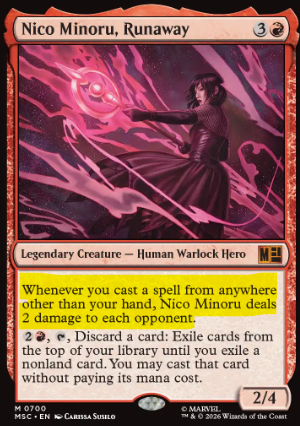
The first way to avoid the traps with Nico is to concentrate entirely on the casting a spell from anywhere part to deal two damage to each opponent. You’re ignoring the hail Mary tap ability entirely and focusing on essentially juggling your opponents into the corner with a multi-hit combo. The end result is similar to a Neheb, the Eternal deck, in that you’re making mana to burn face; the road to get there is entirely different, as you’re unlikely to play cards like Apex of Power and Crackle with Power, and much more likely to play all of the rituals you can get your hands on.
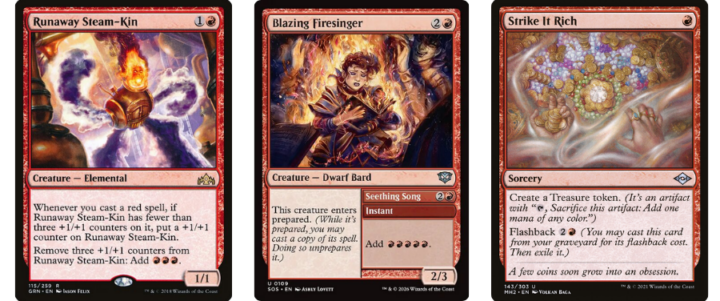
Hitting any of these spells when you’re “spinning the wheel” with Nico is guaranteed to feel terrible, and yet in the Spellslinger focused build of the deck, they’re excellent ways to keep mana production up and also trigger Nico. If you’re desperate to have topdeck manipulation to use Nico’s ability from time to time, you can throw in a Brainstone, Scroll Rack or Sensei’s Divining Top, and scry lands like Zhalfirin Void or Crystal Grotto.
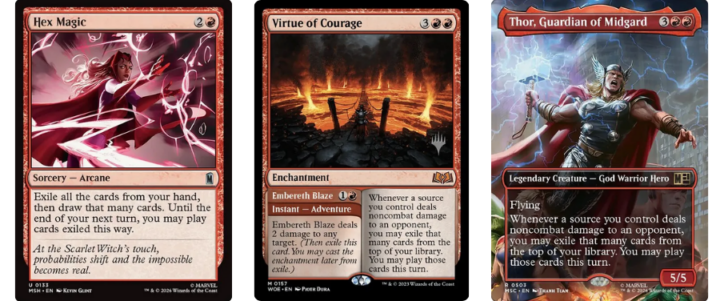
While you’d happily play Hex Magic in any version of the deck, it’s cards like Virtue of Courage and Thor, Guardian of Midgard that shine more in a Spellslinger build where you’re likely to be able to cast a bunch of lower mana cost cards you’re putting into exile. If you put these into a “big spells” version of the deck, you’ll see more cards but ultimately be able to cast fewer of them.
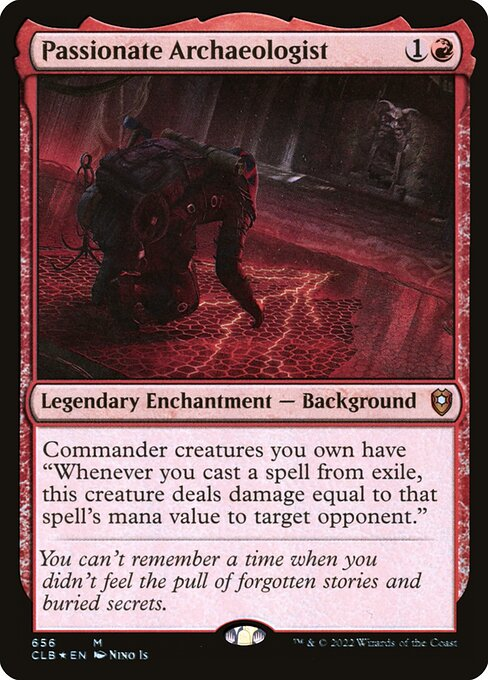
In this build, damage modifiers like Spiked Corridor//Torture Pit get better, as they can buff Nico and your Longshot, Rebel Bowman or Coruscation Mage. Turning all those one or two damage triggers into three or four damage when you can chain rituals and make treasures is a lot better than trying to buff the odd Nico trigger when you’re predominantly casting fewer spells in a turn.
BIG SPELLS/COLORLESS/WELDER
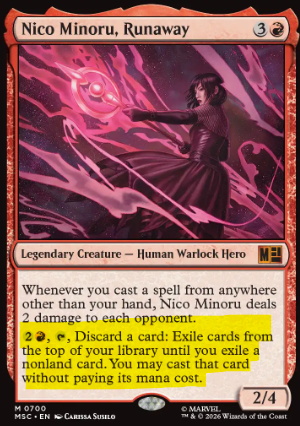
If you’re more interested in spinning the wheel with Nico, then I’d advise you to steer away from the Spellslinger build’s approach and really lean into the chaos aspect, while playing big haymakers.
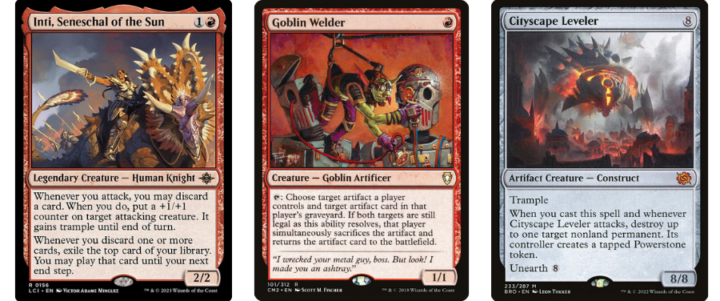
Early game discard outlets like Party Thrasher and Inti lend themselves well to a Goblin Welder and Daretti graveyard engine – just as Nico does, discarding to use her ability. Filling the deck with heavy artifact hitters like Cityscape Leveler – as well as the biggest meanest Eldrazi you have – ensures that your Nico triggers can cause chaos.
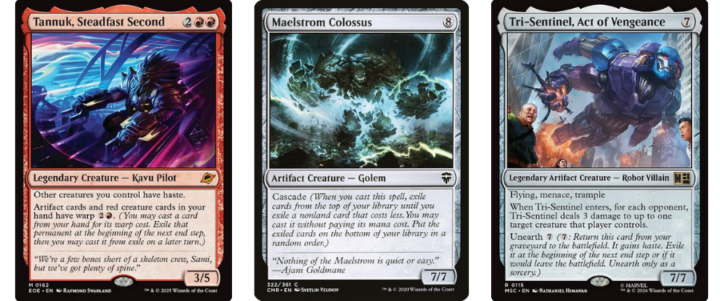
You’ll want to consider completely different cards for this build, like Tannuk as a backup way to get big spells into play alongside your Sensei’s Divining Top or Scroll Rack. Maelstrom Colossus straddles both themes, and Tri-Sentinel is a new beater that you’d love to cheat out early.
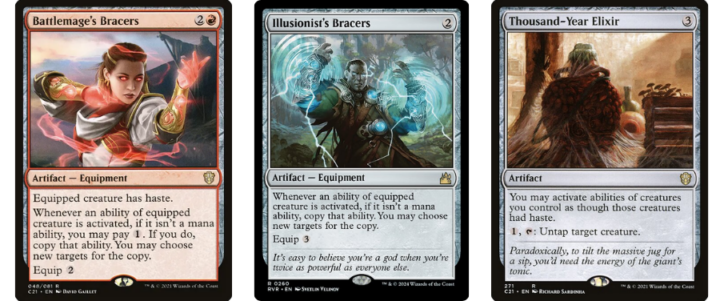
Because you can still miss on your Nico ability – and because you’re spending more mana and have more expensive cards – you’re much more likely to play the ability copier effects in this version of Nico.
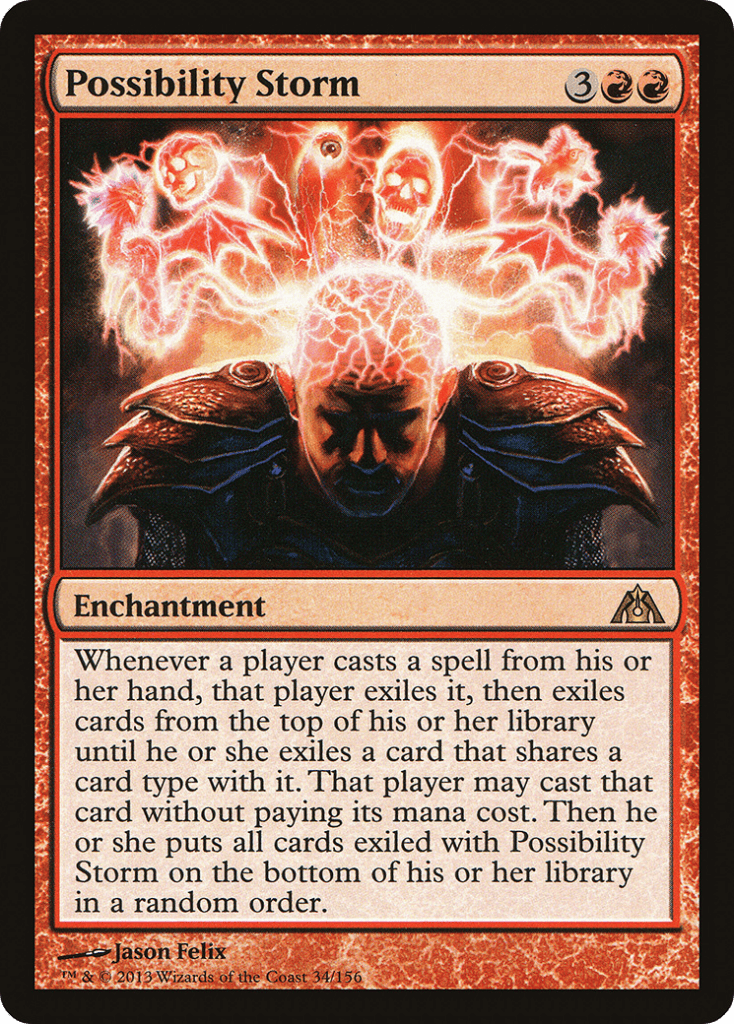
Oh, and if you’re thinking of being extra spicy? This is the version of Nico that runs Possibility Storm, no doubt. Have fun 😉
END STEP
Building Commander decks is always fun, but sometimes you can end up with a deck that just isn’t quite hitting. You should really consider what the Commander is asking you to do, and think about whether your current build is satisfying that requirement.
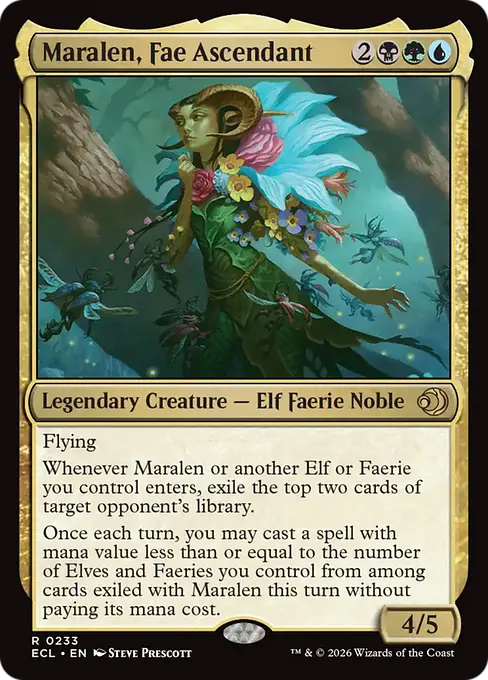
Think about Maralen – she’s Elf and Faerie typal, sure, but it’s much easier to curve out with Elf mana dorks and run a few choice Faeries if you’re trying to max out on her ability as soon as possible.
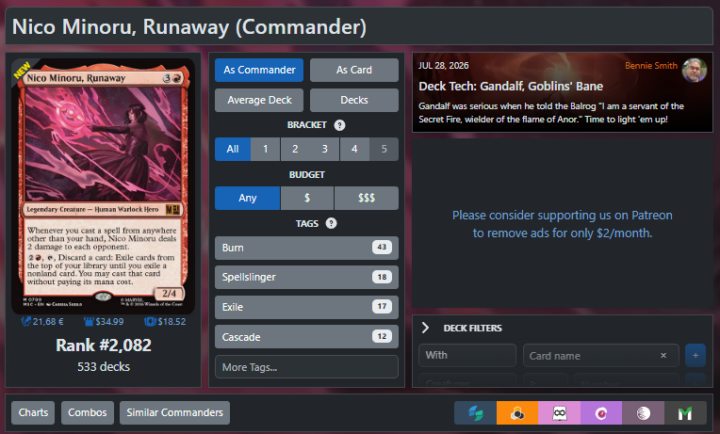
Finally, make sure when using a site like EDHRec to use the filters when you’re not sure. The average of cards on the front page of a Commander is exactly that – an average. The average for a Commander with different build possibilities will always give you a less cohesive deck.
Now that I’ve conquered a fun B2 build, I’ll be moving on to min-max a spellslinger version of the deck. While there are no doubt easier Commanders to build than Nico in this space (in Izzet especially, or even just using Longshot, Rebel Bowman), there’s something to be said about choosing a card because it seems cool to you. Don’t let optimizing beat out your personal expression, especially in lower bracket games.

Kristen is Card Kingdom’s Head Writer and a member of the Commander Format Panel. Formerly a competitive Pokémon TCG grinder, she has been playing Magic since Shadows Over Innistrad, which in her opinion, was a great set to start with. When she’s not taking names with Equipment and Aggro strategies in Commander, she loves to play any form of Limited.