

Secrets of Strixhaven is showing us parts of Arcavios that lie beyond the bounds of Strixhaven School, but this is still a set primarily themed around mage academia. The mechanic which really anchors that theme is “prepare” – a new ability which, appropriately, lets creatures learn to cast their own instants and sorceries!

On the surface it may look like a slight remix of adventures or omens, but don’t let the similar card frame fool you – this is a whole new field of deckbuilding research!
So what unique quirks does prepare hold? Study up on the answers with me and you’ll be ready to incorporate these powerful cards into any format.
PREPPIN’ AIN’T EASY
The play pattern for prepare (the steps to actually use it in game) is relatively straightforward. Each card with prepare is a creature that then offers you the ability to cast an instant or sorcery “sub-spell” specific to that creature. Unlike adventures and omens, you have no choice about which parts of the card to cast: you always need to cast the creature first, then follow up with its prepared sub-spell while it’s still on the battlefield.

There is an upside to this relative fragility, however. The prepared sub-spell can normally only be cast once; however, if certain conditions are met the creature’s “prepared” status will reset, and its sub-spell can be re-cast. The tricky part of prepare to learn is how to deckbuild around it, as it interacts poorly with some common support effects.
Firstly, the prepared spell’s characteristics are effectively invisible except for when a copy has been cast and is on the stack. In all other zones and for all other purposes, these are simply creature cards. This affects everything from tutoring and recursion options to your deck’s companion eligibility.
It’s also important to note that when you cast a prepared spell, you’re actually casting a copy of the spell from exile. You can imagine that the copy is created once the creature is on the battlefield and becomes “prepared”, and is exiled if the creature leaves the battlefield or once it resolves.
One consequence of this is that the sub-spells do not work well with “freecast” effects or red’s “exile then play” version of draw spells.

We’ve seen freecasting be super-effective with adventure cards in the past, since in that case you can use them to play either side of the card. But to freecast a prepared sub-spell requires wording that is highly specific (Charred Foyer//Warped Space) or extremely open-ended (Omniscience)… and you still need to put the creature in play first.
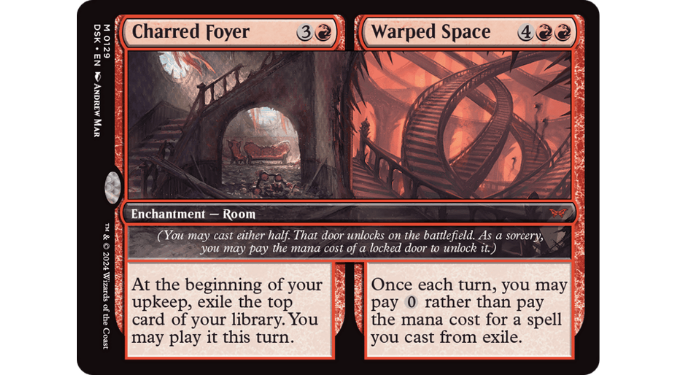
But it’s not all bad news. Prepared sub-spells still work fine with cost discounters like Dirgur Focusmage, or mana-refunding effects that trigger on cast like Stormkiln Artisan. We can also harness the narrower but still valuable pool of effects that support copied spells and spells cast from exile.
In fact if we take a step back and think big picture, being a creature card is actually a significant upside in most cases. Creatures are the easiest type to milk value from, given the ease with which they can be tutored, recurred, discounted, cloned, flickered and so forth. We just need to find the right balance of creature and noncreature synergy to make things pop.
STUDENTS OF THE GAME
I’m making a lot of general statements here, but obviously prepare cards are not intended as an axis of synergy you specifically build around. Not only does the mechanic appear in all five colors, the creatures and sub-spells vary wildly in their effects and apparent strategic purpose.
A lot of prepare cards mimic designs you’d see in other sets as ETB effects or other triggered abilities that go directly on the creature – just with the triggered effect delayed until you go through the motions of casting a second spell. Compare Encouraging Aviator to Aerial Guide, Studious First-Year to Farhaven Elf, or Emeritus of Conflict to Captain Ripley Vance.

In most of these comparisons the prepare cards seem to be slightly more expensive, if you consider the combined cost of creature and sub-spell. They do let you split that cost over multiple turns (or delay the effect for tactical reasons), but waiting is also risky if the sub-spell is a sorcery or you can’t afford to cast it in response to removal. None of these cards are very exciting if you look at the creature side on its own, so failing to cash in the prepared spell at least once is a much nastier blowout than I expected from a new mechanic in 2026!
So if we take for granted that prepare cards are the high-risk, high-reward option, how do we maximize the rewards?
The biggest payoff is obviously managing to prepare and cast the sub-spell multiple times off one copy of the creature. Each prepare creature has a different trigger condition for when it becomes prepared again after casting its sub-spell, most of which are easily met or linked in some way to the effect of that spell.

If you’re evaluating these as upgrades for an existing deck, you should be able to figure out how the sequence of “play creature, cast sub-spell, prepare again” fits into your curve for each card. If it seems like you could meet that preparation condition without going totally out of your way (or you can extract value from an extra cast trigger) then I think the argument is there to try out the prepare version of that effect.
If you can’t justify prepare cards using that logic, then consider this: in Secrets of Strixhaven, every prepare creature also enters the battlefield with the first use of its subspell already available. Any deck which is already comfortable multiplying the value of creatures by flickering, cloning or sacrificing + reanimating them can use its engine to reset that initial prepared state and bypass difficult or non-existent preparation conditions.

Not to be the guy yelling “wow – they broke Displacer Kitten!” but perhaps the cleanest use case for prepare is the interaction between that four-mana Commander staple and Skycoach Conductor.

The “All Aboard” sub-spell can’t target the Conductor itself because it’s a Pilot. But no such restriction applies to Displacer Kitten triggers, allowing you to repeatedly flicker other targets for one mana apiece while Kitten flickers the Conductor each time to re-prepare the spell!
If there is a competitive advantage to bundling lots of prepare cards into one deck, this is it. Flatten their different play patterns into “delayed ETB effects that count as casting a spell”, and you can build a one-size-fits-all value engine around repeatedly casting whichever ones suit the situation.

ALPHA ACADEMICS
I don’t know if the MTG community has a consensus answer for “Which deck or playstyle is the most Wizard-ly”. But mixed creature-and-spell lists like Wizards or Prowess are probably closest – so it feels right to me that this is where these new Strixhaven cards seem to fit in.
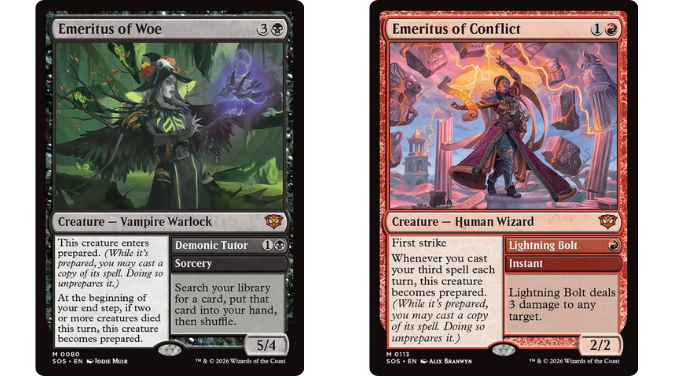
I’d also like to applaud whoever decided that sub-spells which duplicate classic cards should just be named after those cards. Suddenly, it feels like these iconic spells Magic players have learned to love (or fear) over the years are actually being learned as magic spells by the wizards of Arcavios!

Tom’s fate was sealed in 7th grade when his friend lent him a pile of commons to play Magic. He quickly picked up Boros and Orzhov decks in Ravnica block and has remained a staunch white magician ever since. A fan of all Constructed formats, he enjoys studying the history of the tournament meta. He specializes in midrange decks, especially Death & Taxes and Martyr Proc. One day, he swears he will win an MCQ with Evershrike. Ask him how at @AWanderingBard, or watch him stream Magic at twitch.tv/TheWanderingBard.