

After years of writing guides on how to approach Draft strategy for specific sets, I wanted to provide a companion piece: a more general guide to good Draft gameplay.
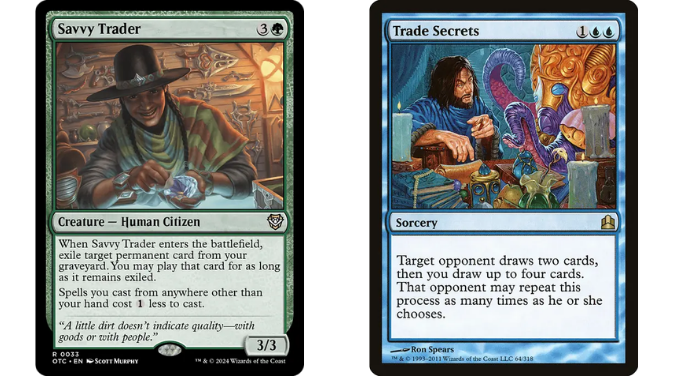
Last week I began that guide by explaining from first principles my mindset for Limited: one which looks at the net loss and gain of resources triggered by each decision. It’s hard to get something for nothing in Magic against a competent opponent, but at least by understanding these concepts you can try and ensure that you take trades which are ultimately more painful for your opponent than for you.
BALANCING THE LEDGER
Last week we briefly listed the main types of resource that you can trade with in Magic: life, cards in hand, available mana, and board presence (a.k.a. creatures and other cards on the battlefield which contribute to combat).
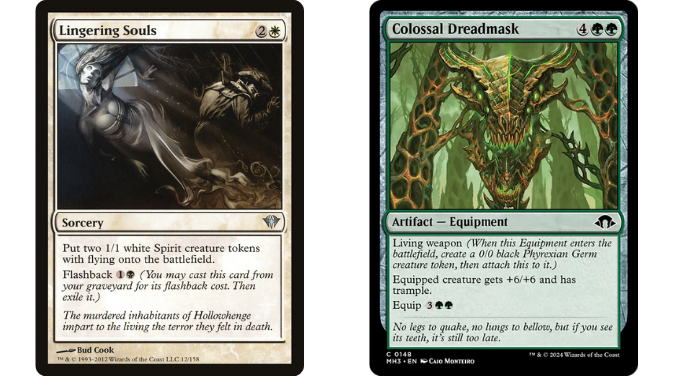
Generally speaking, board presence is the most valuable and important of those. You have to invest cards and mana to create board presence, and having a lot of it is the best way to protect your life and reduce the opponent’s. The least valuable (and therefore best to try and spend in trades) is mana, since you get a decent amount every turn and lose any of it that you can’t spend within that turn cycle.
But trying to figure out which resources are more or less valuable on average isn’t very helpful. In actual games the most valuable resource is always the one you’re missing – being critically low on any of these will badly bottleneck your gameplay and make it hard to utilize the resources you DO have.
For example, a common bit of Magic wisdom is “only the last point of life matters”, but that’s a dangerously simple way to evaluate it.
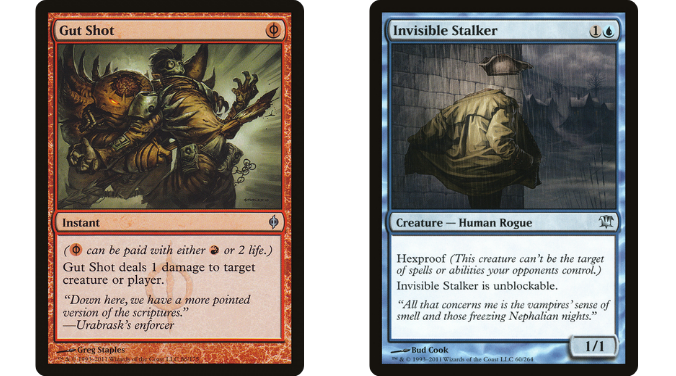
Being on one life forces you to play both incredibly defensively (to avoid taking any stray hits) and aggressively (because every draw of your opponent’s could be something that finishes you off). You have to be massively ahead in every other area to even hope for a comeback in those situations.
Being on five life is a bit better, but you’re still only one or two decent shots away from death, and forced to hold back powerful creatures to block because you’ve completely exhausted your ability to takes life-based trades. That kind of unhappy situation is what we’re trying to avoid for ourselves (and create for our opponents) and it’s why the basic rule of trading is to try and balance resources: buy low, sell high so to speak.
KNOW YOUR PRODUCT(S)
Despite referring to these resources collectively to this point, they have enough unique qualities to be worth breaking down individually. It’s also important to understand what we do with a surplus of each resource, since that’s the biggest factor in dictating what trades we look for.
Life

The fundamental resource, and the only one which we start every game in a definite surplus of. You don’t need 20 life to win at Magic, so at least in the early game of Limited you’ll almost always be sacrificing life if that can buy you anything else. For example:
- Not blocking an attack if your creature would die (or even if there’s a good chance it would, like the opponent having mana for a trick).
- Paying life to have a land enter untapped so you can cast a bigger creature this turn.
- Casting a draw spell instead of a blocker to try find your next land drop (since you only get one per turn, land drops are also an important resource to use early on).
- Taking a small hit from a creature you could kill with a removal spell, so you can save that removal for a larger threat later on.
All of these scenarios describe trading your own life total, but damage to the opponent’s life total is also relatively low value in the early game. You’d rather use mana efficiently and play a larger spell than cast a cheap haste creature, even if the haste creature has a window to attack unblocked this turn.
Most players learn early on that they can spend their life aggressively, so the hard question is when you need to start trying to protect it. The short answer (in my book) is around 10-12. The long answer is dependent on how bad your current board state is, how much instant removal you’ve got to stop sudden big threats bursting you down, and what kind of potential your deck has to gain life back.

This is why I always try and mention the presence of playable lifegain cards or common lifegain mechanics in my Draft guides for each set. In a set like Lorwyn Eclipsed, the plentiful lifegain means you prioritize your board presence and avoid chump blocking at all costs – so long as you get enough total blockers in play to complicate their combat math, you’ll be able to recover your life total and avoid that “in check” scenario I described earlier.
Mana

Mana is weird because it’s the only resource Magic players are comfortable wasting – only a few decks can reliably spend 100% of their available mana on 100% of their turns in a way that’s impactful. To be clear, I’m talking about “how much mana you can produce and spend this turn” here not how many mana sources you have in play, though the two are obviously related.
What’s interesting is how the challenging part of using your mana flips during the course of a game. In the early turns, the puzzle is how to sequence your land drops and your plays so that you can deploy your cards on curve without totally sacrificing early combat potential.
At this point in the game both players are usually producing and spending the same amount of mana per turn cycle, so mana advantage has more to do with the timing of how you spend it. If your opponent tapped out and your creature is the same size as theirs, attacking before tapping your own lands will almost guarantee they don’t block, since combat tricks are powerful and common in Limited.
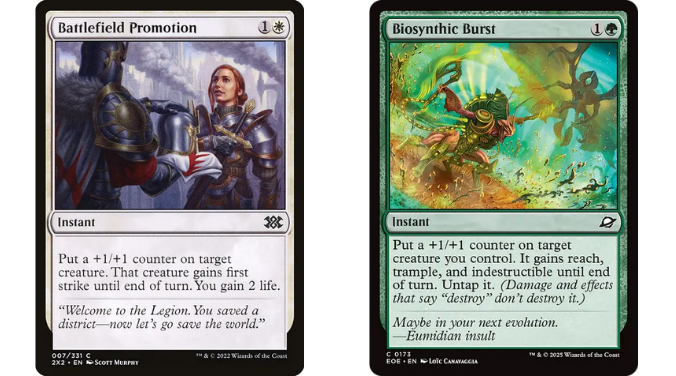
When you’re on the back foot early, finding a window where you can deploy a cheap blocker and still keep up one or two mana to cast an instant can be a huge turning point. You’re able to develop your board and represent a block that (hopefully) trades with an opposing creature – but even if the opponent has removal or a combat trick to trump it, you can use a second spell to negate the impact. This is why cheap removal spells are always such high Draft picks – even if they don’t answer every possible threat.
It’s also the reason you should strongly consider not blocking early even when behind, if waiting another turn lets you block with multiple creatures or with mana held up. Opponents can very commonly use removal or a trick to beat one blocker and keep their momentum, but adding a second blocker which also trades on is more than twice as hard to attack into profitably.
Once you’ve reached the top of your curve though, you’re suddenly playing with a mana surplus, where most decks are now struggling to find good ways to invest their mana – either drawing cards so they have more spells to cast, or playing cards with activated abilities they can use when their hands are empty.

If you reach this phase of the game and only one player has access to such a mana sink, they will inevitably take more and more of a lead over a longer game. The only way to counteract this as the player spending less mana is to shorten the number of remaining turn cycles – to accelerate the pace at which both players are losing life and trading cards.
Playing “high tempo” like this means you will have to be willing to lose your own resources, but hopefully means they have fewer good options left on their turn to leverage their large supply of mana. You still need to try and conserve your own board presence, since that’s what allows you to apply pressure in the first place. But if their mana advantage continues to mount turn by turn you’ll very quickly lose the opportunity to take good combat trades anyway, so sometimes you must be committed to going all-in.
Cards in Hand

When I began playing Magic, card advantage was the unchallenged king – the fulcrum on which all strategic considerations balanced. The habit of referring to trades as “two-for-one” based on the number of cards each player lost to the graveyard comes from this era – and it’s extremely telling that there’s no consideration in whether those cards came from the owner’s hand or battlefield.
Nowadays the game of Magic moves much faster, even in Limited, and there’s a real threat that you can lose the game before you even manage to cast all the cards in your opening hand.
Removal spells are a bit less mana-efficient on average than they used to be, and more mechanics and cards exist to give all colors access to late-game mana sinks, even in Draft. Equipment, activated abilities on creatures, and abilities like Flashback or Adventure that let you get multiple uses from one spell all make it less likely that either player is reduced to true “topdecking” status.
How should we modify our play to acknowledge this shift? Simple: card advantage is still worth pursuing, but only to the degree you can prolong the game to use it.

This evaluation depends both on your deck construction and the current game state. If you’re playing a blue deck with a lot of spells that generate card advantage, then you should try and slow down the tempo – seek trades that reduce both players board presence, reduce mana spending and slow the rate of life loss until your advantage really starts to show.
Holding up mana with cards in hand to represent instant interaction WILL cause opponents to think twice about their plays, even if you’re not in blue. Leave as many creatures as possible back to block, and look to block in ways that kill off some of the attackers even if it means leaving others unblocked.
The more ahead you are on cards (or the more behind you are in life and board presence) the more you should give up on optimal value and just spend those cards however you can. Even if your trade is card disadvantageous in the present, it may end up looking very good compared to chump blocking or watching the opponent activate their mana sink turn after turn in a longer game.
Board Presence

The best resource situation to play towards in current Magic is simply having more power and toughness on board than your opponent – though the number of bodies those stats are split across and what keywords they have is also relevant.
Combat happens every turn, so cards on board which contribute to that are constantly generating meaningful value for you – even if they aren’t attacking or blocking, they are at the very least influencing the opponent’s decisions to attack or block. Saving points of life now adds up to a higher life total in the lategame, which gives you more options to take aggressive trades and more tolerance for bad luck if you can’t immediately draw answers for big-time threats.
Even in removal-heavy, slower decks, having strong board presence lets you all but ignore smaller attackers – this helps you save your removal spells AND any mana you’d have to keep available for them, allowing for more proactive plays and snowballing into quite the advantage over a full game.
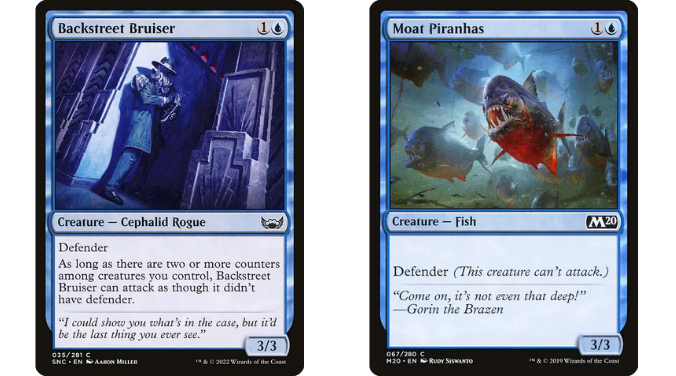
This is why blue decks often prioritize powerful cheap defenders – a 3/3 body for two shuts down so much early aggression that the card doesn’t need to do anything else to be good.
Decisions about when to use your removal spells should always be linked to your current board state. There’s a huge shift in mindset for me when a game reaches the “board stall” position – when neither player can attack because their opponent has sufficient creatures and life that they could set up extremely punishing blocks.
At this point having slightly larger or more numerous creatures becomes much less meaningful than before. Even large attackers tend to trade very poorly against huge multi-blocks, and so long as the defender has enough life to let some of your attackers through, they often kill enough attackers that you can never profitably attack again.
In a board stall, the only creatures that matter are those which can generate advantage in spite of blockers (thanks to evasion, direct damage or mana sink abilities) and those which trade hyper-efficiently in combat thanks to some combination of raw stats and combat keywords: deathtouch, first strike, indestructible, menace, etc.
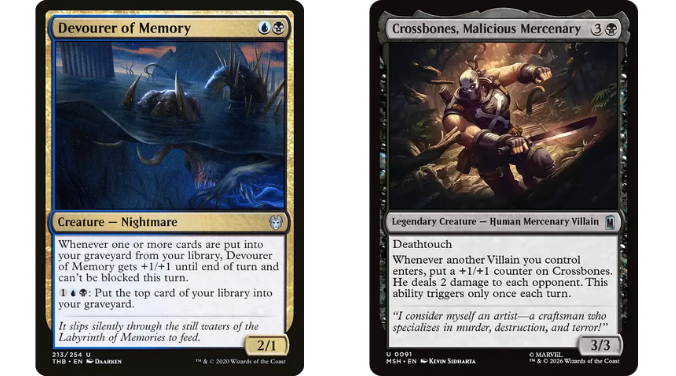
If such a creature appears and you don’t have removal for it, your only hope is having A) enough creatures to multi-block and kill it, plus B) enough life to leave all the other potential attackers unblocked and still have a defensible position after the dust settles.
Even if your multi-block trade goes through without the opponent interfering, it might actually increase the damage you take next turn – they lose one attacker, but potentially “unlock” an equivalent amount of power by clearing the way for their smaller guys that were previously not lining up well with your blockers.
The difference between this kind of catch-22 situation and getting a clean 1-for-1 trade with a removal spell (often spending less mana than they did on their bomb) is why your removal count has such a warping effect on a deck’s playstyle. When there are threats you cannot answer (or at least not without losing so many resources you die anyway), you have to be proactive and aggressive about reducing life totals so that you can kill the opponent before their bombs have a chance to swing the game.
NEW MINDSET > NEW INFORMATION
Writing Magic theory articles is a daunting task indeed, considering it’s such a cerebral game to begin with. You can’t really hone a physical aptitude or train to improve at Magic in any other way, so anyone remotely competitive about this game already spends all of their time thinking about how to optimise their play and every tiny choice within it.
I don’t know what the average reader expects when they click on an article like this one, which promises to share some strategic insights. But as I said last week, I find the greatest and most useful pieces on Magic theory aren’t trying to uncover some secret trick that 99% of players overlook.
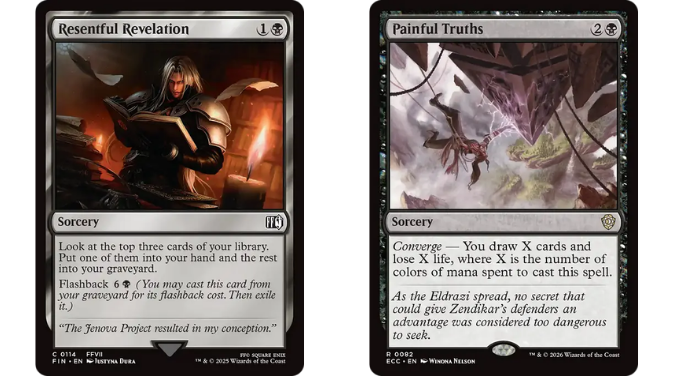
From figuring out who’s the beatdown, to understanding tempo, to Draft evaluation metrics, leveling up from good to great at Magic is often about taking a wider view of the basics, and systematizing choices that previously were made on instinct.
In particular, the ability to go from considering the best play on each turn to an understanding of how your choices over the next three or five turns link up to form a coherent strategy is a huge benefit any time you can manage it – especially in Limited, where individual turns and cards have less game-turning impact. I hope that this discussion of trading philosophy helps you find those plays in your own games!

Tom’s fate was sealed in 7th grade when his friend lent him a pile of commons to play Magic. He quickly picked up Boros and Orzhov decks in Ravnica block and has remained a staunch white magician ever since. A fan of all Constructed formats, he enjoys studying the history of the tournament meta. He specializes in midrange decks, especially Death & Taxes and Martyr Proc. One day, he swears he will win an MCQ with Evershrike. Ask him how at @AWanderingBard, or watch him stream Magic at twitch.tv/TheWanderingBard.