

I play Draft quite a lot. It’s my most-played format by a significant margin, and that experience helps me author Card Kingdom’s Draft guides for each new set that comes out – the ones you can read on this very blog!
Those guides focus on explaining which cards in that set are important, which decks are there to draft, and what you need to understand to draft them. But obviously drafting your deck is only half the battle, and my guides don’t have much room for tips on how to actually play the games.
So this week I want to try and explain my strategy for grinding and winning in Draft – the fundamentals which apply in every game and to every set. It’s all about understanding which resources you have more of than the opponent, and using that advantage to grind down the places they’re already weak.
TRADING IS LOVE, TRADING IS LIFE
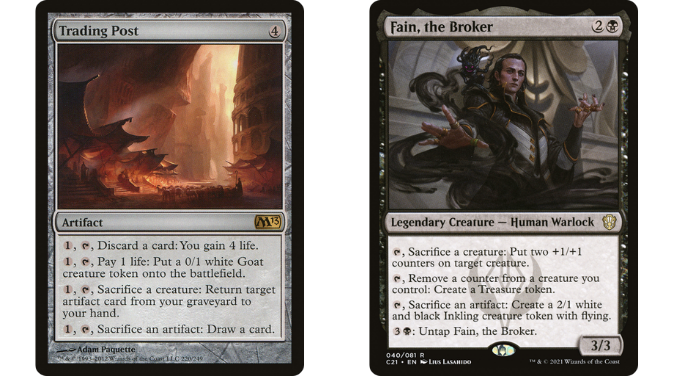
Trades happen constantly throughout every game of Magic, in every format. I see a trade any time players consume or lose an in-game resource, and by that definition they’re unavoidable. Even if both players agree not to block or use any removal spells, and just race to see who can attack for 20 damage fastest, they’re both still engaged in a series of trades!

Each time the active player decides to attack with their team, they are also deciding to leave themselves without untapped blockers on the opponent’s turn. They even know how much life that decision will cost them, minus any haste creatures or other ways to add power on the opposing side. Making that choice to swing is offering your opponent a trade: X points of their life (however much the attack is for) in exchange for Y points of yours.
Using a removal spell on their creature is a more classic trade: your card for theirs, one-for-one. But cards aren’t the only resource, or even the most important one in modern Magic. Using removal also expends your mana for the current turn cycle, whereas your opponent probably paid for their creature on an earlier turn and still has this turn’s mana available – not so even a trade after all.

But what if the creature was attacking unblocked and your removal spell saves you from taking a big hit to your life? Or the opponent had invested mana and cards to buff the target with equipment, auras and counters, all of which are now also lost in the trade? Needless to say, simply counting how many cards each player spent is not a reliable way to identify good trades in real game contexts.
LIMITED RESOURCES
There are quite a few resources players have in Magic, and every trade – basically every game action – shifts the metaphorical needle showing who has more of what. If I wanted to try and be cute and sum up all Magic strategy in one sentence, I might say “good play is trading things you can afford to lose for things your opponent cannot”.
But we apply that heuristic differently in Limited compared to Constructed. Decks in Standard or Modern or Commander are machines made of specialised parts. It’s foolish to try and simplify those games down to just “who has more cards” when the right two-card combo can instantly overcome any deficit in mana, cards and life total.

In Limited it’s very rare for a single card to reliably flip the momentum of a one-sided game – and if one can, you can least assume it will cost a lot of mana. Most spells have a roughly equal exchange rate of mana-to-game-impact, and both players inevitably share the basic gameplan of “control the board and attack for damage”.
These conditions make it much more relevant to zoom out and look at the game from that macro, resource-counting level – your win condition is just to take good trades every turn until your opponent dies.
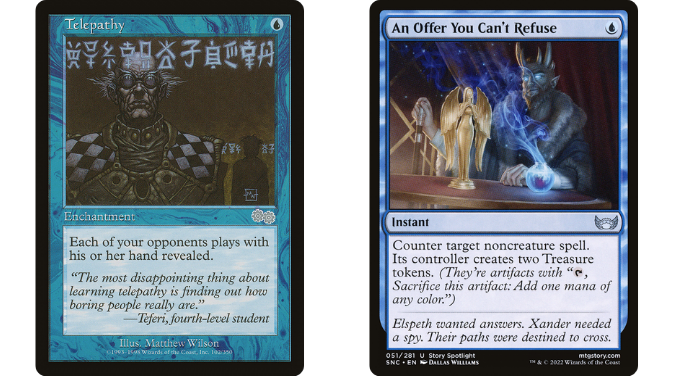
The main resources we have to trade with are life, cards in hand, mana, and combat-relevant permanents in play (a.k.a. “board presence”). Whenever we interact with our opponent, we’re probably paying a cost from one or more of these stockpiles – ideally, the one we think we’ll miss the least in the current game state.
Those aren’t the only resources worth tracking in Draft though. Unconditional removal spells are an irreplaceable strategic option, an insurance policy against threats you’d otherwise trade with poorly. Knowing how many are left in your deck changes how you “spend” the ones in your hand, as well as when you prioritize card draw. In longer games, or ones with mill effects, the number of cards in each library can become just as important as your actual life total.
But those first four resources stand out because they’re always relevant, and because we always know the tally for BOTH players. Your opponents life total and number of cards in hand are public information, and in the overwhelming majority of Limited games you’ll also know exactly what mana and creatures they’re currently working with. Knowing the opponent’s resources means you can try to trade your plentiful resource for their scarce one, forcing them to make harder decisions and take riskier or less efficient lines.
SPEND YOUR LIVES DEARLY
Now we understand the philosophy of why and when to trade, let’s look at how we actually “force” good trades to happen in game. Why would someone expose themselves to a trade that’s clearly on our terms?
The most common way for trades to happen in Draft is through creature combat. Opportunities to attack and damage your opponent are perhaps the most valuable and scarce resource in Limited!
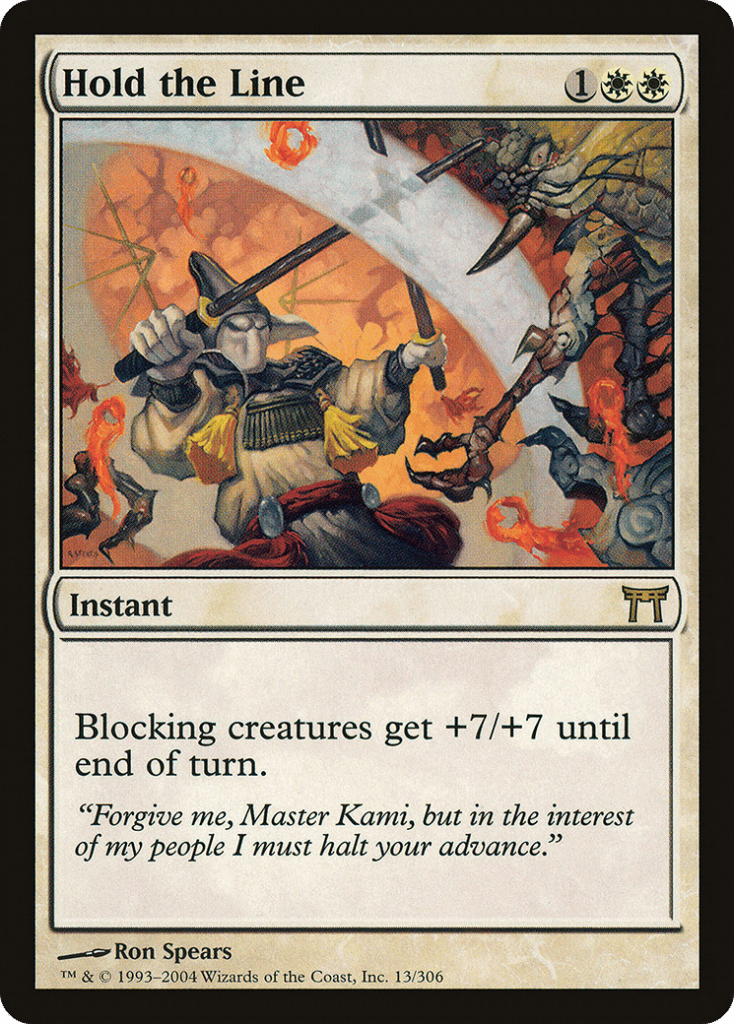
You can only attack once per turn cycle no matter how far ahead you are, and it usually takes a few swings to whittle the opponent down. This means players are incentivised to attack whenever their position is strong enough to come out ahead in that trade – keeping in mind that the defender chooses which creatures block what, and will usually make matchups that are the hardest for the opponent.
Now we can start to see the natural relationship between these resources emerge: stockpiles of cards and mana tend to convert naturally into board presence. Our board presence then converts, through combat, into damaging the opponent’s life total.
Theoretically, the worst thing to give up in a trade is board presence – your creatures already in play. Not only are the expensive and slow to redeploy, but every turn where you have a weakened board presence represents a lost opportunity to deal or prevent extra combat damage. In contrast, you can happily trade in any amount of your own life – until it gets low enough that it starts to limit what actions and trades you can take without risking death.

Experienced players understand this disparity in value instinctively. Think about early-game combat, when the board is simple and both players have plenty of life. In which of these scenarios would you consider blocking and trading in your creature?
- Your opponent has a 3/3; you have a 2/2.
- Your opponent has a 2/2; you have a 2/2 with flying.
- Your opponent has a 2/2 with vigilance; you have a 2/2.
- You both have vanilla 2/2s, but the opponent has mana to represent a combat trick and you don’t.
- You both have 2/2s with vigilance.
For me, only the third scenario makes me happy to block – mostly because the opponent’s vigilance removes my alternative of taking the hit and using my creature to smack them back. Chump-blocking a larger creature is sacrificing our valuable board presence to preserve a less valuable resource (life) – way too desperate a move for the early game.
Blocking an equal-sized creature is at least trading our board for theirs, so you could at least consider it in the right game state. If you drafted a deck that is very strong in the late game, then you might be happy to accept any even trades that keep your life total high and slow the game down. Or you might be playing red-black, which in many sets is designed to thrive when both players have very small armies – think abilities like menace, or spells like Sheoldred’s Edict and Act of Treason.

But it’s not just about what trades you think look good. If the opponent represents a combat trick, you risk trading your board for that trick instead of their actual creature.
The last scenario is the complicated one, precisely because it’s the simplest and the most even exchange! Our creatures are the same size, and both having vigilance means that even if I take the hit and swing back on my turn, I’m only offering my opponent the same trade they’re offering me right now.
Since not blocking costs me life without giving me any new options in future, the safe answer is just to accept the trade now and block. But that’s where the wider game context comes in. Why is my opponent happy to offer that trade, if it’s so even?
Maybe they have a recursion spell in hand and want a creature to die so they have a target. Are they so confident that trading cards and keeping both boards small is a winning situation for them? Maybe their hand lacks removal and they’re worried that if I buff my creature instead of trading it now, they won’t have any good answers?
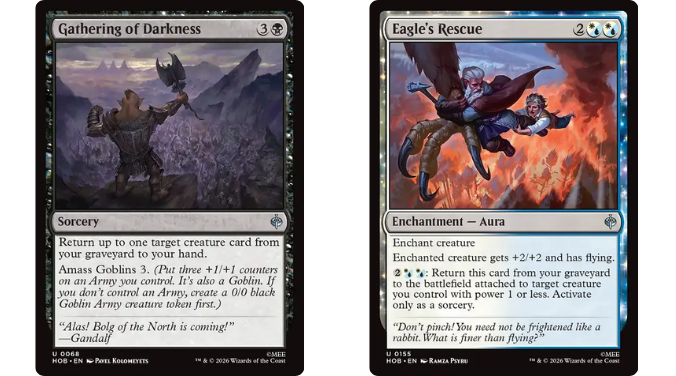
As backwards as it sounds, I think I would be prepared to take a hit or two on my life in that situation and try to find some better options for alleviating the pressure without giving up my creature.
NEGOTIATIONS ARE ONGOING
If you’re an experienced Magic player, perhaps right now you’re thinking “isn’t this all very obvious? Why are you explaining these basic situations so carefully, like you’re unveiling a great secret?
But my goal here isn’t to try and bamboozle you with puzzles or trick questions. I don’t pretend to have any secret knowledge that proves everyone else has been playing Magic wrong this whole time! But I think the best Magic theory articles are the ones which codify these instincts and principles every player knows, and define a framework for discussing and thinking about those ideas more systematically.
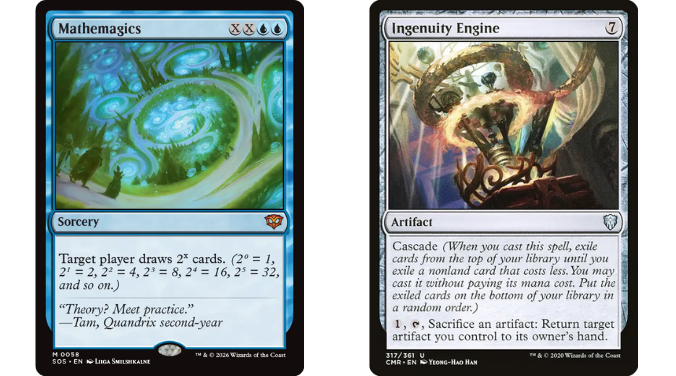
Just picking the “correct” play each turn of a game based on feel is different to having a consistent heuristic that helps you understand what makes it “correct”. Most importantly, if you know what makes that play feel correct, you can guess what opponents think are “correct” plays and use that to set them up.
We’ll go into much more on how to set them up in next week’s blog, where we will discuss how to engineer more complicated trade scenarios in your Draft games and use them to snatch victories from the very jaws of defeat.

Tom’s fate was sealed in 7th grade when his friend lent him a pile of commons to play Magic. He quickly picked up Boros and Orzhov decks in Ravnica block and has remained a staunch white magician ever since. A fan of all Constructed formats, he enjoys studying the history of the tournament meta. He specializes in midrange decks, especially Death & Taxes and Martyr Proc. One day, he swears he will win an MCQ with Evershrike. Ask him how at @AWanderingBard, or watch him stream Magic at twitch.tv/TheWanderingBard.