

Magic: The Gathering is the kind of game you can play forever, which is one of the most special things about it. Having players all over the globe – and nowadays on digital platforms – mean you can always find a time and place to play. If the games start to feel stale, don’t worry: there’s a huge variety of playstyles and formats you can try to get a fresh experience.
But there are still some big reasons why people fall out of love or drift away from Magic. And perhaps the most consistent one I hear about is the price of entry. Entrenched Magic players can sometimes lose perspective on how much is “reasonable” to spend on a hobby like this before it stops being fun. It’s a sad way to lose some of our best community members, especially because a lot of them would love to play Magic if it were just a little more affordable.
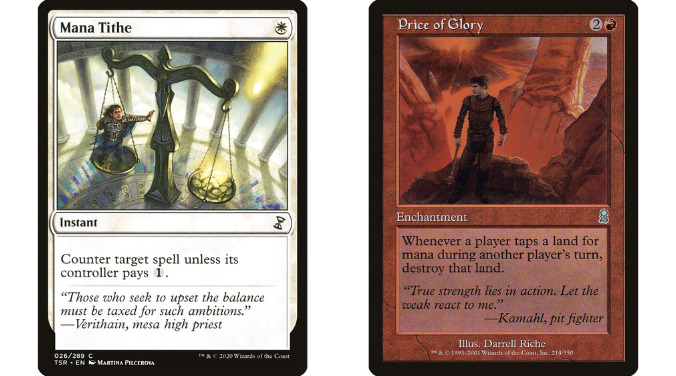
Well, the good news is that it can be! Within that huge variety of ways to play, Magic has more than a few formats which are welcoming of low-budget players – if not outright designed for them.
Value Vintage
The most obvious and certain option for playing affordable Magic is the format where low cost of entry is more or less the only rule! In Value Vintage, your entire deck (minus basic lands) has to be built on a $30 budget.

Maybe that sounds gimmicky at first glance, but it really does a lot to make this format approachable. You can pick out any deck or playstyle you like, and get the best possible version for less than the cost of a steak dinner! You also know that your opponent is playing with the same price limit, so there’s no disadvantage to being a budget gamer.
Another cool effect of the price limit is how it eliminates the need for any other deckbuilding limitations! Basically every card in Magic (that costs less than $30) is legal to play with – and given how market prices work, making more esoteric and underrated card choices gives you more bang for your buck.

The only tricky part is actually calculating what your deck costs. Using deckbuilding websites to build your list is more or less mandatory, so the total can be easily checked using current prices.
But don’t worry – unless you’re trying to enter tournaments, nobody is going to ask you to re-check your price total every match in case you’re a penny over. So long as you’re not blatantly ignoring the rule, you’re fine to keep enjoying your deck as-is.
“Forgetful Fish” a.k.a. Dandan
Sweeping the Magic community by storm in the last few years, Forgetful Fish is a new and different approach to the game. Neither Limited nor Constructed, it’s more of a board game or Magic minigame that you play using a fixed decklist and slightly modified rules. If you’re a fan of matchups involving counterspell wars and hidden information, or you find something quietly compelling about the card Dandan, then this is definitely worth checking out!
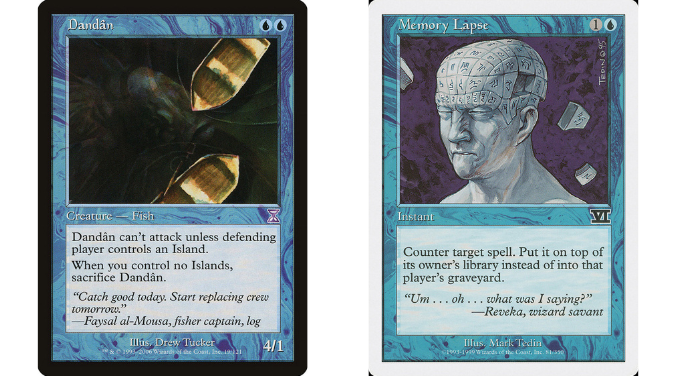
As mentioned, Forgetful Fish is played using a pre-set deck of (mostly older) blue cards. That’s one deck for BOTH players, by the way! That singular deck goes in the middle of the table and both players treat it as their library, which is the mechanic responsible for most of Forgetful Fish’s signature brain-teasing gameplay. When you both draw from the same deck, any spell that scries or puts cards back on top takes on a whole new meaning!
But the defining card of this format is the Forgetful Fish itself. Copies of Dandan are the only creatures in the deck and therefore the main threat to end the game. But even attacking with this odd-looking card can be its own puzzle to solve!
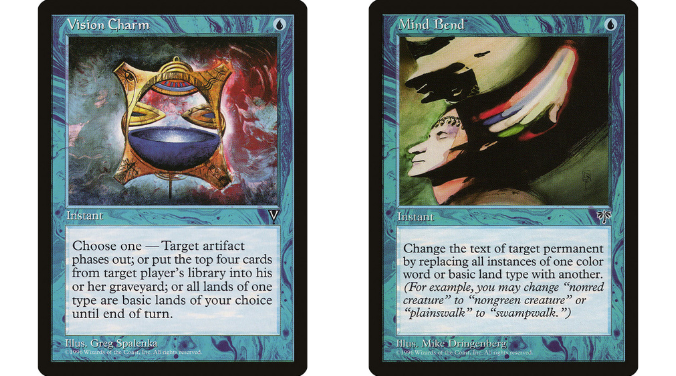
In terms of budget, you can technically play Forgetful Fish for $0 – if you can find an opponent who owns a copy of the shared deck. But even if you decide to “buy in” yourself, common versions of the Forgetful Fish decklist are about $130. That’s not bad for a deck you won’t need to update and which you can play even against friends who don’t have their own cards!
Even better, the surge of popularity and attention has led a lot of Magic players to tinker with their own “minigame” formats and decklists spinning off the Forgetful Fish formula into other colors or playstyles. Many of those lists are even more affordable and approachable, so give this fascinating niche of Magic a closer look!
Cube Draft
What about players who prefer the variety and strategy of Limited over Constructed? Can you enjoy regular Draft games without running up the bills for booster packs? The answer is a pretty straightforward “yes”, so long as you can find a friend with a cube – or build one yourself.
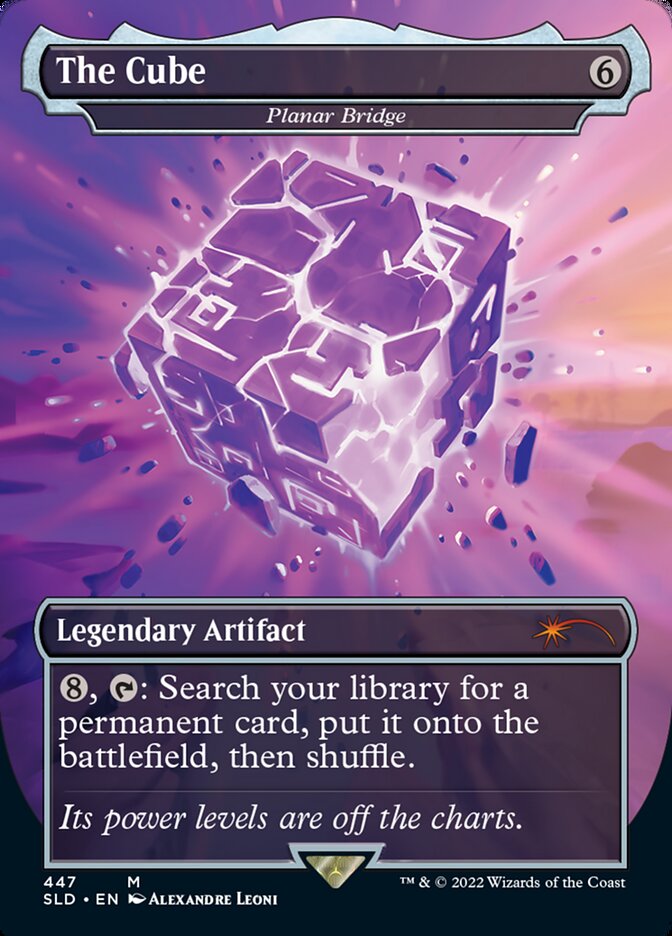
If you’re not familiar with Cube, the idea is to set up a custom Draft set (usually a few hundred cards), randomize it into discrete “boosters”, and then draft it with your friends. While buying hundreds of cards is going to set the entry price a little higher than for Value Vintage, a lot of players build their cubes from their favorite old cards they already own.
The key is to not be too overwhelmed by the magnitude or complexity of the task. Look up some recommended ratios of creature to non-creature spells and balance the number of cards in each color, and then get stuck in drafting ASAP. You’ll learn what you like and what you want to change about the experience faster by getting, well, experience.

Of course you don’t necessarily need to take on the challenge of assembling your own custom Cube. If you’re just excited to draft you can always copy a popular, battle-tested Cube list from sites like CubeCobra – or you can go to your LGS and loudly ask if anybody could please tell you about their cube! Players who have already made the investment in building a cube are naturally keen to find chances to play it, making Cube Draft a large and welcoming subset of the Magic community.
Low-Power Commander
As the most popular and spotlighted format of the past decade, it seems very important that there be ways to enjoy Commander specifically on a budget. Even among my own Magic-playing friends, a majority only know and play Commander, not 60-card or Limited formats.
Maybe this doesn’t seem like a difficult problem to solve: Commander’s whole identity is as a casual, play-what-you-like type experience. Virtually every card is legal and with no stakes, there’s no pressure to keep up with a bullying competitive metagame… right?
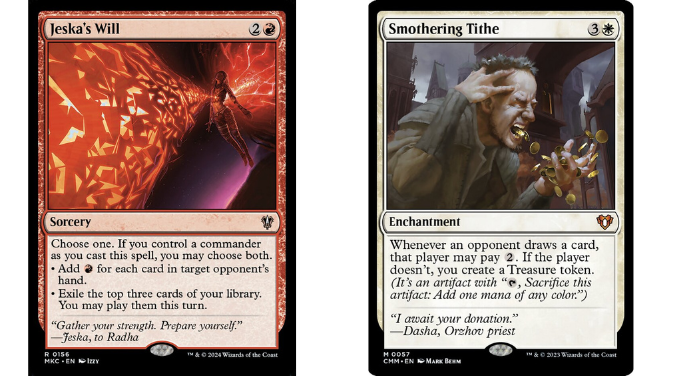
Unfortunately, just because there’s no prizes for winning doesn’t mean it’s fun to lose – or more specifically, to be uncompetitive in a game. Even casual Commander at the upgraded-precon power level has a distinct metagame, where some strategies and card types have much greater utility.
Commander is about telling a fun, competitive story – you need to be able to affect the flow of the fight, and ideally feel like you’re in with a shot to win, which means that the power balance and matchups between decks DOES matter a lot.
This is why I was so happy to see Wizards take the initiative and put out an official tiering system for Commander earlier this year.

You could argue those brackets are just common sense, but the fact they come “official” from Wizards makes all the difference. Now the community has one clear-cut reference point for what tier a deck is in (and which “game-changer” cards are so impactful as to alter that status).
You could try any or all of these brackets to suit your taste and experience the differences in gameplay. But from a budget perspective, I see brackets 1 and 2 as a perfect level for building very cheap commander decks. Even if you can’t afford rare lands or powerful format staples, you’re unlikely to fall too far behind – and you can run whatever weird and wonderful cards make you happiest.
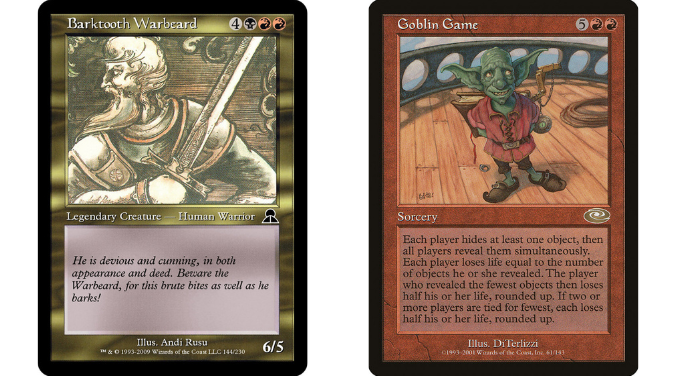
Either get your regular Commander group on board for some low-power nights, or show up to your LGS and make it clear you’re looking to play bracket 1 or 2. Either way, you should be confident you’ll find yourself in an engaging and tense Commander narrative without breaking the bank.
DON’T SAY THE B-WORD
I don’t think that the price barrier is just about managing expenses. The need to constantly keep up with a metagame and replace old cards with new, to play what is optimal – it also alienates players from their favorite cards and decks, and makes them feel that the version of Magic they know and enjoy is gone.

A lot of these formats offer budget but also the chance to play the cards you want Other metagames sometimes offer “budget decks” that give you a chance to be competitive on a low price tag. But being forced to play a specific niche deck as a plucky underdog is only going to satisfy a handful of players.
In the formats we’ve looked at today, you can save your budget and still enjoy a full, rich Magic: The Gathering experience.

Tom’s fate was sealed in 7th grade when his friend lent him a pile of commons to play Magic. He quickly picked up Boros and Orzhov decks in Ravnica block and has remained a staunch white magician ever since. A fan of all Constructed formats, he enjoys studying the history of the tournament meta. He specializes in midrange decks, especially Death & Taxes and Martyr Proc. One day, he swears he will win an MCQ with Evershrike. Ask him how at @AWanderingBard, or watch him stream Magic at twitch.tv/TheWanderingBard.