
When you think about it, Draft plays an important role for Universes Beyond sets. Only a handful of the cards in Marvel Super Heroes are destined to find a lasting place in the metagame of Standard, Commander, or other Constructed formats. Even then, they will typically be just one or two Marvel cards playing a role alongside cards from other sets, like the Superior Spider-Man reanimator deck.
Drafting a deck might be intimidating if you’re not used to it, but Limited is the best way to experience Marvel Super Heroes in full. You get to play with and against all the cards in the set, from common to mythic rare. Not only does that give more of these characters a chance to shine, but you get to notice and appreciate all the cool synergies and matchups the designers build into the set – the things that really make it feel like a faithful adaptation of the comics and films.
If that’s got you excited to give Marvel Super Heroes Draft a shot, then read on for our official Card Kingdom primer!
SHAPE OF THE FORMAT
It took a few drafts for this to dawn on me, but the design team really have created a “superhumans and mortals” dynamic among creatures in this set. Some creatures, mostly superpowered heroes and villains, have really high solo impact on the board compared to others and will carry the game for you if not met with equal force.
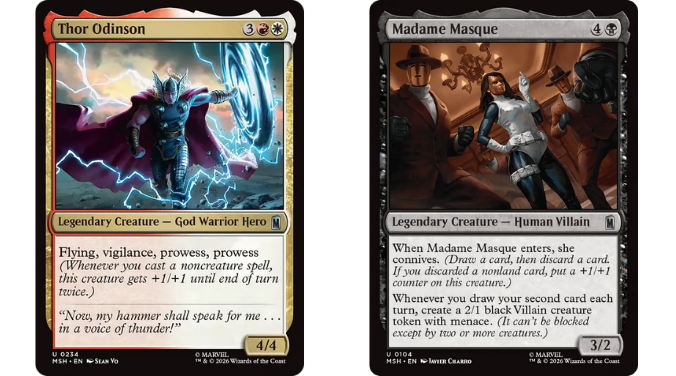
The rest of the creatures are remarkably pedestrian. Even the gold uncommons you expect to be the better cards holding your deck together have poor stats for their cost. That by itself isn’t totally unusual, but normally that statistical inefficiency would be offset by powerful enters triggers, static abilities, or other text which allows the card to have an immediate impact on the board state.
But not in Marvel Super Heroes – there’s scarcely two or three such creatures in the whole set! Instead, the non-superhero creatures are almost always built around synergistic triggers and abilities which don’t pay off fully until you start to put multiple of them on the battlefield together.
It’s a very interesting paradigm and clearly one the design team have created intentionally. I will admit it’s a flavor win to have heroic figures like Thor or Hulk feel unstoppable and mighty against the massed goons and frail schemers of H.Y.D.R.A.. But from a hard-nosed Draft strategy perspective, it does lead to some problems.
I don’t actually have an issue with how strong the various heroes are: there’s a lot of good removal in the set, and most of it will take down any target regardless of size. But when you make so many creatures so dependent on synergy and engine-building to be worth their mana cost, it becomes much more difficult for players who fall behind on the early turns to stabilize the board.
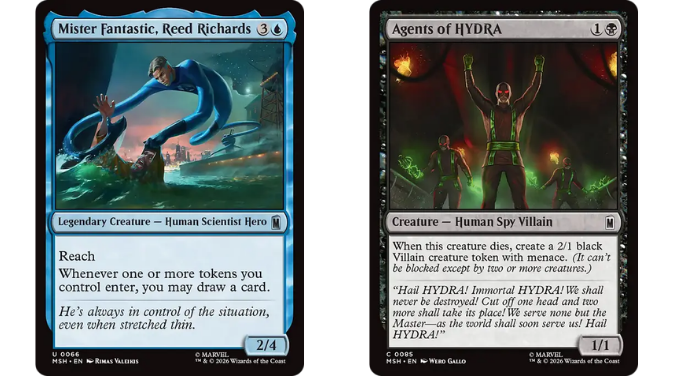
Unless you’re in green, you simply can’t rely on being able to draw and cast a big four- or five-drop and scare off their small attackers. Look at the stats on Baron Strucker, Madame Hydra, Beast, Hawkeye, Mockingbird, Mister Fantastic… so many of these key uncommons are totally unfit to block even if you cast them on curve.

Not being able to stabilize with blockers alone makes those removal spells even more essential and dominant. You NEED them: to answer opposing superheroes, to catch up if the opponent has a better start, to break up an opposing synergy engine if you’re not able to pressure their life total before it’s set up.
I know that saying “removal is good” is not the kind of Draft advice people pay big bucks for! But I need to convey to you how much MORE priority efficient, unconditional removal is in Marvel Super Heroes than even an average Draft set.
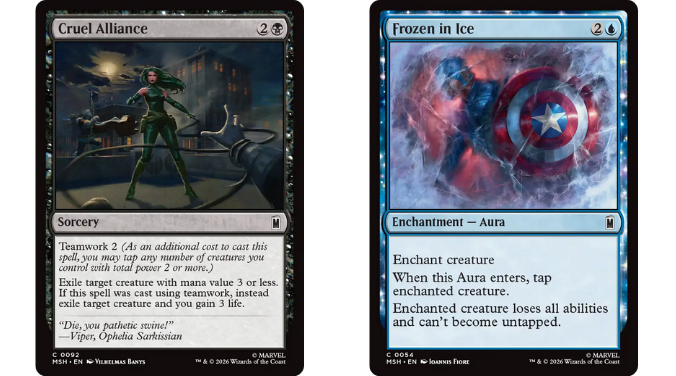
If a pack has a removal spell that costs three or less, I am taking that spell over everything except the most SSS+ tier bombs. I’m don’t even care what color it is. I will hard pivot to two new colors in the middle of pack two because I got offered Cruel Alliance and Frozen in Ice back to back! These are essential tools for every color and archetype, so ignore them at your peril.
COLOR THEORY
This part of the set at least is relatively simple. You should almost always be playing a classic two-color archetype in your final deck, with the potential to splash a few off-color pips. Exactly how many depends on whether you’re able to draft enough of the limited fixing tools to add consistency. Of course, it is possible to play three or more colors if your splash cards are good enough, or if you find enough fixing.
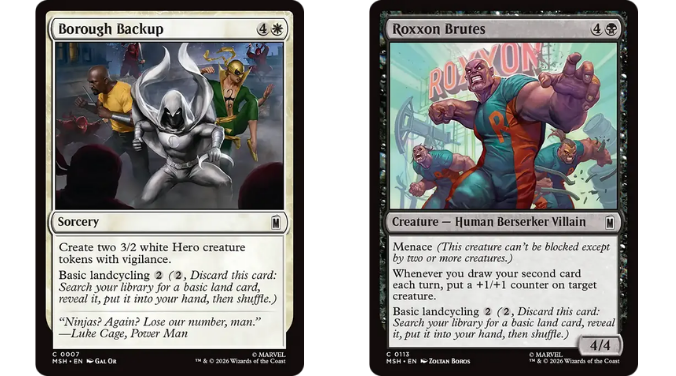
The “big creature landcycler” cycle isn’t as amazing here as it usually is, but they’re all still perfectly castable cards and offer pretty good stats, so you can play up to three or four copies without much issue. I’m prepared to take both the landcyclers and multicolor lands fairly early in packs, if only because they’ll always make your final deck (if you’re in those colors).
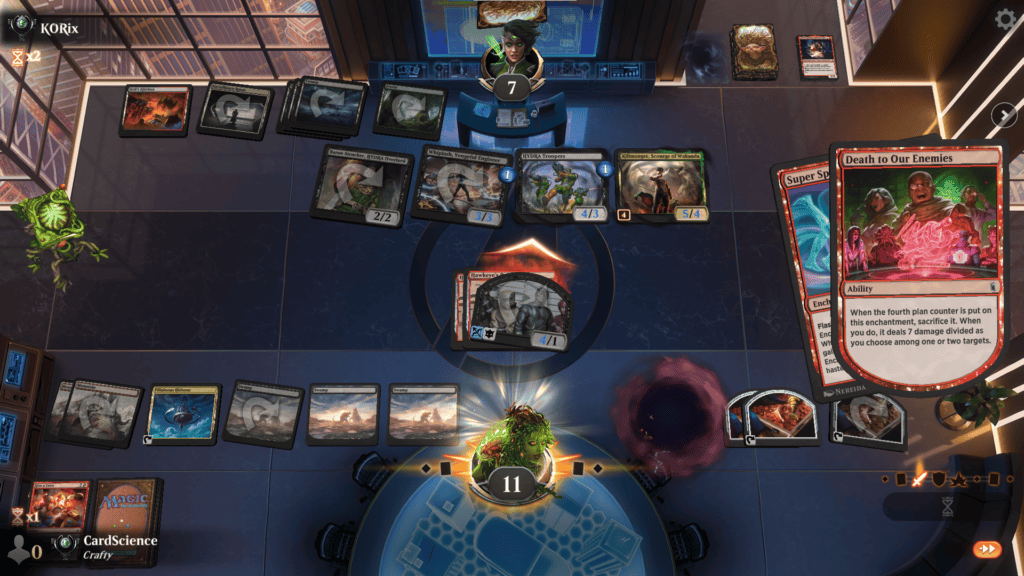
When it comes to ramp, green gets a pretty strong mana dork in Undercover Skrull, along with Ant-Man’s Army and Restorative Technique. Other colors are stuck with the less-playable Dependable Quinjet, or treasure generators like Stark Industries Executive and Death to Our Enemies.
You can obviously also play a mono-color deck if you get enough playables. But there are not really many payoffs for doing so: it’s pretty much Baron Helmut Zemo as a mono-black opener, and possibly Namor in blue.
If you don’t find yourself wanting to force any specific colors, then I advise chasing removal as I mentioned above, and then trying to increasingly pick up good, efficient creatures once your removal decides your colors.
ARCHETYPE BREAKDOWN
As I mentioned above, not all the mechanical themes in this set feel equally viable or supported. I would say that white, black and green have the most well-defined identities, so they tend to define the playstyle of whatever deck they’re in.
That isn’t to say that red and blue are worse colors – blue in particular has many good cards. But blue as a whole is less cohesive and thus a trickier “lead” color in this set. It’s harder to pivot from blue-black to blue-red or blue-green in pack two of your draft (since those decks want different kinds of blue cards), compared to pivoting from white-black to white-red or white-green.
WU: Evasive Tempo
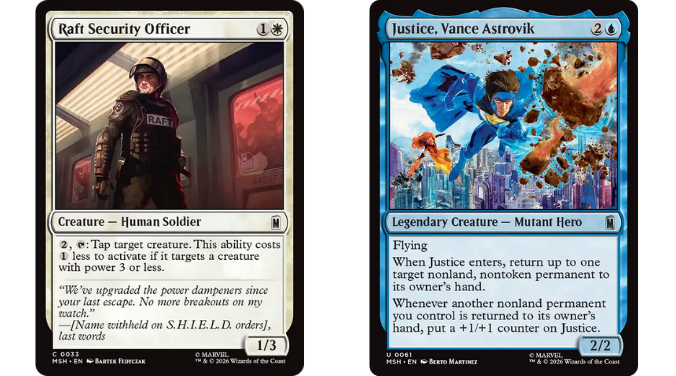
UW is playing the most classic form of tempo strategy – using flyers and other hard-to-block creatures to make opposing blockers irrelevant. If blocking isn’t an option, opponents who fall behind will be relying on those precious removal spells to stem the bleeding from your air attack.
That’s where defensive interaction like We Say Thee Nay!, Take Up the Shield, and Spider-Man, To the Rescue play their part – shutting down this remaining avenue to victory and buying the extra turn or two you need to chip away the opponent’s remaining life.

Having your own removal is important in case the opponent tries to race you with larger creatures. Super Villain Lockup, Web Up and Frozen in Ice are the gold standard but there’s a lot of backup options, including combat tricks like Depower and Panther Pounce. Most notably we can make amazing use of tap-down and bounce effects. So long as our air force is getting in damage, slowing threats down is as good as killing them.
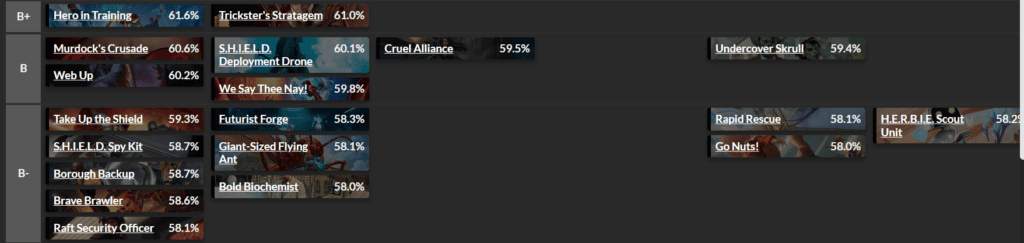
Considering what I’ve said already about how good it is to play with early board leads, it should not surprise you that Vance Astrovik is the highest-winrate uncommon this set. UW also has the vast majority of high-tier commons. Draft it while it’s hot!
WB: Lone-Attacker Tempo
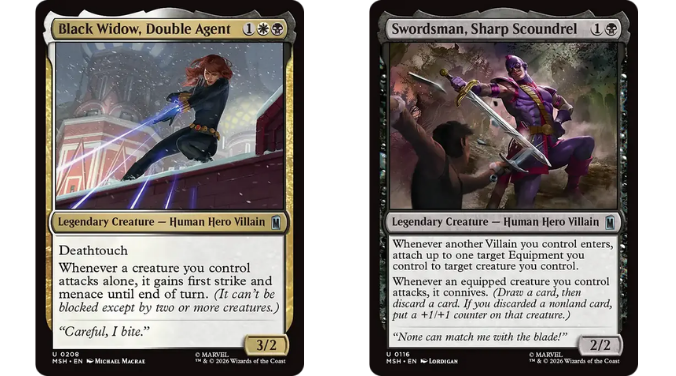
WB’s favored strategy is to swing with just one creature per turn, buffed to the nines, while leaving the rest of your team back to block. Even if the opponent is technically able to block your designated attacker, they shouldn’t be able to kill it, and they shouldn’t be able to hit you back. So you’ll gradually grind down their boardstate to nothing – or small enough that you can ambush their remaining blockers with removal or tap effects and then crash through for lethal.
Removal should be saved for when the opponent resolves a blocker too big (or too deathtouch-y) for your attacker to swing into. You really need to be forcing difficult blocking decisions for them every turn with this deck. Even if you aren’t able to force a quick win, eroding their resources and forcing them into awkward lines to save extra points of life will make the difference in many games!
Because you sometimes need to accept or even seek out trades to maintain pressure, I would avoid picking slow, synergy-focused creatures. But there are strong uncommons which generate value while fitting your curve and gameplan – Agent Maria Hill, Black Widow, Double Agent, Titania, Swordsman and Ronin.
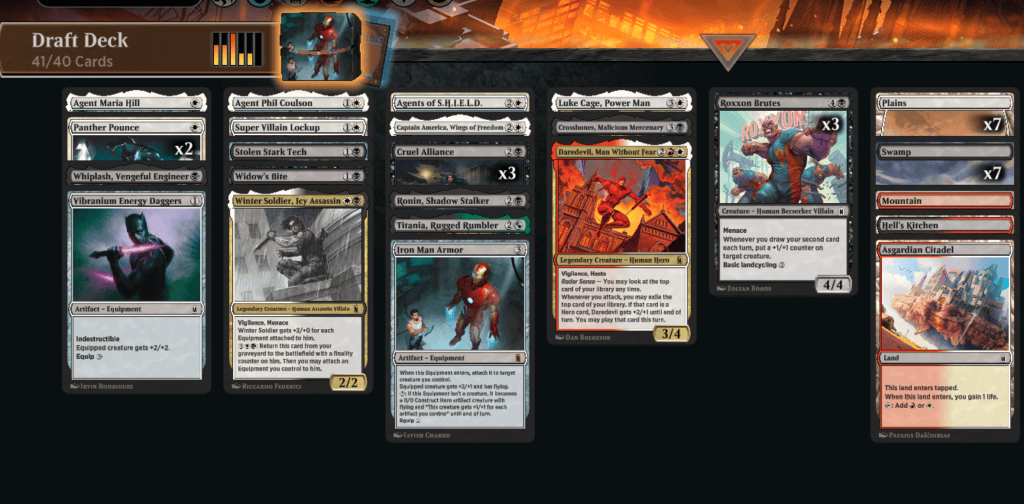
The equipment subtheme in this color is definitely viable, especially since S.H.I.E.L.D. Spy Kit and Stolen Stark Tech are great cards on their own. Curving Vibranium Energy Daggers into Swordsman, Sharp Scoundrel into any villain creature turn three is one of the best openers in the set, allowing Swordsman to immediately connive and swing as a 5/5!
WR: Tricks & Burn Aggro

Another aggressive deck built around the same core of cheap white creatures and efficient white removal. This time our supporting color is red, which has even less evasion but makes up for it some amount by dealing damage directly to the opponent!
Lightning Strike is strong as always, either guaranteeing you an early lead by melting the opponent’s initial blockers or finishing them off in the endgame. Truck Toss is the only other spell which can burn an opponents life points, but you can supplement these with some very respectable “pinging” abilities: Human Torch, Repulsor Blast, Red Hulk and Hawkeye’s Bow.
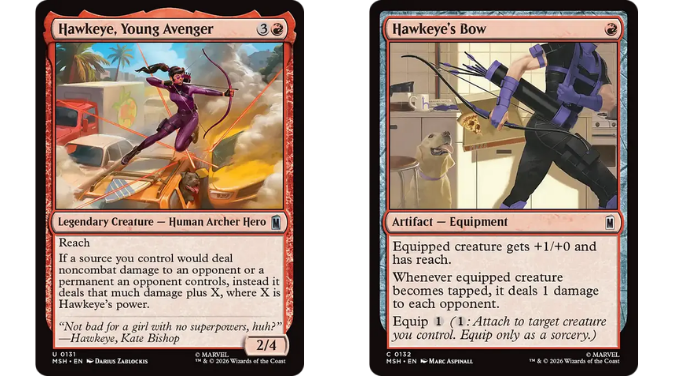
Hawkeye herself is one of the most niche synergy creatures in a set full of them, but extremely good when you can combo her with repeatable pingers like HYDRA Assault Robot. You can also find sneaky damage sources like Loki Laufeyson (who doubles Lightning Strike and Truck Toss after powering up) or Bullseye (whose resource costs are made up for by Misty Knight or Stark Industries Executive.
The other effect that RW has a lot of is combat tricks, presumably to pair with the various prowess or “cast a spell targeting your own creature” abilities on its creatures. Other than Take Up the Shield, Panther Pounce is the only trick I like enough to take consistently. It can surprise a blocking opponent by granting flying, or an attacking opponent with the one-mana untap. And at the very least, it replaces itself while triggering any artifact-related abilities. I’m glad to have it in any white deck – even in multiples!
WG: Go-Wide Midrange

Like most green decks, WG is trying to put as much power and toughness on the battlefield as possible – a great gameplan in this set. Adding white just means spreading those stats out across more bodies, which you are incentivized to do by uncommons like Political Triumph and Black Panther, Vanguard.
Those are the only two team-wide buffs below rare, however, and both white and green have a lot of cards dedicated to buffing and attacking with single creatures. So don’t be too tunnel-visioned on the idea of playing a tokens deck here, especially since there’s not all that many token-making cards in the first place.
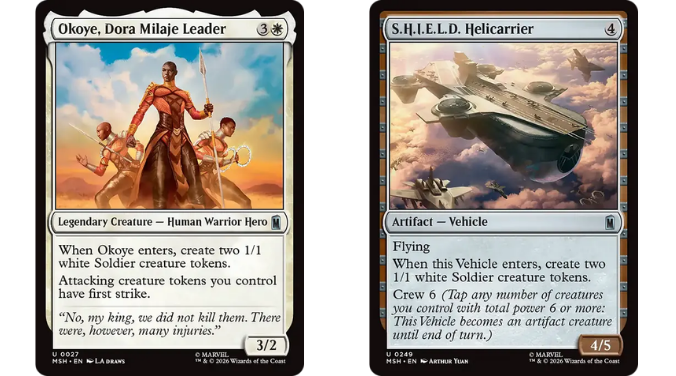
The best GW decks are simply looking for efficient stats in any form, all the way up the curve. Then when they reach the top of that curve they can sink extra mana into power-up abilities on cards like Pet Avengers, She-Hulk, Jade Defender, Brave Brawler and Serpent Specialist. Anything which generates +1/+1 counters at no extra cost is valuable for contributing to this dominant endgame, and anything which gains life (including Brave Brawler) or ramps mana is good for giving you the breathing room to get there.
Overall, I think GW is very strong and flexible, it just doesn’t have one dominant strategic direction it pushes you in. Try and build around whatever good cards you get your hands on!
UB: Villain Control

Control is challenging to draft this set, given how hard it can be to come from behind. This is especially acute with black decks, since black is the #1 culprit for having under-statted creatures. So, blunting your opponent’s momentum becomes your biggest goal. From there, you can win either by generating infinity Villain tokens with the H.Y.D.R.A. engine, outdrawing your opponents over time (Super Intelligence, Attuma) or even by powering up evasive attackers. (Stature, Size Shifter, Aerial Doombot, Viv Vision).
Cruel Alliance is my favorite removal spell in the set, and quite possibly my favorite spell of the set overall. You usually want to use the teamwork mode even if targeting something small; that’s how good gaining life is this set! If you’re able to land multiple copies in the same game this lifegain can absolutely throw off an opponent’s estimate of when to commit hard to push lethal – leading to them running out of cards too soon and you cruising to a win.
The two-drop slot is a big weakness of this deck. If you miss playing something on turn two, that makes it even more awkward to try and set up your under-statted, combat-avoidant uncommons on turns three, four and five. Hydraulic Helper and Bold Biochemist feel reasonable value, especially if you can power-up the latter at some point in the game. But a lot of the other two drops are suspect, which is why We Say Thee Nay! And Widow’s Bite are so valuable here.
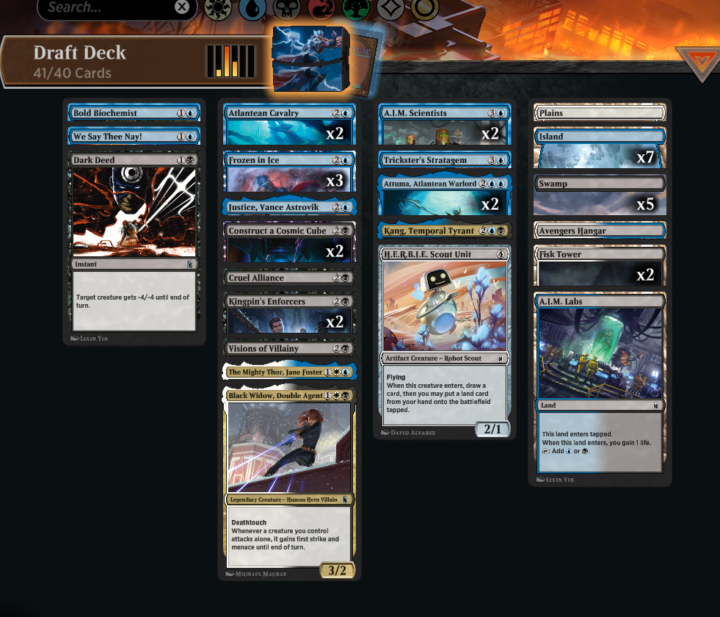
Kang, Temporal Tyrant is unfortunately pretty disappointing, as he needs to attack himself to trigger and is too small to survive doing so on most boards. Instead of working hard to clear his path each turn, just draw cards off Viv Vision or Attuma instead (Attuma can at least trigger off Atlantean Cavalry attacking instead of himself).
UR: Artifacts Matter
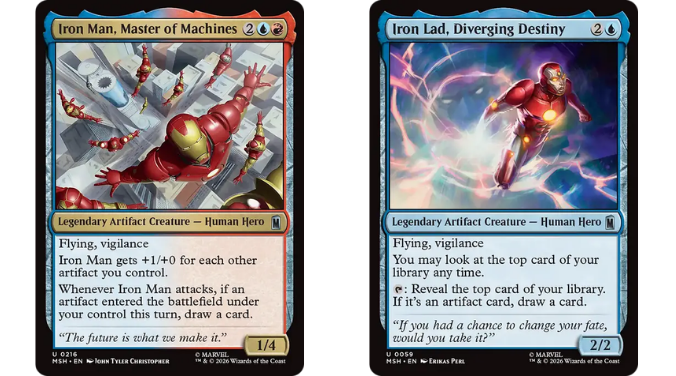
UR has been a tricky archetype to figure out in theory, and hard to assemble in practice. Despite the seemingly clear emphasis on artifacts, there’s not quite enough density of cards, nor are there useful artifact spells to fill certain essential roles (like removal!).
The most effective build for me has been an aggressive one. Red’s best artifact-related cards tend to deal direct damage or scale in power based on how many artifacts you control. Blue provides several cheap artifact creatures with flying and equipment to boost their damage. It’s already non-trivial to answer flyers for most decks, so if they’re swinging for three or more from very early turns you will be able to race a lot of decks.
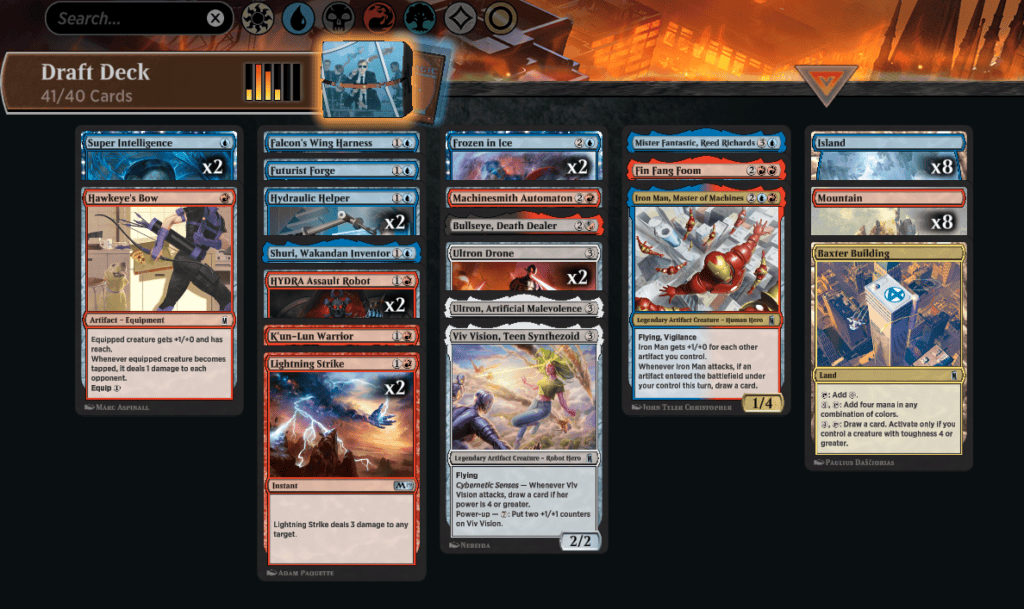
One card worthy of special consideration is Death to Our Enemies. Normally the downfall of this card is that it doesn’t really offer much to you until you finish putting counters on it. But in an artifact synergy deck, generating a treasure token will trigger HYDRA Assault Robot and Machinesmith Automaton (or Mister Fantastic) and give your Iron Man, Master of Machines an extra point of power.
UG: +1/+1 Counter Ramp
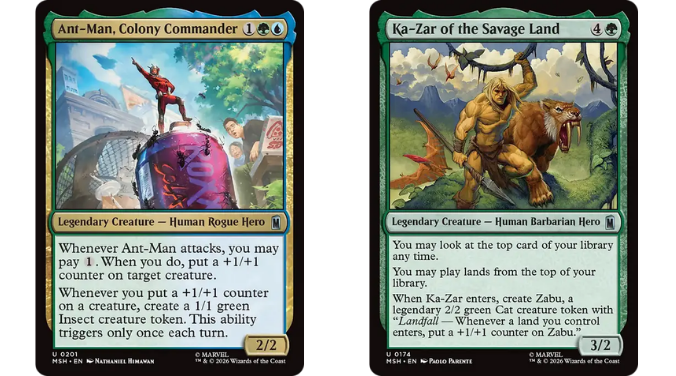
UG feels a little off this set, as both colors involved have a bit less of their signature resource accumulation effects compared to other sets. Blue’s only card draw spell is Thirst for Knowledge, which is quite limited by its dependence on artifacts. Green’s fixing and ramp might enable a potential five-color deck, but the way most cards rely on synergy makes that less rewarding than it might appear.
As a result, UG focuses more than usual on +1/+1 counters and growing its creatures. Partly this is just thanks to the green cards that do that being some of the best in the set: Training Regimen is one of the few spells I will confidently draft above any kind of removal.

UG also enjoys essentially uncontested access to some uncommons which are very good in this deck. Ant-Man, Colony Commander and Beast, Erudite Aerialist often go quite late in packs, even wheeling to you at times. Atlantis Attacks is an extremely powerful spell if cast with teamwork, and UG has both the resources and beefy creatures required to do that consistently.
Do keep your mind open to a splash if you’re able to pick up multiple removal spells in a third color, or a complementary package like red’s power-up enablers. You’re trying to go over the top of people in the endgame, so anything that raises your ceiling without compromising consistency helps!
BR: Villain Aggro
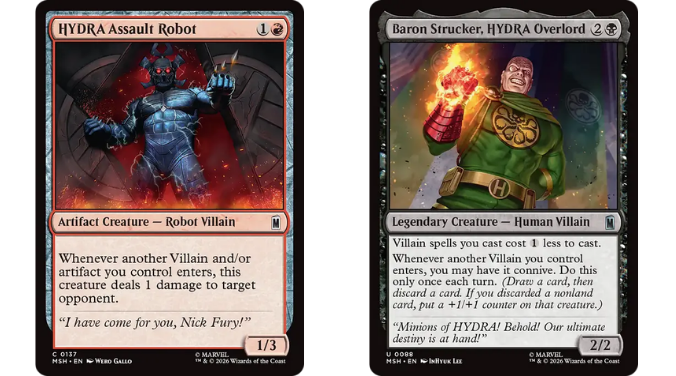
This is another tricky color combination to navigate and understand: black is the most synergy-driven color of this entire set, and there are a lot of cards which might be excellent in one red-black deck but a wasted pick for others.
Dethlok Soldier is a good example: a great card if you have enough removal to slow the game down plus some way to farm it for value by either discarding or sacrificing it. But it doesn’t do anything for the Villain typal package (other than get discarded to connive triggers), and it’s a pretty poor attacker even for decks trying to be low to the ground.
My most successful versions of RB have been much more simplistic aggro, combining removal and combat tricks to blow through early blockers and then finishing opponents off with a swarm of menace tokens or direct burn.
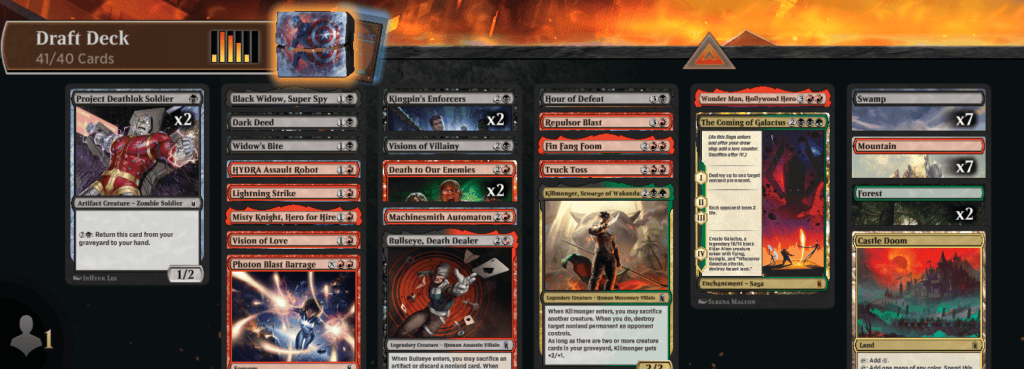
This is also the other color combination which can really utilize Death to Our Enemies: you can use it to make Visions of Villainy a one-mana draw-two, power up the artifacts-matter creatures in red, feed the treasures to Bullseye and Kingpin’s Enforcers or have them pay for splashed bombs and power-up costs.
BG: Graveyard-Matters Midrange
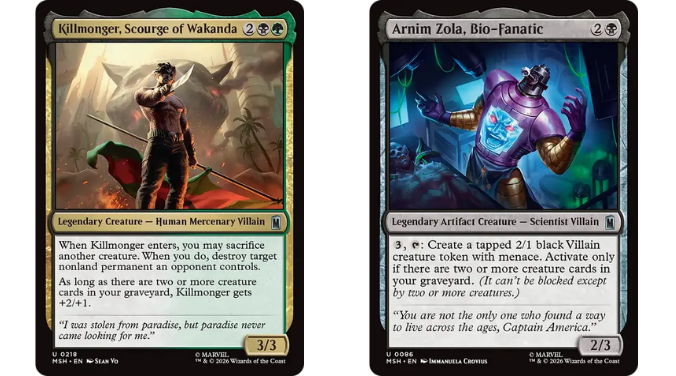
Another very open-to-interpretation color pair, the closest thing BG has to a common mechanical theme is “happy to have creatures in the graveyard”. It doesn’t really matter how they get there, or even what they are. But having some bodies in the bin powers up a lot of your effects – and the others tend to be empowered by sending them there, like premium uncommon Killmonger.
From this starting point you can actually extrapolate a lot of GB’s strategy. You want to trade creatures early and often to build that body count, and your recursion effects will be most impactful in longer games. Obviously this is going to be a very grindy archetype! Anything which can net value over time – be it card advantage or stats in the form of tokens and +1/+1 counters – will be good here. If it produces that value using the graveyard, so much the better.
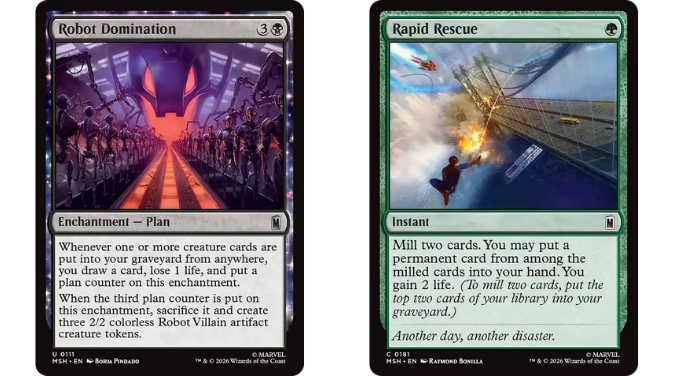
One card worth noticing is the seemingly-innocuous Rapid Rescue. This is one of the top-performing commons in the set statistically! The life gain is obviously good, it’s an instant, and assuming you don’t have many other non-permanent spells (quite likely in this deck) it will always replace itself while doing just a little to fix your draw and fill your yard. If your gameplan relies heavily on one or two ultra-powerful bombs, such as The Coming of Galactus, then grabbing a handful of Rapid Rescues will help you find them much more consistently!
RG: +1/+1 Counter Aggro

The RG deck is centered on one of the set’s most well-balanced and interesting mechanics, power-up. This is a one-time-use activated ability appearing on a lot of different creatures, with the activation cost and exact results differing from card to card. Typically though, the cost will be two or three mana more than what you paid to cast the creature, and the effect will be to add two or three +1/+1 counters to it.
Each creature can only power up once while it exists on the battlefield, unless it gains a different power-up ability somehow or you control Wonder-Man.
The important twist however, is that these power-up abilities cost a lot less on the turn the creature enters the battlefield. In fact for the rest of that turn after entering, the cost is reduced by their printed casting cost (including colored pips). So a player with access to seven mana can effectively cast a full-powered Human Torch! This also means that if you ever get Hulk, Gamma Goliath out alongside Wonder Man, all your creatures essentially get to power-up twice for free as soon as they enter!
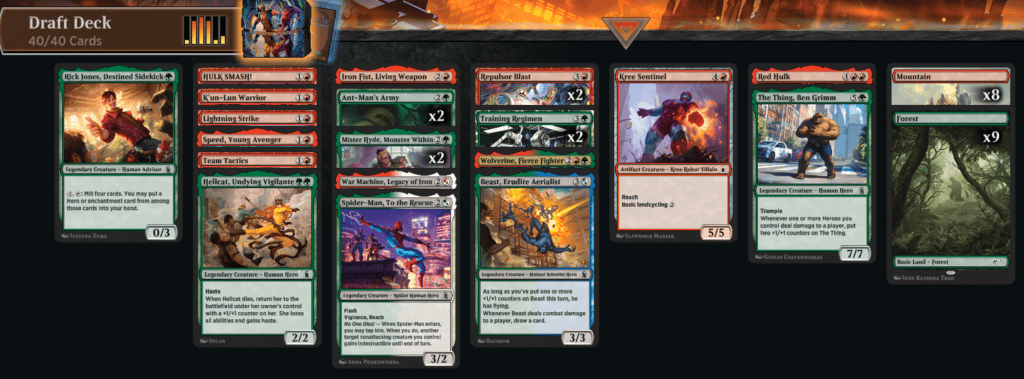
Speaking of Hulks: Red Hulk is one of the most expensive and dominant creatures in the set, especially among the ranks of villains. This makes him exceptionally good in combination with Evil’s Thrall, stealing the enemy’s best blocker for two turn cycles right when they need it most! This is also probably the best deck at using Jessica Jones (though she is quite good overall) or Iron Fist – green’s combat tricks and fight spells serving as ideal enablers.
MODERN MYTHOLOGY
This is somehow both an easy and hard set to evaluate: everything is at least theoretically powerful, even the cards with quite bad statistics. Instead it comes down to consistency: it’s more likely that you’ll get good use out of a card like Thor, which is strong on its own, compared to Madame Hydra.
If you have much previous experience with Limited, you can probably tell pretty quickly which cards pack this standalone power. Don’t overthink your way out of drafting them, just to end up with a fragile, overly-synergy-dependent deck.

This is especially true of removal spells. I was initially demoralized when I realized how much this set hinges on whether you can draft a bunch of removal. But at least every color gets multiple affordable options at common and uncommon: enough that it should be there for you in most drafts, if you chase it. From there, a lot of the archetypes actually have some real depth to explore. I hope you enjoy discovering it for yourselves!

Tom’s fate was sealed in 7th grade when his friend lent him a pile of commons to play Magic. He quickly picked up Boros and Orzhov decks in Ravnica block and has remained a staunch white magician ever since. A fan of all Constructed formats, he enjoys studying the history of the tournament meta. He specializes in midrange decks, especially Death & Taxes and Martyr Proc. One day, he swears he will win an MCQ with Evershrike. Ask him how at @AWanderingBard, or watch him stream Magic at twitch.tv/TheWanderingBard.