

Over the years, Magic has invented a multitude of mechanics to build decks around, each with its own unique advantages, dedicated support cards and memorable payoffs. But when all of those archetypes are thrown together into the grand melting pot of Commander, a few top-tier choices stand out. They offer versatile deck building options, consistent performance across different areas of the game and power ceilings which border on unbeatable.
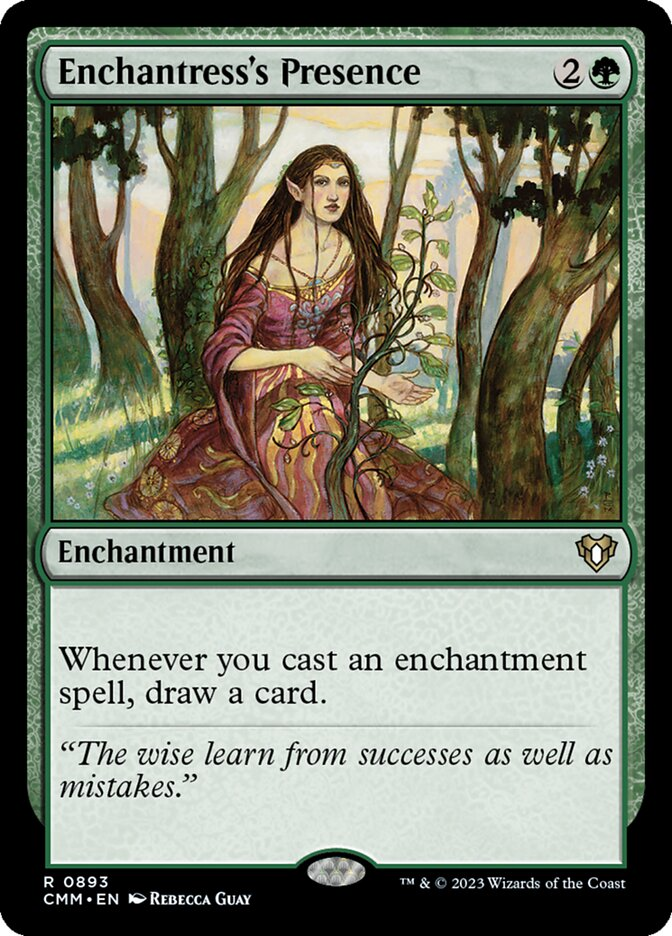
This week, we’ll be looking at the Enchantress archetype. It says a lot about Magic that simply focusing on one type of spell can create such a tangible aesthetic and strategy for a deck. Enchantments have their limitations, but they also have certain strengths which happen to align very nicely with the demands of the Commander format.
INDIRECT ASSAULT
The defining trait of enchantments is their constancy. While some can be activated or take effect upon entering the battlefield, most have static abilities which are “always on” or wait to be triggered by something else.
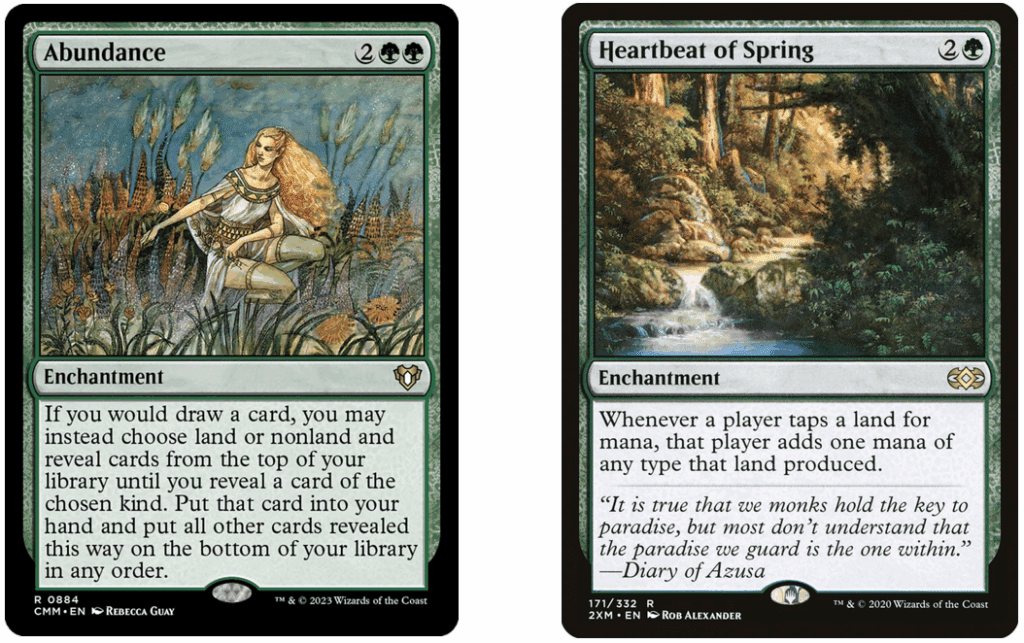
It’s a subtle distinction, but building an entire deck out of enchantments really magnifies the effect on your gameplay. Instead of holding up mana and resources to stymie opposing actions as they happen, you have to interact with them indirectly. Often this also means acting preemptively – anticipating your opponent’s next move and deploying an enchantment to block that possibility.

These static defenses cost more to cast than counterspells or removal, and since you made the first move there is a risk your opponent will be able to react and play around it.
But looking at the big picture of a multiplayer Commander game, defensive enchantments actually end up being highly efficient. Paying that one-time cost protects you against any number of future harms, and you get to choose when you pay it instead of needing to always have mana ready in case your opponent acts.
As permanent and ongoing effects, you can stack them up over time to become nigh-invulnerable. The indirectness also makes them more reliable against defensive spells and abilities. It doesn’t matter how much ward or hexproof your opponent’s commander has, or which counterspells they’re holding – if you have a Solitary Confinement in play, they’re not dealing you damage!
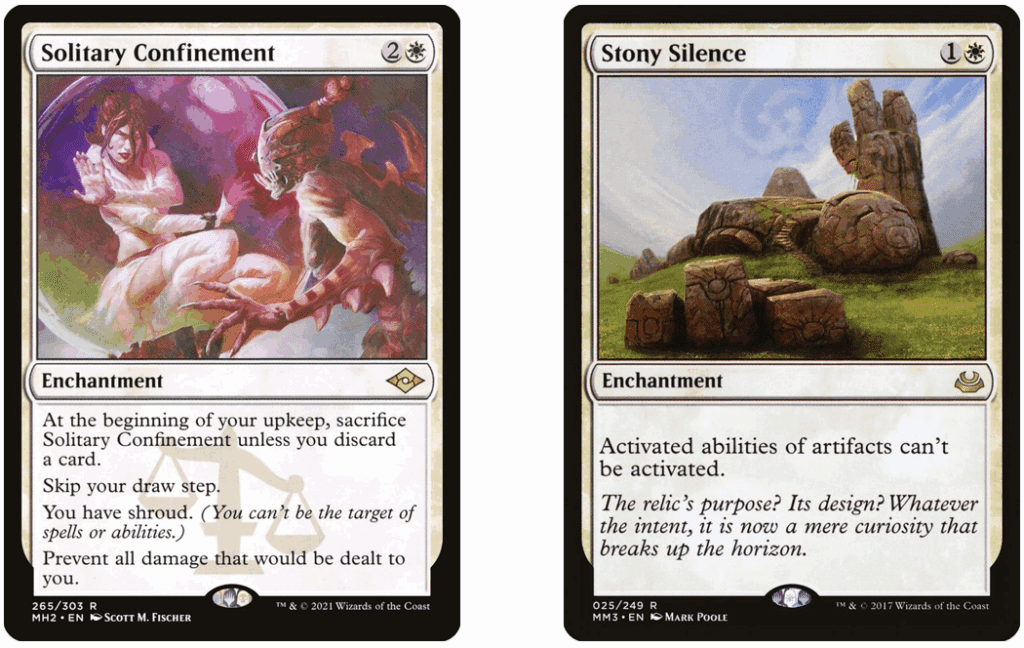
So, Enchantress interacts with the board in a selfish, snowballing way where you can answer your biggest threats before they appear, often without provoking any specific opponent into retaliation.
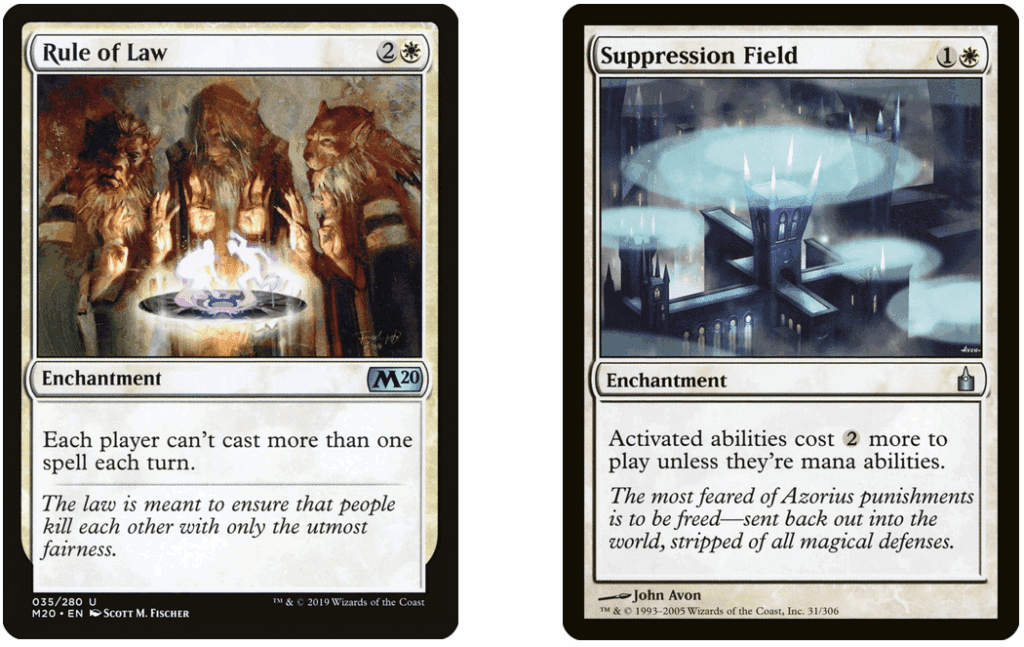
The major exception to that last part are when your enchantments fall into the informal category known as “stax”. Stax effects universally increase casting costs or otherwise make it hard for anyone to play the game. At most tables, playing cards like this will quickly draw the ire of the other players, who may gang up to remove it (or you!) from the game ASAP. Be careful who you stax!
JUST HOW WE DRAW IT UP
The most traditional and well-recognized version of this archetype is the one built around the various enchantresses: creatures (and sometimes other permanents) which say “Whenever you cast an enchantment, draw a card.”
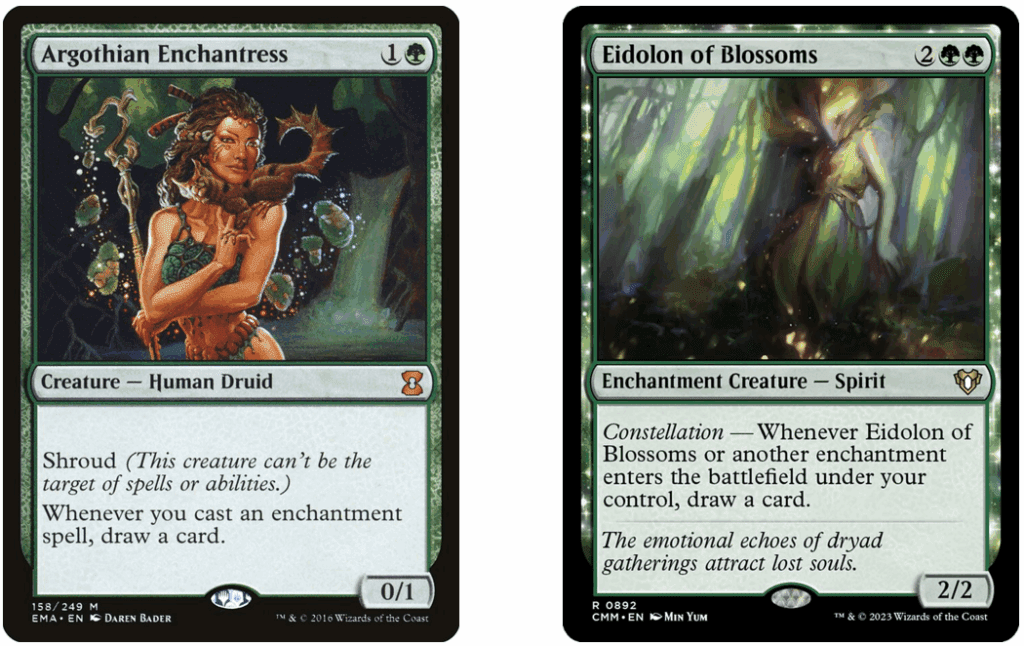
If you expand your search to include slight variants of this ability, like Eidolon of Blossoms, you can play enough enchantresses to reliably draw a couple at the start of each game. The rest of the deck is predicated on having at least one enchantress in play (ideally two or three) so that all your cheap enchantments become cantrips or draw spells, allowing you to tear through your deck while stacking up a high count of enchantments in play.
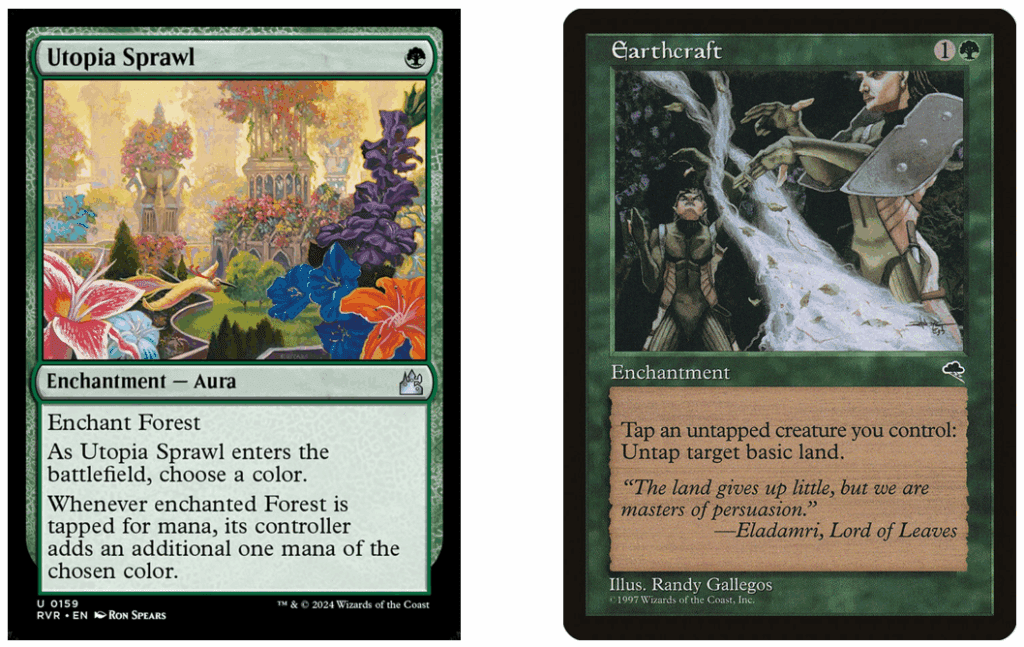
This playstyle heavily incentivizes using the most mana efficient enchantments possible – especially those which can accelerate your mana production. It’s almost impossible to run out of cards in hand with enchantresses in play, so mana becomes the bottleneck on how fast you can play through your deck.
Since you’re casting such an avalanche of enchantments, some of your best cards are those which scale with your number of enchantments or permanents in play. Serra’s Sanctum and Sanctum Weaver are ideal as simple yet effective mana sources. So long as you keep drawing and playing enchantments, you’ll eventually have a critical mass of resources to take over the game. But if you are struggling to actually finish things off, then I would recommend turning to a two-card combo like Helm of Obedience + Rest in Peace.
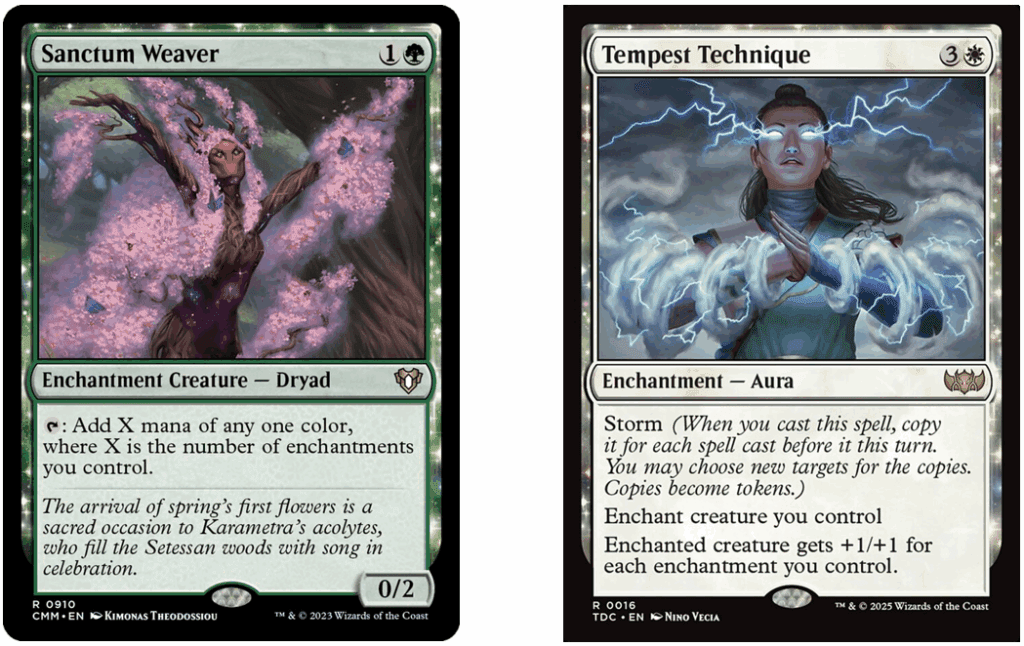
This build of Enchantress suffers a little in highlander formats since there’s not enough top-tier variants of your best effects, but the sheer draw power and ability to snowball momentum towards a winning gamestate make it worthy of respect.
UN-FAIREST OF THEM ALL
Since non-green builds of Enchantress lose access to its defining draw engines and mana ramp, chain-casting cheap enchantments is not going to be as efficient. So what’s the alternative?
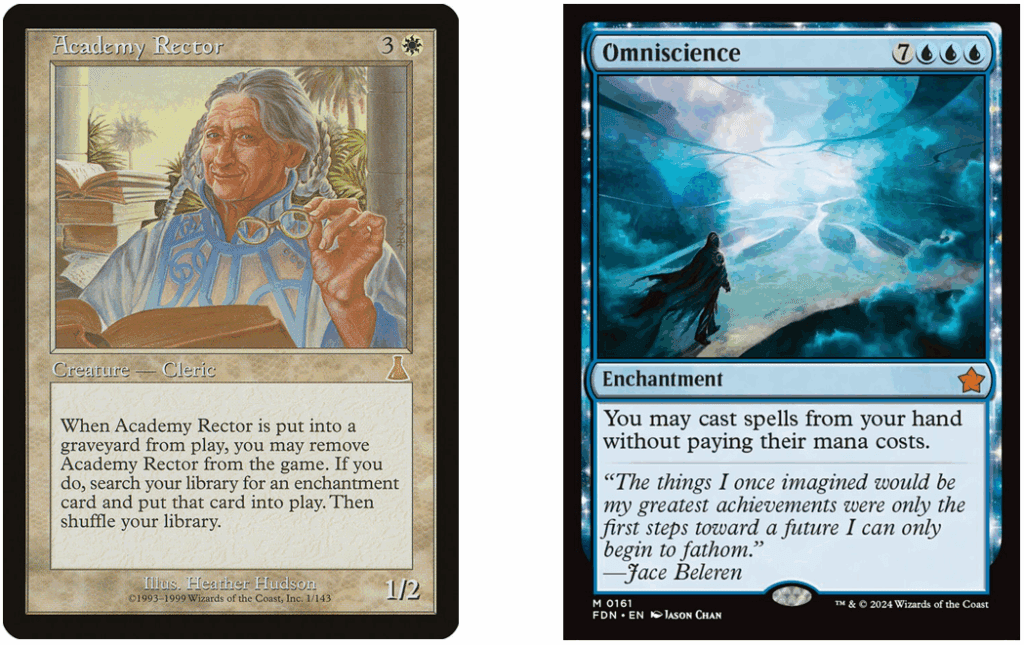
Logically, the only thing more efficient than cheap spells is playing spells for free! Instead of using slots on support cards which give us extra reward for casting enchantments, we can use them on various ways to reduce (ideally to zero) the costs.
Mass enchantment reanimation like Replenish, Open the Vault or Renewed Faith, cost-altering enchantments like Omniscience, Dream Halls or One with the Multiverse, and one-off freecasting effects like Academy Rector, Lost Auramancers, or Show and Tell each have their strengths – we’d like to play all of them!
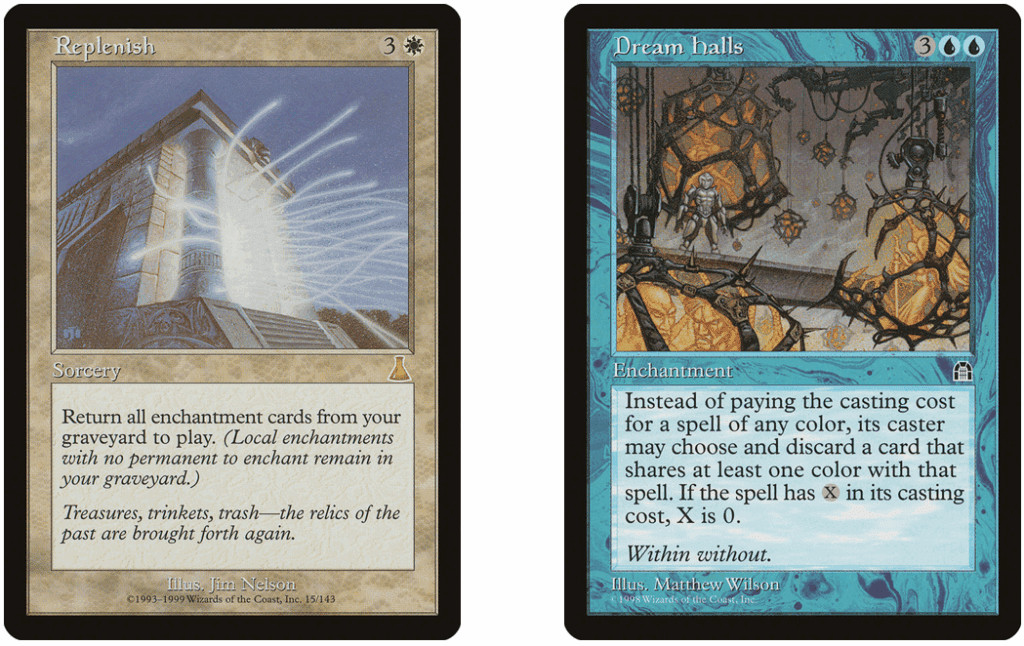
At the very top end of the mana curve we will find enchantments with the kind of game-winning impact that’s worth the extra effort to set up. Overwhelming Splendor, Mind’s Dilation, Curse of Unbinding, Mind Over Matter, and Dismiss into Dream are just some examples. Other enchantments unlock their game-winning power in two-card combos, such as Parallax Wave + Opalescence or Decree of Silence + Solemnity.
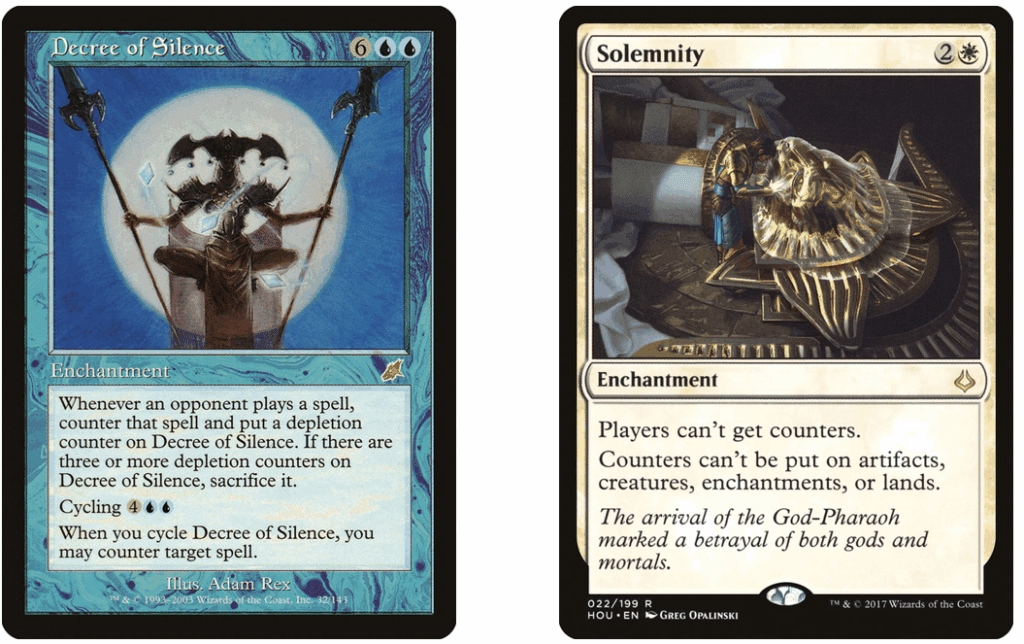
We also need a few other types of support cards. I like some self-mill or looting to set up our graveyard for reanimation effects, as well as mana ramp to accelerate and give us a chance of occasionally casting these haymakers fairly. We’re not pressured to include an especially high enchantment count (quality over quantity) so we can fit in a lot more “normal” interaction, including countermagic.
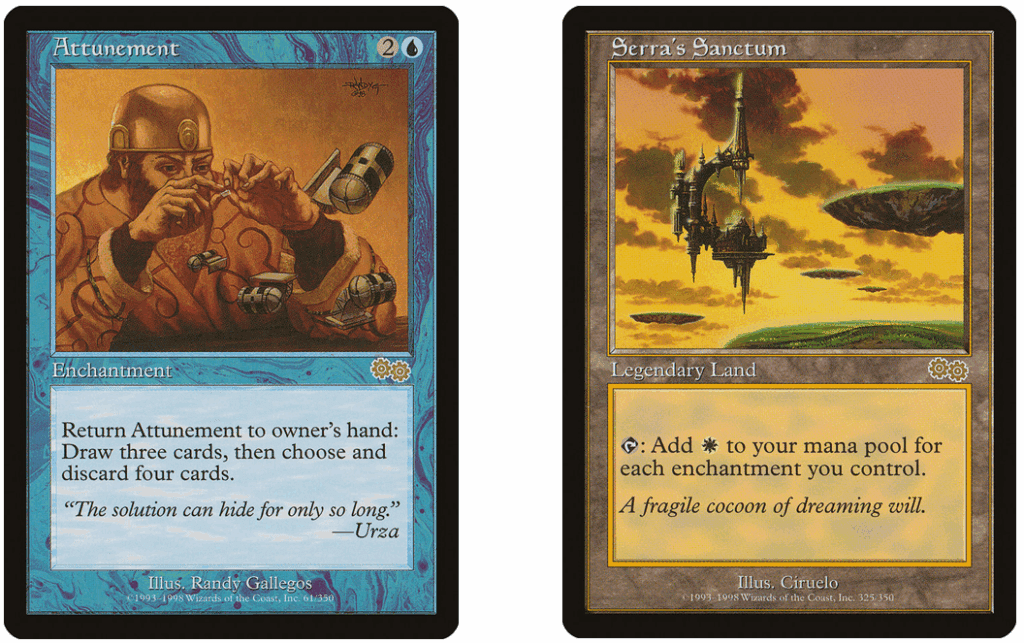
Of course, we still like to fit in smaller enchantments like Omen of the Sea or Oblivion Ring to increase the average value of our set-up cards, especially the mass-reanimation ones. Stax enchantments are still extremely good here, though we should be careful about accidentally blocking ourselves from doing unfair things!
MIND-BOGLING POTENTIAL
The final path to Enchantress success in Commander is one of rampant aggression – combining cheap creature-buffing auras with powerful enchantment synergies to create enormous, hard-to-answer combat threats. Players in other formats call this strategy “Bogles”, after the optimal choice of creature to hold all these auras: a one-drop with hexproof.

Commander builds of Bogles will often (but not always) put an aggressive aura-holder in the Command Zone. This avoids the potential bottleneck of drawing auras without a target, and amps up our lethality by bringing the threat of Commander Damage kills into play.
But a more value-centric enchantress commander like Sythis, Harvest’s Hand is still perfectly viable, since the mana curve and enchantment count of these decks is likely similar to the basic Enchantress versions. In fact there are a few extra value engines which only really shine in this sort of list: Sram, Senior Edificer and Kor Spiritdancer are key examples. You can also include more combative value generators like Generous Visitor.
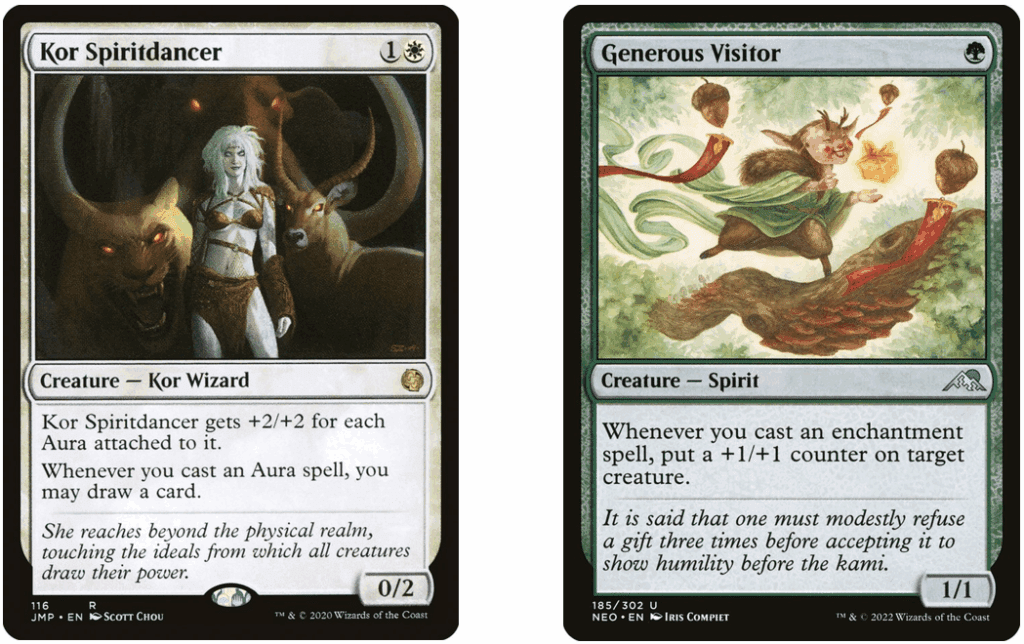
As for the auras themselves, the most important kinds are those which can help protect against removal, and those which scale with the number of enchantments you play. You can tailor the defensive cards to complement your commander or other chosen aura-carriers: if most of them inherently have hexproof, then perhaps the protection of umbra armor is more worth including.
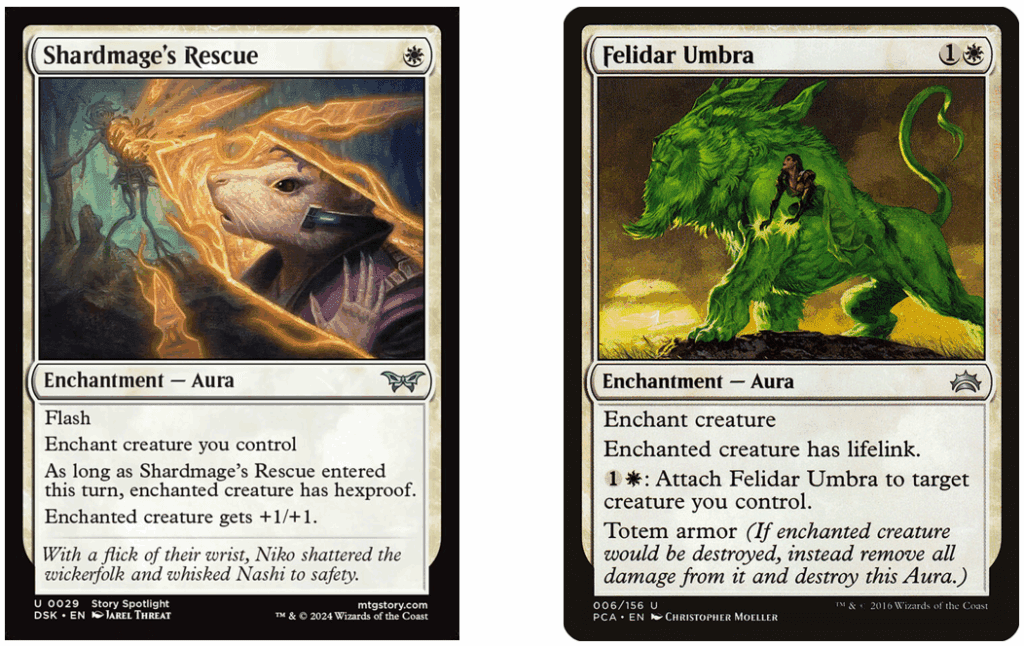
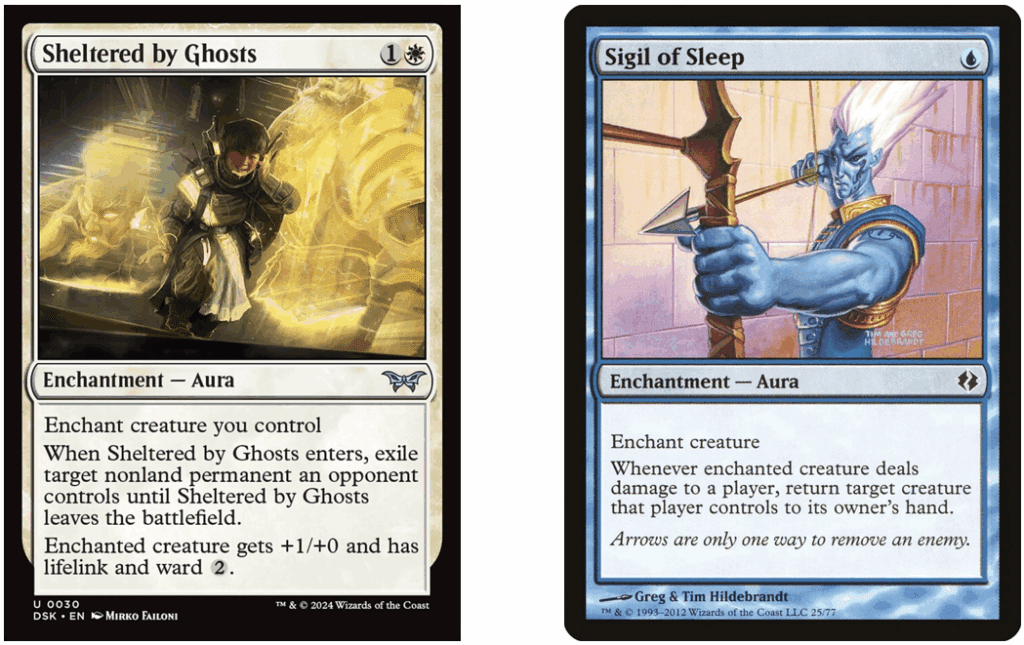
Keywords like evasion, vigilance and lifelink are also extremely valuable to ensure you can race multiple foes in combat. Cheap removal like Sheltered by Ghosts is important for nullifying opposing defenses or keeping them off their own gameplans while you beat down.
CARDS ON THE TABLE
To be honest, I just love to play any Enchantress deck, no matter what kind. It might well be my personal favorite archetype across all Magic formats, so you could say that writing about it this week is a bit of a holiday gift to myself.

But even if you aren’t already a die-hard enchantment fan, I think the unique playstyle enforced by playing around sorcery-speed cards with static abilities makes for a great change-up from a more typical Commander deck. You can run enchantress in almost any color combination, at any price point and virtually any power level: get stuck in and find the version that works for you today.

Tom’s fate was sealed in 7th grade when his friend lent him a pile of commons to play Magic. He quickly picked up Boros and Orzhov decks in Ravnica block and has remained a staunch white magician ever since. A fan of all Constructed formats, he enjoys studying the history of the tournament meta. He specializes in midrange decks, especially Death & Taxes and Martyr Proc. One day, he swears he will win an MCQ with Evershrike. Ask him how at @AWanderingBard, or watch him stream Magic at twitch.tv/TheWanderingBard.