
Welcome to the Card Kingdom draft guide for Avatar: The Last Airbender – the Magic set!
I’ve already written and thought about this set and its mechanics quite a bit, moreso than I usually do before writing the draft guide. If you’ve been reading those pieces, then you’ll know my early opinion on A:TLA is very positive – and I’m glad to say that testing a bunch of Draft gameplay hasn’t dampened my enthusiasm.
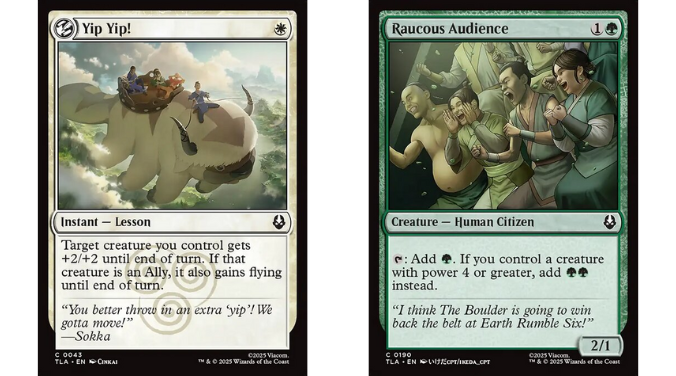
The bending mechanics give you a ton of opportunities to pull off interesting interactions even within the context of Limited, and the set has a ton of mana fixing and cross-archetype “glue cards” to allow for creative, flexible drafting. Read on for a guide to exploiting the unique mechanics of Avatar, how to build and play each Draft archetype, and the top picks to look out for in your packs!
SHAPE OF THE FORMAT
Putting my finger on the pulse of Avatar draft has been a little tricky. It’s certainly a greedy set overall, with tons of rare bombs, ramp, fixing, and synergy engines which encourage building a boardstate and avoiding constant trades. But there are also very strong aggro and tempo mechanics which can exert incredibly pressure on life totals using only cheap commons.
As a quick comparison, I would liken it to March of the Machine (which was one of my favorite drafts ever) – you need to make sure you don’t lose the game on turn two, but once you pass that interaction check the match usually switches gears to board stall mode.
But that’s not to say aggro is weak or fragile in the set! For one, those snowballing “turn two win” draws are fearsome and quite easy to assemble through the draft. Even if you don’t run away with the game that way, each of the aggro archetypes is just as capable of biding its time and going over the top in some way: you just have to pick your moments and play to your outs.
These fundamental dynamics are heavily influenced by the kind of removal spells available: in this case, mostly sorcery speed and/or conditional in when they can be used. The mana costs are not atrocious compared to other sets, but it’s still inefficient to use on small creatures (except for the red removal, which is an important exception).
Those creatures are themselves a little under-statted for their cost in most cases, but in return many of them have some significant ability and/or archetypal synergy which can elevate their impact as the game goes on.
This high potential means that despite stalled boards and defensive standoffs being relatively common, they never feel especially stable – since almost every spell can threaten to break that parity in some way or another.
COLOR THEORY
I don’t just call this a greedy, MOM-like format because of the emphasis on synergy and cumulative value. It’s because A:TLA offers a ton of mana fixing and, consequently, supports a full range of deckbuilding choices when it comes to colors.
While the “default” deck is probably still dual-color archetypes with a splash or two, you can absolutely draft your way into five-color “all good cards”, or even special rainbow synergy decks like Shrines or Allies.
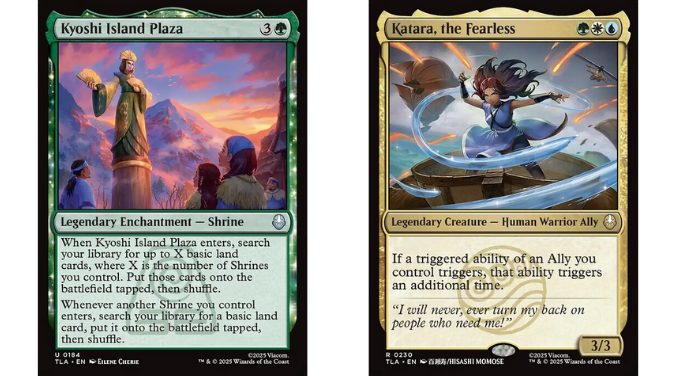
You have the ideal (and now classic) selection of easy-to-run mana-fixing cards. A cycle of big dumb land-cycling monsters, check. A selection of affordable green land-ramp spells and mana dorks, check. A once-mana utility artifact which is mostly there to fix colors early and then gets sacrificed for value later on – yes, absolutely check!
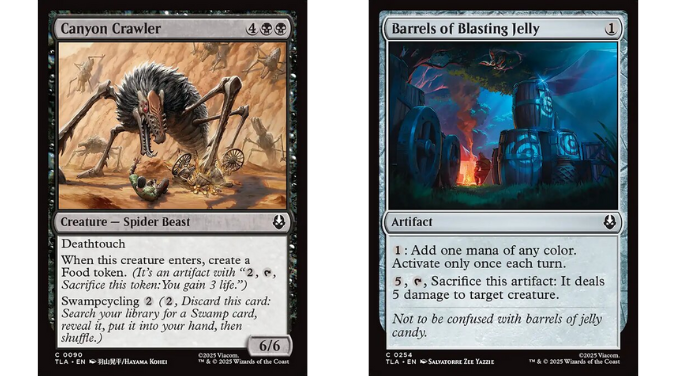
All of these cards feel awesome to play: Barrels of Jelly is on par with most common removal in the set, and I basically always want one in my drafts. Yet for all the inherent upsides of going rainbow-drafter and running the best possible bombs across all five colors, A:TLA also offers incentives to go the opposite direction.
For example, Ally typal as an archetype is based in white-green, but extends into all five colors: it has a fixing-land specifically for casting Ally spells of any color, and a one-drop which scales based on how many colors of Ally you control with a WUBRG activation cost. However, the most consistent Draft payoff for the deck is Gather the White Lotus, which rewards you for playing as many Plains as possible – which in Draft essentially means a mono-white or heavily white deck.
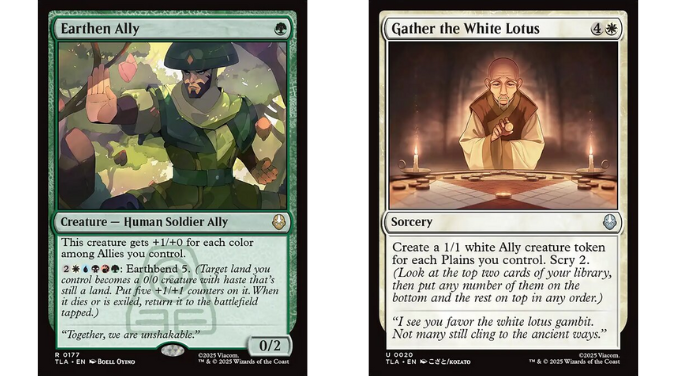
In my testing I have played both a “true” 5c Allies deck, with multi-color rares and a ton of fixing lands, AND a heavily white Allies deck which played 3 copies of Gather the White Lotus supplemented by a green splash and hybrid white costs like Sokka, Lateral Strategists.
The fact both of these builds have substantial merit shows how thoughtfully designed this Limited environment is, and how much flexibility you have to assemble the building blocks available in any given Draft run.
There is at least one uncommon payoff like Gather the White Lotus for each color. So even though I won’t be covering the mono-color archetypes in this guide, if you find yourself with all the same color of playables through Pack 1, you can keep that possibility in mind.
ARCHETYPE BREAKDOWN
WU: Boardstall Waterbenders
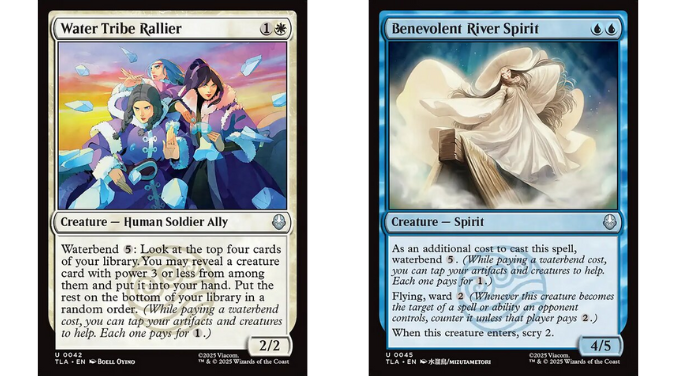
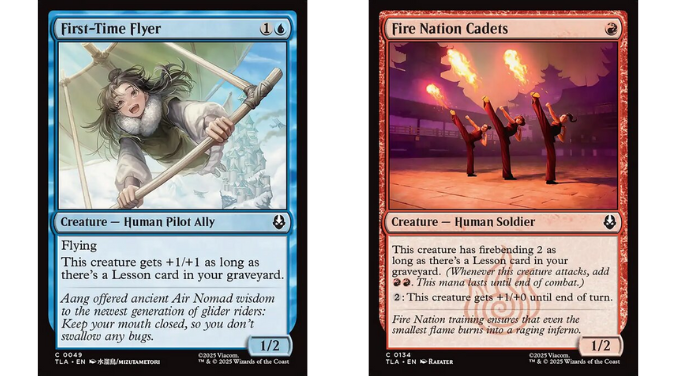
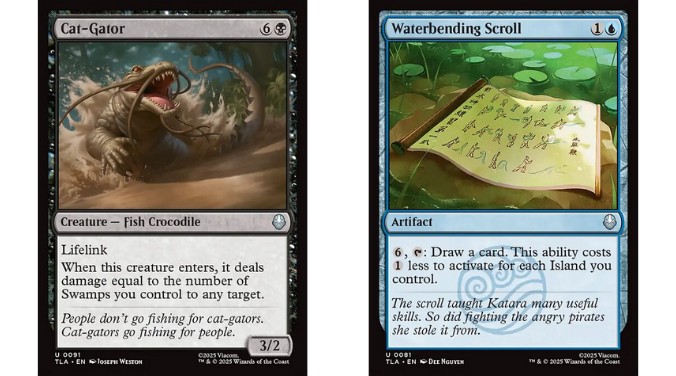
Official Wizards guides and the UW gold uncommon indicate that this color combo is meant to be a flyers deck. To pull that off in practice, you are relying heavily on First-Time Flyer being a common 2/3 for 1U, backed up by some three-cost two-power guys.
That’s not likely to win the race against enemy aggro on its own, so in practice I think it’s more apt to label this archetype by the most consistent aspect of its game: making a ton of bodies to clog up the ground, then slowly building some sort of advantage during that boardstall.
That advantage could be from gradually chipping away with flyers, or with a single Ally token per turn buffed up by Team Avatar. But it could also be from leaving everything back to block and activating a powerful Waterbend ability to gain card advantage in the opponent’s end step.
It could even be waiting until you can chain together a few Gather the White Lotus to scale up Avatar Enthusiasts, or simply until you can cast your splashed bomb creature. The tools for traditional blue control in this set aren’t amazing, but if you make up for that with power on board you can still slow games to a glacial pace.
WB: Sacrifice Value
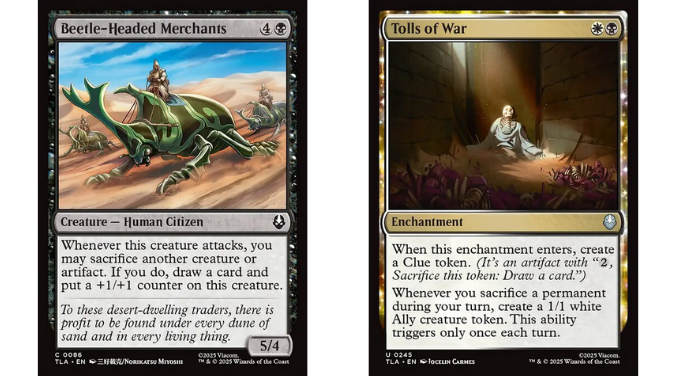
All the white archetypes have the potential to become more or less of an Ally-typal deck, and even in black there are some valuable on-type creatures like Merchant of Many Hats, Foggy Swamp Hunters and Foggy Swamp Spirit Keeper. But in my experience the power of WB tends to come a lot more from black’s sacrifice synergies – which I’d call an upside given they’re less contested.
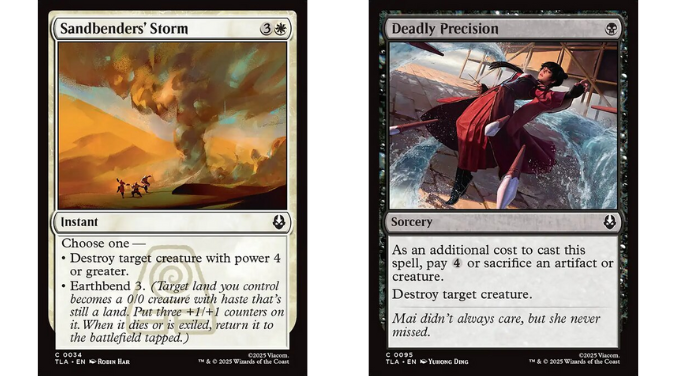
Sacrifice archetypes are a lot better when the sacrifice outlets are valuable without needing extra synergies, and thankfully that is true here. Deadly Precision, Joo Dee, June, Bounty Hunter, and Beetle-Headed Merchants are virtually always a good deal, so having Tolls of War or Pirate Peddlers in play becomes a luxury instead of a necessity.
And while other outlets like Hei Bai or Vengeful Villagers are more situational, you also have some outstanding “incidental” sacrifice fuel like Fire Navy Trebuchet, Destined Confrontation, Barrels of Blasting Jelly, or the common taplands (you can even run off-color versions if you’re extra keen). Keep in mind that those lands and any Clue tokens can trigger both your sacrifice effects and any “draw-two” synergies. You can splash U to go more in that direction, G for an Ally-heavy build, or R for tempo and Jet’s Brainwashing.
UB: Draw-Two Control
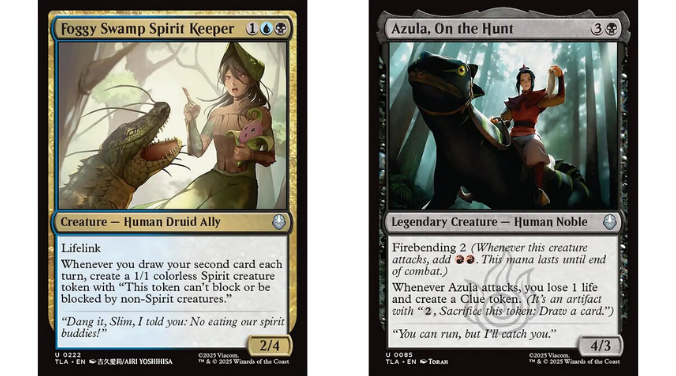
As with WU, playing a controlling deck in this Draft format means reckoning with the limitations of the interactive spells. Black’s removal suite is decent at least, which lets you use blue’s aura-based removal where it’s most effective (early game and combat-focused threats). But you’ll want to rely more on your permanents and activated abilities to generate card advantage. Clue tokens are ubiquitous and the easiest enabler for Foggy Swamp Spirit Keeper and other “draw-two” effects.
Depending on how reliably you can trigger those, you can absolutely have an aggressive list focused on June, Bounty Hunter, Knowledge Seeker, Otter-Penguin and Messenger Hawk. In fact, that’s probably the most powerful build of the deck.
If you can’t get the requisite copies of those creatures and the cheap cantrips to go with them, then don’t be afraid to play for lategame. Giant Koi is an easy way to break through boardstalls, while Hama, the Bloodbender (recurred or copied with Ember Island Production) can both grind and mill opponents out.
WR: Go-Wide Aggro
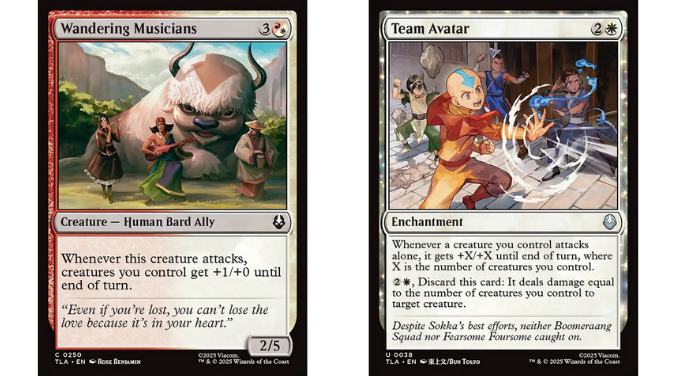
Combine white’s ability to flood the board early with red’s up-tempo offense and what do you get? Classic RW aggression, with a variety of ways to efficiently push extra damage and make sure you finish off your target. Red is by far the scariest aggro color in Avatar thanks to its cheap creatures, cheap removal (leagues ahead of every other color’s) and the firebending mechanic, which generates bonus mana to be used during your combat phase.
Being able to spend 50% or 100% more mana than your opponent starting from turn two is a very potent way to snowball your advantage and make blocking feel impossible. It enables the classic Limited play pattern of always attacking with mana available, and then playing more creatures in 2nd main so the opponent is forced to tap out on their turn for more blockers, such that they can’t hold up mana in combat themselves.
White gives you a few extra ways to use firebending mana: activating Water Tribe Rallier, or helping cast Fancy Footwork. But the strongest upsides of this combo are the ways you can scale off a high creature count: Team Avatar pushes one huge attacker every turn, while How to Start a Riot, Wandering Musicians, and Water Tribe Rallier can achieve a game-ending horde attack.
UR: Lessons Prowess
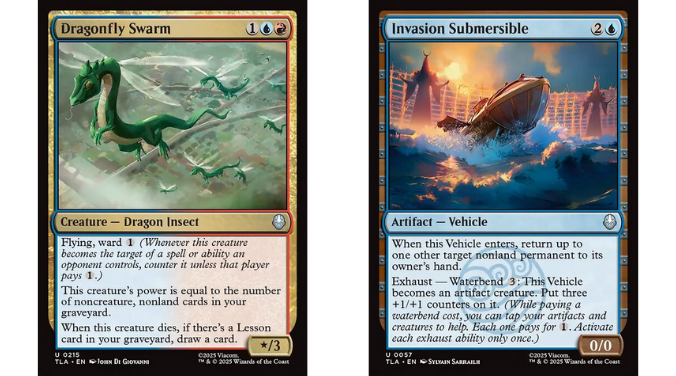
This deck can be a little funky to put together, since only about half of the blue cards really gel with the red ideal of a fast, aggressive prowess deck. If you can get those cheap blue flyers, Invasion Submersible, and one-mana interactive spells, then you will be able to really blitz opponents out of their shoes!
However, many decks will need to blend these elements with a more patient, value-focused approach to UR. Here, you want to build on the lesson synergies of cards like Gran Gran, Jeong Jeong, the Deserter, Combustion Technique and Uncle Iroh, since a lot of your interactive spells are lessons anyway.
Regardless of build, avoid trading your creatures away where possible, since you’re likely to not have the highest creature count and your burn spells (beside Lightning Strike) cannot go face. Artifacts are also good here: they trigger your non-creature spell synergies like Boar-q-pine, even the vehicles (which are excellent).
You can also take this further by splashing green for a bunch more lesson synergies, including non-creature spells with earthbending. Borrowing blue-green’s self-mill is a great way to maximize your Dragonfly Swarm!
BR: Firebender Aggro
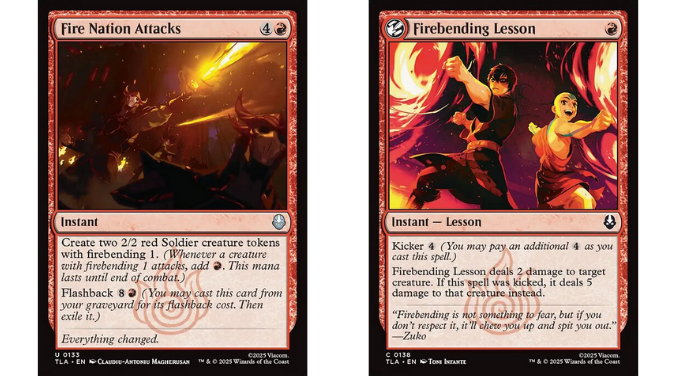
Much as the white-X archetypes this set are each defined by their inclusion of Ally cards, the red-X archetypes are all heavily influenced by firebending. But BR is the most firebending deck of them all, since the Fire Nation characters are actually split between red and black and thus the keyword appears in both colors.
It is worth noting that they each use the bonus red mana in different ways. Red has cheap instant removal to enable early aggression, and “firebreathing” type activated abilities which can push extra damage. Black tends towards sorcery-speed removal which cannot be paid for with firebending, and instead wants you to spent the mana saccing Clues or activating other value abilities. By playing both colors, you get the best of both worlds – channeling the mana from Azula, On the Hunt into a mid-combat Fire Nation Attacks!
In most cases, I believe that the more aggressive your RB deck is, the better. Cheap evasive creatures like Callous Inspector, June, Bounty Hunter and Messenger Hawk make amazing targets for Cunning Maneuver and Twin Blades. Save your clue tokens for when you draw Zhao, Ruthless Admiral if you want to see the highest potential damage in the format!
WG: Ally Typal
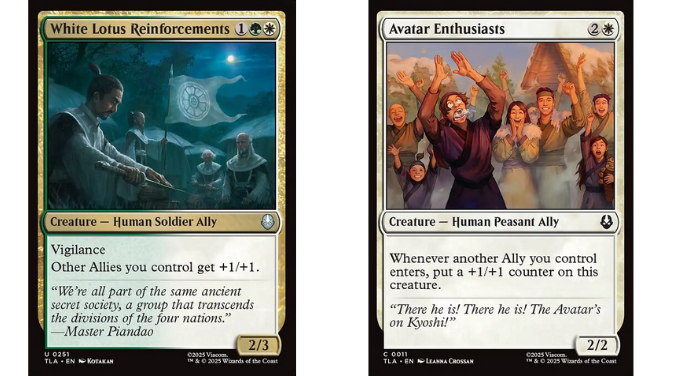
Despite the light smattering of support cards across other colors, WG is the natural home for straight-up ally typal decks. Not only do you have amazing payoffs at uncommon like Haru, Hidden Talent, White Lotus Reinforcements, Suki, Kyoshi Warrior and Invasion Tactics, there’s also just a very high density of ally-typed creatures up and down the curve.
I really appreciate the designed overlap between the ally and earthbending themes, as both use +1/+1 counters and allow for stacking more and more value over time. However, I have seen multiple opponents throw away sure wins against me by being TOO conservative, choosing to grow and grow and grow their board while never attacking. Knowing when to cash in your army, even if half of it has to die to blocks, is critical with this sort of deck.
It’s a little ironic for a deck about the common people of the realm rising up, but I do have to mention how much the rare card pool adds to GW Allies! There are multiple excellent rares, even just within this color pair, that only the ally deck really wants and which can hugely enhance your draft performance. If you’re not contested, you can almost rely on picking up one or two by the end of the draft – which is a huge boon when it happens.
UG: Lesson/Shrine Ramp
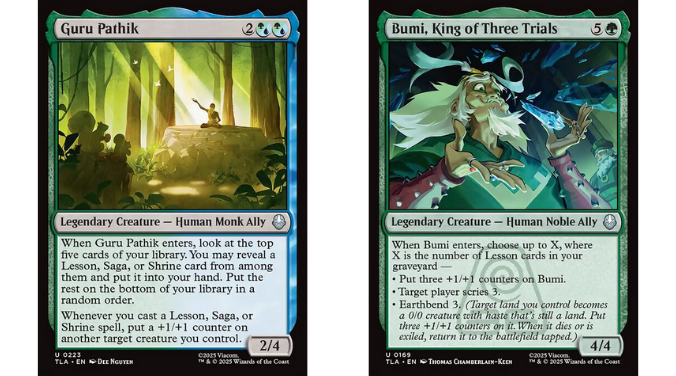
This draft archetype unfortunately feels a little undercooked to me amidst the high power and synergy of the others. Or rather, it’s more of a starter kit for playing five-color goodstuff, all-in shrines, and other highly specific multicolor builds. This path is very powerful – if you get the chance to first pick something like Iroh, Grand Lotus, just try it and find out!
However, if you are drafting straight UG, be aware that this is a slow, big-spell archetype that wants to both ramp AND self-mill to set its impact plays up, and which has neither good early blockers nor good early removal to defend itself while that happens.
Blue at least can boast some one-mana removal enchantments, but those interact awkwardly with a lot of the format’s synergy creatures as they continue to provide value while tapped down or disguised as a hard-working citizen. You’re honestly best off just chain-ramping through the early game and trusting the lower average creature stats to keep you alive in that initial window.
What are you ramping into? The answer is simply the best cards you were able to draft – whether that’s Special Guest Koma, or every color of Shrine back to back (make sure that the red then white ones trigger last). The in-color payoffs are Bumi, King of Three Trials and Serpent of the Pass – if you’re running those, make sure you have actually invested in the self-milling-lessons part of this archetype, but they don’t do anything you can’t find elsewhere.
BG: Earthbender Midrange
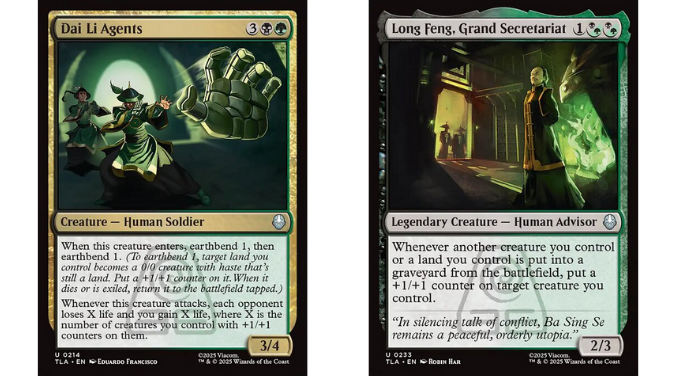
Does anyone else feel weird seeing such a clear +1/+1 counter archetype with so few actual payoffs for having counters on your things? I feel like this set maybe wanted an Inspiring Call: there are some synergies like Badgermole, but nothing that compares to the support for Ally typal or even Lessons. Instead, you just play these earthbending and +1/+1 counter effects because they do good things on rate, not because you’re desperate to trigger your Earth Kingdom General.
Luckily for you, Earthbending Lesson et al. are indeed very good on rate (even better if discounted by Uncle Iroh!) and black has great removal and some draw power to back that horde of medium-size creatures up.
One of the big decision points you will need to master is how to allocate your earthbending triggers. Do you use them all to target the same land and try to make something unblockably large? Or do you spread them out to play around removal? When is it worth putting the counters on a tapland so you can proceed to sac it and draw a card twice? These are genuinely challenging decisions which go a long way towards spicing up an otherwise basic archetype.
RG: Ferocious Midrange
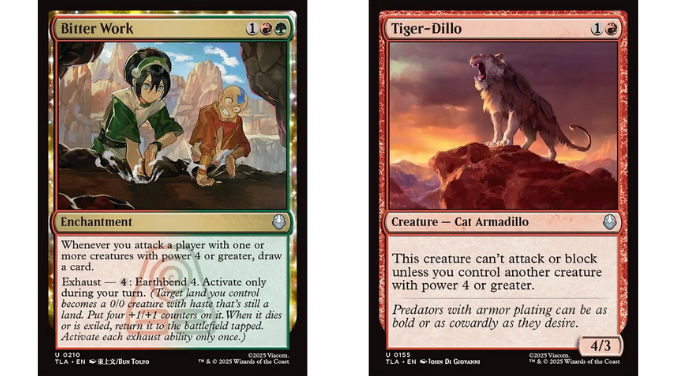
This archetype finds a really satisfying way of blending the aggression and power-pumping of red with the solid earthbending midrange of green: classic “four-power matters” a.k.a. ferocious. Different cards will care about the power of your creatures at different times and in different ways, so it’s important that you play around them correctly, especially when using temporary power boosts like Cunning Maneuver or Pillar Launch.
The unique A:TLA flavor here (other than some of your ferocious creatures being lands) is that you can curve out while ALSO playing combat tricks and removal, thanks to firebending. This deck might naturally play slower than other red decks, but even the cheap red creatures scale surprisingly well into late=game, thanks to their firebending-inspired mana sink abilities. If you ramped to eight lands, you can just use them to activate Fire Nation Cadets four times – I’ve seen more than one game end that way, and Fire Sages or Vindictive Warden are even nastier.
I’ll close by giving a special shoutout RG’s favorite uncommon: Tiger-Dillo. This card has great potential but non-green decks struggle to turn it on, so it’s often available quite late into packs. Of course picking up multiples makes them all much better, so if you think you’re in RG I’d grab them early and often – they just run away with the game.
THE FIRST PICKBENDER
I can now say with confidence that this is the best Universes Beyond product yet – and only partly because they went back to the normal Magic card frames. I’m at best a casual fan of Avatar the show: watched it once with friends as an adult, liked it okay, and left it at that. But even with that cursory knowledge these cards are evoking great moments and characters I might not even remember otherwise – and they combine that homage with some really tight set design and four of the more innovative new mechanics of recent years.
I expect this is going to be a well-received draft format, and judging by its depth of archetypes, hopefully one with a long tail. Good luck to all would-be Avatars (or firelords?) beginning their travels through the next weeks and months!
BONUS POSTSCRIPT – BEST FIRST PACK (NON-RARE) PICKS, BY COLOR:
This is a synergy-focused set, so I have valued speculating on narrowly-themed cards more than usual.
WHITE: Team Avatar, Water Tribe Rallier, Southern Air Temple, Path to Redemption, Avatar Enthusiasts
BLUE: Benevolent River Spirit, Gran-Gran, Invasion Submersible, Teo, Spirited Glider, First-Time Flyer
BLACK: Azula, On the Hunt, Heartless Act, Epic Downfall, Fire Navy Trebuchet, Zuko’s Conviction
RED: Firebending Lesson, Fire Nation Cadets, Zuko, Exiled Prince, Combustion Technique, Lightning Strike
GREEN: Allies at Last, Invasion Tactics, Haru, Hidden Talent, Cycle of Renewal, Seismic Sense
OTHER: Foggy Swamp Spirit Keeper, Cruel Administrator, Wandering Musicians, Zhao, Ruthless Admiral, Barrels of Blasting Jelly

Tom’s fate was sealed in 7th grade when his friend lent him a pile of commons to play Magic. He quickly picked up Boros and Orzhov decks in Ravnica block and has remained a staunch white magician ever since. A fan of all Constructed formats, he enjoys studying the history of the tournament meta. He specializes in midrange decks, especially Death & Taxes and Martyr Proc. One day, he swears he will win an MCQ with Evershrike. Ask him how at @AWanderingBard, or watch him stream Magic at twitch.tv/TheWanderingBard.