

It’s been a couple of weeks now since the release of Reality Fracture, and we’re about to enter a very critical phase of any Magic set’s life cycle. That’s right: we’re finally getting enough tournament data to assess which new cards are likely to stick around and have significant roles in the ongoing Standard metagame!
That’s not an easy bar to clear, and even in the best-case scenario only a fraction of Reality Fracture cards will make it through. Ever seen nature documentary footage of turtle hatchlings rushing down the beach while sharks and seabirds swarm around picking them off? It’s a brutal culling which will let only the luckiest and most able survive to form the next generation. Today, we’re going to find out which Reality Fracture cards made it all the way to the ocean.
FROM THEORY TO PRACTICE
The first thing I have to point out in these discussions is the size of the Standard card pool. Having more cards in the format from a wider variety of sets tends to punish cards designed around set-specific mechanics. Existing meta decks are unlikely to support those mechanics, and it’s not worth making room for a full support package of new cards even when the payoffs are very good.
However, this could end up being a positive thing for Reality Fracture, since it barely has any set-specific mechanics to begin with. So rather than being designed as support cards for a mechanic which wouldn’t even pay off, most rares and uncommons from Reality Fracture are simply generic effects intended for use everywhere.
The set does have one signature new mechanic: empower Jace. Planeswalkers have been in a weak place lately, other than the pseudo-creature Kaito, and I don’t expect we’ll see a full planeswalker themed deck emerge even with the unique “Way of” support cards added by Reality Fracture. But there is one particular planeswalker which has made an immediate impact on Standard decklists (hint: his face is on the set symbol).

As the marquee character of the set and potential final incarnation of Jace in Magic, I’m sure the designers intentionally designed The Theorist, Jace Beleren as an absolute 10/10 bomb. It’s the kind of card people want control decks to revolve around, and Standard UW decklists have dutifully added a healthy three or four copies, along with a couple blue Chandras. The less expected part is how The Theorist has accidentally brought his little brother Token! Jace along for the ride to metagame relevance.
It’s all thanks to another new rare, Jace’s Machinations. While not every UW list with The Theorist has included it, Machinations has shown up in several high-placing builds as an instant-speed draw spell that becomes extremely powerful with The Theorist in play. Once he’s deployed, Machinations can be used to reactively downtick and bounce a key permanent, or uptick to produce a surprise body while advancing the clock on Theorist’s ultimate – a really cool and unique way to soup up this already-mighty ‘walker.
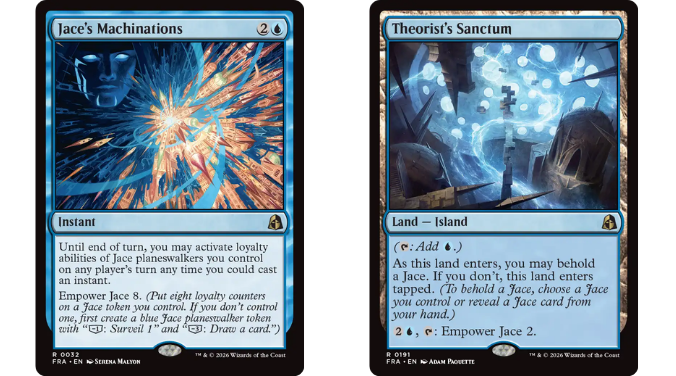
Oh, and it also has a bit of bonus text that says “empower Jace 8”. This ends up working out like the world’s most complicated Divination: you get to immediately -3 the token thanks to Machinations’ effect and then untap and -3 again on your turn for +2 total cards. Not a bad deal, especially since you’ll still have a two-loyalty token Jace. You can use him to surveil on future turns or just keep him around and try to add a bit more loyalty using Theorist’s Sanctum to cash in another -3!
SEEING RED
I personally love that aggro decks are responsible for a lot of the variety in the current standard meta. Whatever your favorite flavor of mana is, there’s a deck that lets you beat down with it, and Reality Fracture added significant new cards for most of them.
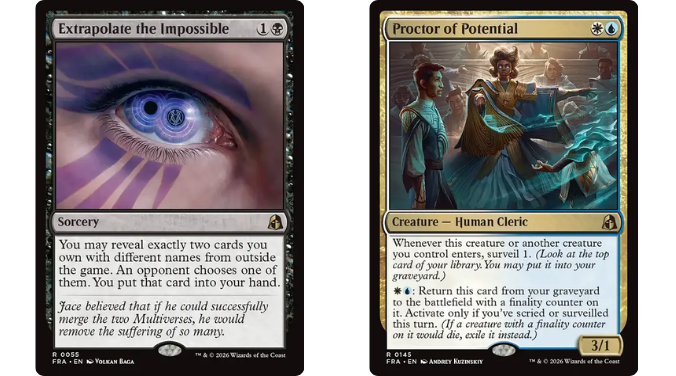
Dimir is a very established aggro/midrange archetype without any specific mechanical theme to influence its choice of cards: the only criteria is raw strength. So it’s impressive to see any new spells break into the list – but that’s what Yuriko, Hope from the Shadows and Theorix Charm have done.

The mix of card selection and flexible interaction these cards provide just fits perfectly into the blue-black gameplan. Bonus points for Yuriko being a ninja and thus potentially benefiting from Kaito, Bane of Nightmares emblems!
The same goes for the introduction of Pompous Battlemage into the reigning UR Prowess decks or Carnivorous Cultivator to Mono-Green Landfall. These cheap, powerful rares were always expected to make the cut, but it’s still impressive to see them appear as four-ofs in archetypes which are already so optimized.

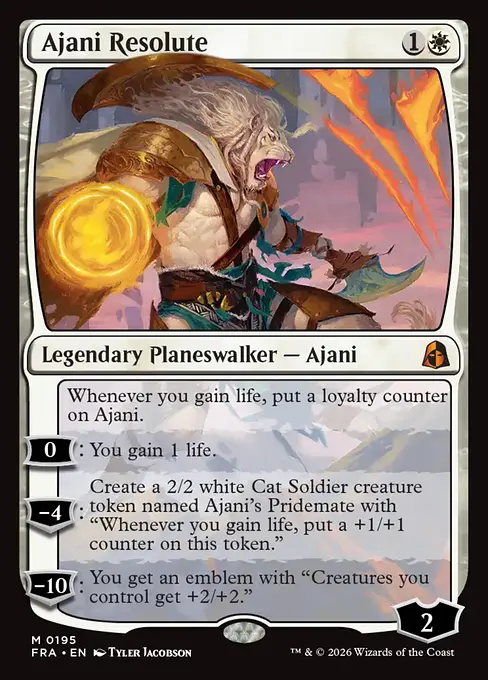
Orzhov Lifegain, on the other hand, is the complete opposite kind of situation. Previously a very fringe strategy, the deck got a huge boost from multiple Reality Fracture cards which have now propelled it to prominence. Bringing Liliana the Faultless and Enlightened Confidant into the fold is a huge boost to pre-existing lifegain payoffs like Amalia Benavides, Starscape Cleric and Case of the Uneaten Feast.
The end result is a true synergy or engine deck, a whole greater than the sum of its parts. None of these cards could really be considered playable in any other context – even Enlightened Confidant, which is one of the highest-potential cards in Reality Fracture.

The breakout nature of this new build means we’re yet to see a true consensus decklist for the archetype. When one does, I wouldn’t be surprised if that ends up including Ajani Resolute as yet another great new lifegain payoff – for synergy decks, you simply can’t have too much of a good thing.
FILLER SET (COMPLIMENTARY)
One other important niche addressed by Reality Fracture is cards that help fill your own graveyard. So it’s no surprise that graveyard-centric archetypes have rushed to cash in, adding the best new tools to bring their synergies online faster and more consistently.
Jund Sacrifice has made good on my prediction from a few weeks ago, putting up a ton of wins with the re-introduced Tarmogoyf. In that article I guessed Tarmogoyf would need to find a shell that was both aggressive and good at filling the graveyard. Jund Delirium fits that bill perfectly. Red-green delirium aggro has been a competitive choice in Standard ever since Duskmourn: House of Horrors, but it really lacked for good one-drops beside Patchwork Beastie.
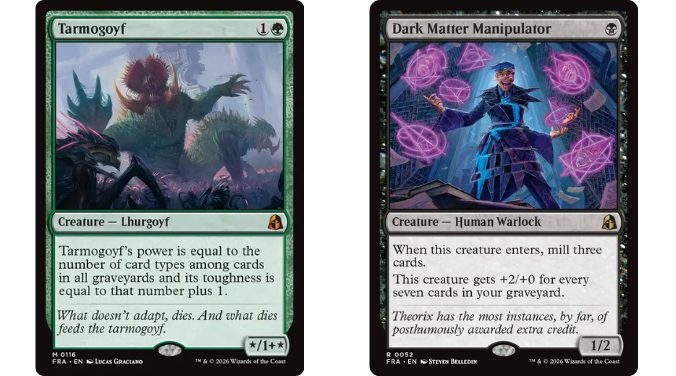
Incorporating black lets you add a couple of Moonshadow and more importantly, a playset of Reality Fracture’s Dark Matter Manipulator. The Manipulator’s mill trigger is a perfect opener for this strategy, potentially turning on delirium right away. It’s also a reasonable attacker thanks to its power-scaling ability, which is crucial for a deck which mainly fails by not drawing enough threats to maintain pressure.
The most prominent graveyard deck of this Standard era is Dimir Reanimator, built around Superior Spider-Man as a unique reanimation spell and Doomsday Excruciator as the default game-winning target.
It’s very hard to imagine displacing either of those signature cards from their roles, so perfect is their fit. But the archetype is still interested in side-grade options, and many pilots are making room for a one-of Uldaros Theorix in the main.
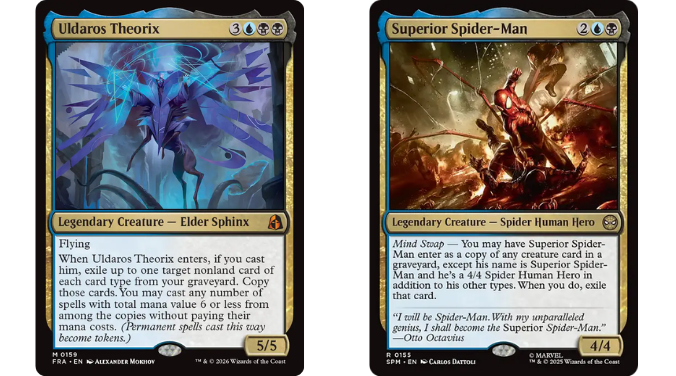
The wording of Superior Spider-Man means you still get the elder sphinx’s cast trigger upon reanimation, giving you flexibility to recur anything from Deadly Cover-Up to removal to Duress. Most of the time you’ll also use it to copy an additional copy of Spider-Man, which effectively makes your reanimation of Uldaros “free” since that second copy can then reanimate Excruciator or whatever else you would normally target. It’s a little bit win-more, but if you fill the graveyard fast enough to still be consistent with the main plan then Uldaros might be key to going over the top of a mirror match or other strong opponent.
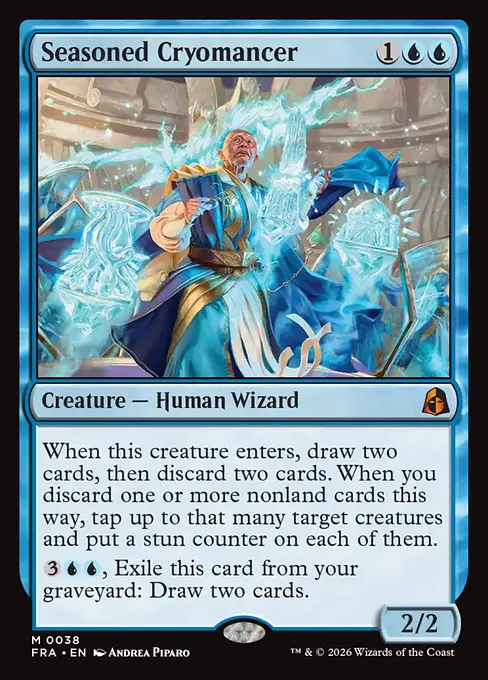
Reality Fracture is of course helping out with the filling part, not only thanks to Theorix Charm but also new mythic rare Seasoned Cryomancer. In addition to the valuable draw-discard trigger, Cryomancer’s defensive contribution (both from stun counters and chump blocking) compare favorably to noncreature options like Winternight Stories or expensive ones like Emeritus of Ideation.
LINGERING ECHOES
While The Theorist and his schemes to rewrite reality were defeated, they seem like they will go down as much more than a footmark in Standard history. I don’t know whether this set was deliberately designed to try and fill gaps in the Standard card pool, but either way there are a lot of tools here that decks happen to need and it’s led to a lot of early success for Reality Fracture overall.

We haven’t even had time to get into the cards people are trying out in sideboards. Most obvious is the cycle of uncommon color hosers, a type of card that’s always pushed as competitive options (they’re certainly not appealing to most casual players!). But there’s also a lot more exotic cards being tried, from Null Summoner in Dimir to Sphinx of False Conclusions in control lists. What’s new and untried at least holds potential to be revolutionary, and I’m sure many players will be drawn to that potential as Reality Fracture Standard plays out.

Tom’s fate was sealed in 7th grade when his friend lent him a pile of commons to play Magic. He quickly picked up Boros and Orzhov decks in Ravnica block and has remained a staunch white magician ever since. A fan of all Constructed formats, he enjoys studying the history of the tournament meta. He specializes in midrange decks, especially Death & Taxes and Martyr Proc. One day, he swears he will win an MCQ with Evershrike. Ask him how at @AWanderingBard, or watch him stream Magic at twitch.tv/TheWanderingBard.