
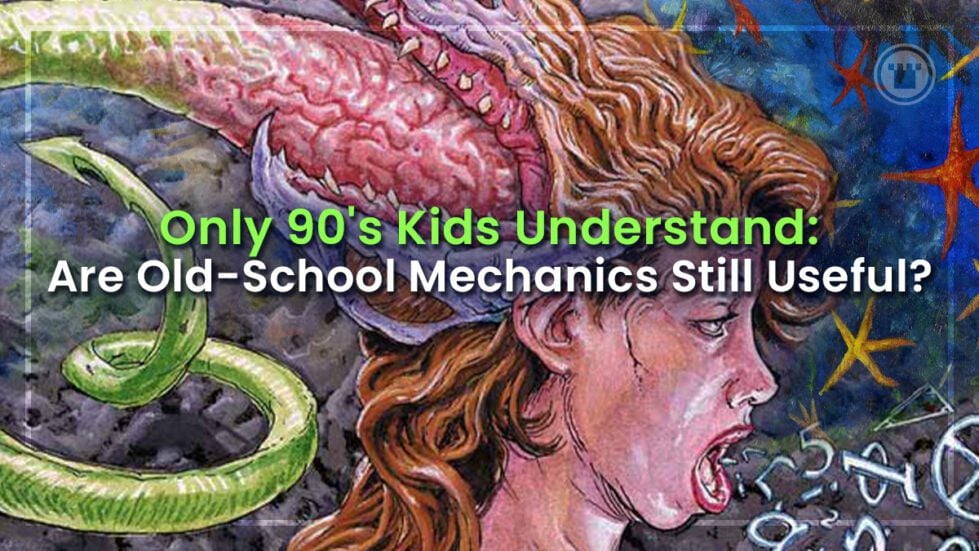
Magic’s long and unbroken history of development makes it truly unique among strategy games – three decades of evolution and expansion, stretching back towards Antiquities.
The constant churn of new cards and new mechanics keeps Magic fresh and current. It also creates something akin to “generations” in its audience. We each discover and learn the Magic of our own time, and usually that’s the Magic we use as lens and measuring stick to understand other generations.
But is it possible that this generational mindset lead us to overlook the potential of older cards and inter-generational synergies?
COUNTING ON AGE
You can’t find a much better example of past-generation mechanics than cumulative upkeep. The whole concept is emblematic of an older, glacially slow period of Magic – specifically Ice Age and its follow-up sets.
Having to pay your creatures a subscription cost every turn like they’re a bunch of streaming websites is bad enough, but when those costs keep going up and up and up? How do you justify that kind of recurring drain on your mana supply in an era where using your mana efficiently is so vitally important?
Well for starters I’d argue the pace of play has gotten SO fast now that even a card which only stays in play for a couple of turns can have a dominant impact on the game. Static Prison from Modern Horizons 3 has seen widespread success even in decks which can’t generate energy to keep paying its upkeep cost. That mana cost and expected duration aren’t too far from a cumulative upkeep design like Elephant Grass.
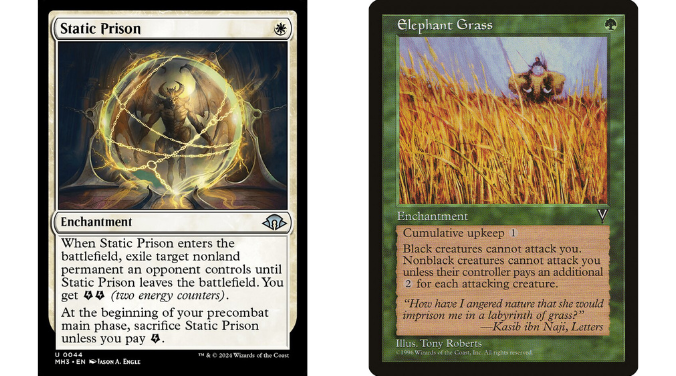
In both cases you’re benefitting from an abnormally low initial cost for the effect to compensate for the upkeep cost. But if you figure that the card provides playable value over its first one to three turns, then it starts to feel like you’re getting that low cost upside for virtually nothing!
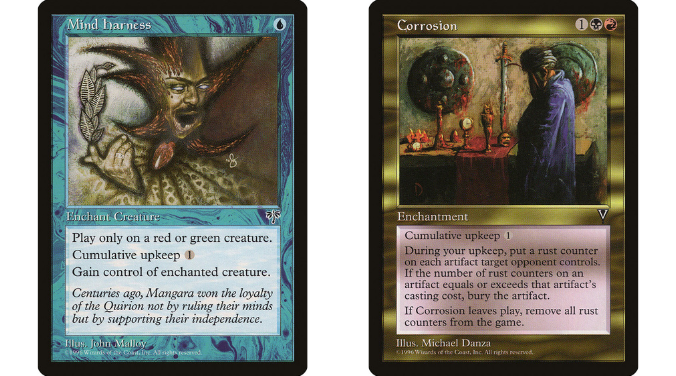
That’s even more true when you use these cards in multiplayer, where you’re paying the same price to get double or more the usual duration out of effects like Infernal Darkness, Inner Sanctum and (most notably) Mystic Remora.
Another meaningful point is that not all Cumulative Upkeep costs are paid with mana. Anytime Magic offers us a non-standard cost good players take notice, and a lot of these cards can be amazing tech for decks looking to do extremely specific things.

For instance, some RB decks seek to punish opponents for playing creatures with effects like Trespassers Curse, Repercussion and Burning Sands – Varchild’s War-Riders might be the most efficient way to force creatures onto opponent’s battlefields ever printed. Another example is Thought Lash: already a playable defensive effect with a more manageable upkeep cost than most, it can become an amazing enabler for spells that care about your number of cards in exile.
Other non-mana upkeep costs can be made neutral-to-beneficial based on your strategy or current boardstate, such as Jotun Grunt, Psychic Vortex, Sheltering Ancient, Wall of Shards, or Vexing Sphinx. Dreams of the Dead is already a pretty good and flexible source of short-term reanimation, but decks with a lot of flicker effects can basically make it mono-blue Debtor’s Knell!
Even the mechanism these cards use to keep track of the mounting costs can, in 2025, be reimagined as a source of value. Age counters are, well, counters – meaning they can be managed with proliferate or removal effects like Moxite Refinery and O’aka, Traveling Merchant.
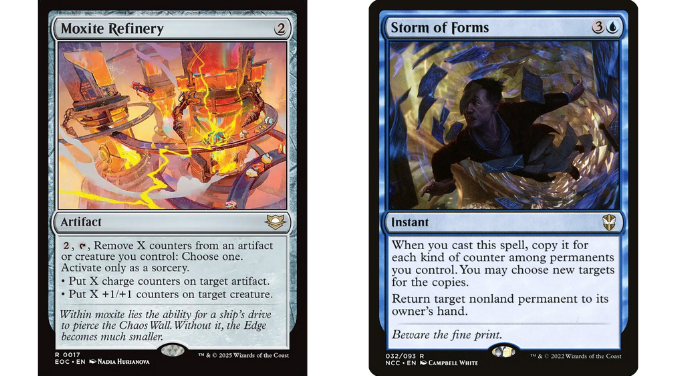
They also help fuel the rapidly-expanding pool of cards which care about amassing different kinds of counters: Blitzball Stadium, Goldberry, River-Daughter, Storm of Forms, and so on. You only have to pay for age counters if the card they’re on actually has cumulative upkeep, so moving them onto these payoffs is upside benefits both cards in the transfer!
GETTING THE BAND BACK TOGETHER
Another example of how mechanics can become inextricably associated with a certain generation is banding. Even decades after being effectively retired its name is still frequently invoked as a byword for both poor game design and Magic’s misty past.

But given a fair review through the eyes of current-generation players, banding is both less obtuse than reputation suggests and much more relevant than other old-timey keywords like flanking or rampage. The premise of banding is straightforward and evocative: when declaring attackers, you can group some of them together into a single unit, or “band”. This band can contain any number of attackers who have the banding keyword, and up to one which doesn’t have it (as a bonus).
The downside is that your opponent can now block the whole band with a single blocker. Banding also turns off evasive keywords like flying or shadow unless your entire band is But it can often be better to attack with one huge attacker than a swarm of little ones, and banding gives you the flexibility to make that choice.
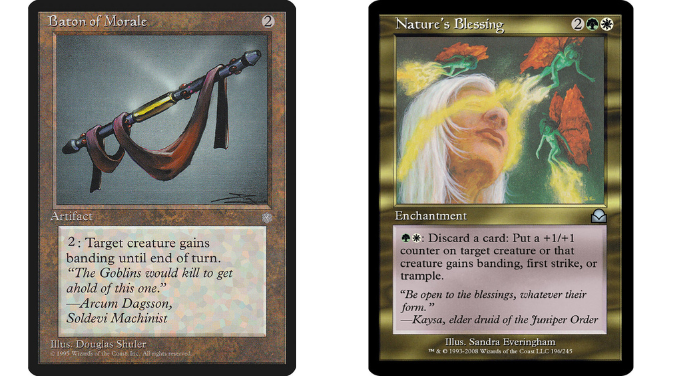
The “infamously confusing” aspect of banding is how it affects combat damage. Normally when a creature in combat has a choice of multiple creatures it can assign damage (such as when double-blocked), the player dealing the damage chooses how to split that damage up for maximum lethality.
But if a band of creatures are being assigned damage, then the band’s controller chooses instead: they can put all the damage on one Benalish Hero to protect the rest of the unit, or they can spread out 1 point to every creature so the whole team survives. This part of banding even works on defense! So long as your multiblock includes at least one creature with the banding keyword, you can assign all of the blocked creature’s damage however you like.
This is just a fundamentally strong keyword to play around with in any generation of Magic. However, it has a few specific uses that are more relevant in 2025 than ever before. Every banding creature is an effective, efficient bodyguard for creatures with powerful attack triggers, which normally risk themselves in combat to get at that value. They’re also excellent partners for cards that like being damaged, like Brash Servitor or the new Anti-Venom.
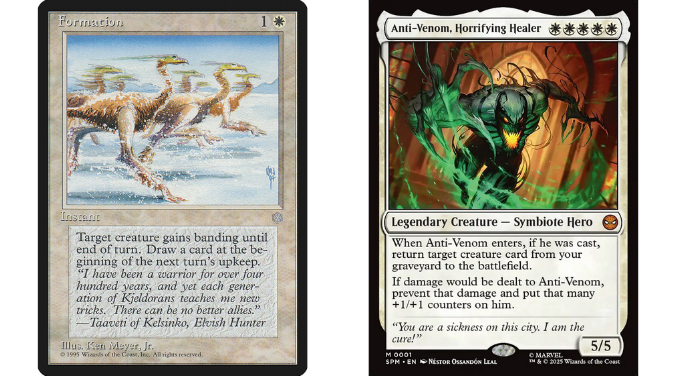
Honestly, I don’t really see how Banding is any harder to understand than more recent mechanics like mutate or ninjutsu or toxic. It’s unique, powerful, and promotes aggressive play with small creatures. Wizards, forget trying to invent replacement mechanics like enlist; just put banding back on uncommons in the next set and start whistling like nothing happened.
THE ONLY ONE I CARE FOR IS VALUE GENERATION
Maybe you think my request there sounds totally deranged, or that this whole article has been cherrypicking and stretching the answers to suit my “make old cards relevant again’ agenda. But to that crowd I would say: “how about the phasing renaissance?”

During its first run in the 90s, phasing had a reputation just as sour as banding. It was quickly discontinued, and left as a dusty old trivia question for the next 15 years… until suddenly it made a stunning comeback as an alternative way to “flicker” creatures out of play that would not set off leaving/entering the battlefield triggers. Now there’s as many new-generation phasing cards as old, with the new cards leaning harder into that valuable niche.
All I ask is that we consider these older, less well-feted mechanics anew and consider what they do from every angle with an open mind. You’ll probably find some amazing new tech: or at least, you’ll be able to enjoy playing cards that force every opponent to have to stop and read.

Tom’s fate was sealed in 7th grade when his friend lent him a pile of commons to play Magic. He quickly picked up Boros and Orzhov decks in Ravnica block and has remained a staunch white magician ever since. A fan of all Constructed formats, he enjoys studying the history of the tournament meta. He specializes in midrange decks, especially Death & Taxes and Martyr Proc. One day, he swears he will win an MCQ with Evershrike. Ask him how at @AWanderingBard, or watch him stream Magic at twitch.tv/TheWanderingBard.