

Secrets of Strixhaven is a uniquely challenging Draft set to wrap your head around. Unique, that is… unless you played the original Strixhaven! Much like its predecessor this new set has a heavy emphasis on instants and sorceries, and their interplay with the students and professors of Strixhaven’s five colleges.
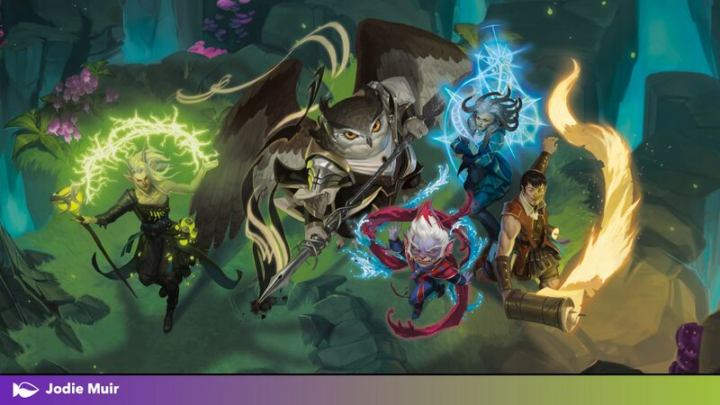
As a Draft format this provides some really memorable archetypes to explore. Blistering tempo decks and greedy value piles are both viable, even within the same colors! But figuring out its unique requirements and picking patterns might test your patience… unless you read this study guide to prepare first.
SHAPE OF THE FORMAT
As a set built around instants and sorceries, Secrets of Strixhaven games tend towards small boardstates, with few creatures alive for either player at any given time.
Some of this results from simple type distribution: there are slightly fewer creature cards in an average booster than other sets, thanks largely to the guaranteed Mystical Archive spell in each pack. But the impact of any creature shortage is emphasised by the number of instants and sorceries which either buff or remove creatures, leading to a high-stakes balancing act for drafters and deckbuilders.
On the battlefield, this arsenal of efficient interaction can fuel powerful tempo gameplans. The first player to attack with mana open has a tremendous advantage, since they can usually trade your creature for a combat trick and still have mana to add another body to their board.

Of course, if you try and wait to block with mana for a combat trick of your own, they might just play removal and leave you with an empty board once again!
These play patterns have previously led to some of my least-favorite draft formats ever. But in SOS (as with original Strixhaven) the difficulty of blocking is offset by lower creature damage and plenty of strong removal. Every color has tools to fight back against aggro from bad starts, and most matches see players able to trade off their cards and slow things down until the set’s value-generating mechanics have a chance to shine.

The most prominent of these is prepare, which I reviewed at length in last week’s blog. Making it so your creatures “unlock” bonus instants and sorceries for you to cast instead of a normal triggered ability is a big flavor win for the set about wizard school!
Just remember when drafting these cards to double check when and how they “become prepared” – most will enter the battlefield with their sub-spell prepped and ready to go, but not all of them do!

Another nice thing about prepared is that it ensures you have enough spells to trigger the various other mechanics in the set that play off instants and sorceries.
I’ll go into more detail on these in the archetype breakdowns, since the other mechanics are associated with the individual colleges of Strixhaven. But besides Witherbloom, the different trigger conditions are quite easily met even just by “playing the game normally”, so you rarely get the feel-bad moment of not having enough enablers to play the good cards you drafted.
COLOR THEORY
The absolute first thing you should have in mind when approaching this format is the strict color limitations. You are essentially locked into the colors represented by the five Strixhaven colleges. The other color pairs have no multicolor cards and no fixing lands, making it nearly impossible to end up in them by drafting normally.

Leaving five “empty” color pairs has an important secondary effect on the drafting phase. I normally advise drafters to keep their options open in Pack 1 by drafting around one primary color, which gives you time to feel out which secondary color is most open.
But in SOS there’s only ever two viable pairings per color to choose from! On top of that, most of the strongest early picks are either gold cards or heavily biased towards a particular college’s gameplan. Factor in the small amount of color fixing (most of that being lands which are also limited to the five supported pairs) and you have a ton of reasons to commit to one college early and decisively.
That doesn’t mean you are always locked in by Pack 2, though. The strong divide between draft lanes means the effects of being contested are much more pronounced. With everyone committed to their colors early and cards from other colleges being almost unsplashable, high-tier cards are often available late in Pack 2 or 3 just because nobody’s trying to play Lorehold today – and if you notice and switch into that college, you can be the one to scoop those riches up.

You also need to remember casually splashing a high-powered rare or two is much harder and less rewarding than in other sets (since there’s a higher concentration of cards IN your colors as well). For best results you need an all-or-nothing approach. Either you play almost completely within your chosen color pair and optimize for consistency and efficiency, or you are deliberately aiming to play all five colors from Pack 1 – it’s very much the sixth archetype of SOS.

Remember, the two cycles of fixing lands only cover the color pairs that match a college. If you’re trying to add red to a white-black deck, you’ll need to specifically find the Lorehold lands (since there’s no red-black ones) and you’re only rewarded with access to one college’s worth of extra cards.
But going full WUBRG means you can also pick up Prismari lands as red sources, and the overlap from all colleges will give you the same or better color coverage for all five colors as you’d get trying a single splash! Drafting this way also unlocks the full power of the converge mechanic. These cards only really become worthwhile when cast with four or five colors, making them the “signpost uncommons” for the WUBRG deck.

Wanting to get five different color sources online ASAP naturally biases these multi-color decks towards a controlling role (and Quandrix ramp cards). While reductive, it’s not inaccurate to summarize the metagame as a duel between two-color aggro/tempo decks and greedy, five-color control.
ARCHETYPE BREAKDOWNS
WR: Lorehold (Graveyard-Matters Aggro)
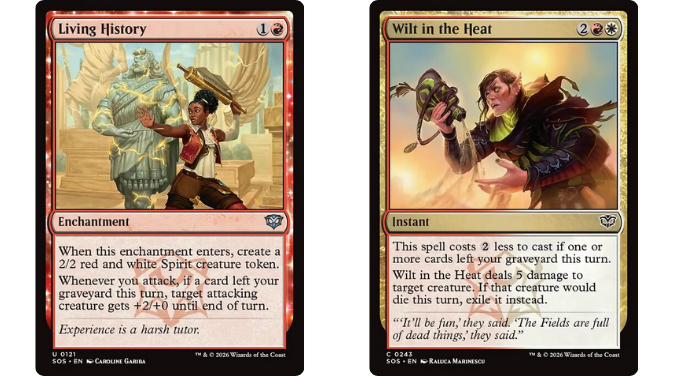
To me, the most exciting thing about Strixhaven sets is that the five colleges really shake up some of the stereotypical gameplay we associate with each color pair. The identity of Lorehold is that of intrepid, Indiana-Jones-style archeologists, who retrieve ancient artifacts and lead the ghosts of past wars to battle.
Mechanically, this translates to cards which care about cards leaving your graveyard, rather than what’s in there. This can happen when you exile things from your graveyard to pay a cost, when you cast a spell with flashback, or when you reanimate a creature to the battlefield – it’s actually very easy to trigger on most turns.
Flashback is usually the most mana-efficient method, and Lorehold has three great commons and several uncommons in-color with that ability. Combining those with Interjection and other super-efficient instants should give you the confidence to attack constantly in the early game and get your opponent down to low life.

If your opponent manages to stabilize, Lorehold does actually have some decent amount of staying power thanks to graveyard recursion and draw engines. But a lot of your opponents are likely to go bigger and draw more cards than you, so I try not to rely on my long game if there’s a way I can close things out.
Either burn their last few life points with Rubble Rouser and Thunderdrum Soloist, or use Duel Tactics, flyers and Lorehold charm to go around, over or through their blocks for the deathblow. Skycoach Waypoint has also been consistently great for me in these specific colors, with a lot of valuable prepared spells you can refresh to break open these board stalls.
WB: Silverquill (Creature-Targeting Aggro)

The WB deck is somehow even faster and nastier than the RW one when it comes to combat-trick-fuelled rushdown, which is probably why a lot of people have been rating white highly in the set.
In my experience the Silverquill decks feel like they have a bit more variance because their cards rely on synergy and snowballing momentum. How good I feel about drawing Lecturing Scornmage or Killian’s Confidence will vary widely from turn to turn, compared to the stable value of Practiced Scrollsmith or Charging Strifeknight.

The key to hitting the ceiling of WB is to rush out multiple creatures as early as possible. You’ll need combat tricks and removal to overcome blockers most of the time, so ideally you’re getting maximum value each time you spend those cards: either adding +1/+1 counters with repartee triggers, drawing cards with Killian’s Confidence and Snooping Page, or pushing through damage with surplus attackers alongside the thing getting blocked.
Stalling out is a very real concern for Silverquill if you run out of creatures, but there’s enough removal and flyers available to keep the threat of combat damage live throughout most matches. If you can’t break through, black has a handful of engines in Arnyn, Deathbloom Botanist, Forum Necroscribe and Leech Collector which might get you over the line.
UR: Prismari (Big Spells Control)

Another really fun and singular take on a color pair, building on red’s pivot to a control color in this set.
Adding blue gives a ton more interaction (mostly bouncing and countermagic) and the overwhelming majority of the set’s card selection, which is usually enough to ensure inevitability so long as you can keep playing interaction to stay alive through the early and midgame.
The Prismari mechanic, Opus, is a modified form of prowess where you get a small amount of value when casting an instant or sorcery, but then a much greater value effect if that spell costs five or more mana.
To help make all these expensive spells viable, UR gets access to several mana dorks, treasure-creators and other accelerants. You’ll also see expensive spells with cheaper alternate modes (flashback, X costs, Visionary’s Dance) or attached to cheap creatures as prepared sub-spells.
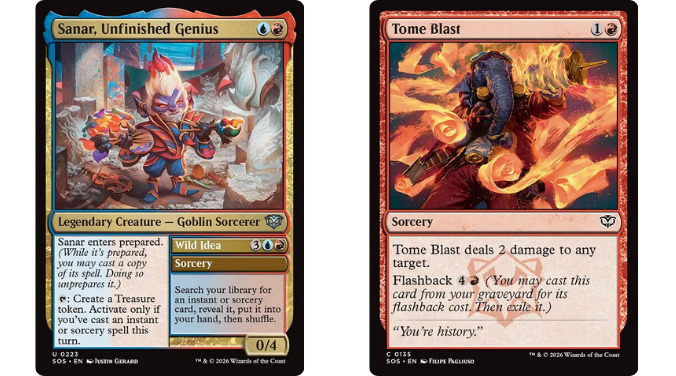
There’s a lot of cool design involved, and I think it mostly succeeds in making the individual cards feel good to play. But unfortunately there is still a lot of tension in this archetype when it comes to choosing your gameplan.
On the one hand you have a ton of cheap interaction that bounces, taps, or disable blocking. Those encourage early, all-in aggression so you kill them before it matters that you didn’t permanently answer their creatures. But the other half of the UR card pool is understated creatures and mana accelerants to help you build around lots of expensive sorceries that will eventually overpower and outlast the foe.
In practice, it seems that greedy second option is the most reliable choice. I also see a lot more “rainbow Prismari” decks or URG blends than I do straight-up UR. Be aware of these options, and try to pick the cards which best support what you’re trying to do in the current draft.
UG: Quandrix (Ramp and Draw)

This college is maybe the least original in terms of playstyle for its color pair, but using ramp to power out huge creatures and throw their weight around does feel pretty unique compared to the other decks in SOS Draft. It’s not just that your creature curve tops out higher than the other colleges: the Increment mechanic means your early-game plays will also out scale so long as you continue to cast larger and larger spells.
In a set which produces lots of lengthy games, UG decks love to exploit any lull in pressure with a chunky draw spell like Zimone’s Experiment or Embrace the Paradox. The first burst of cards and mana makes it more likely they can fit in a second such spell, and then further follow-ups until the compounding resource lead is overwhelming.
Ironically, this makes it perhaps more important that you take the most efficient creatures and interaction available to shore up the early game, as your ability to blunt an opponent’s initial momentum will frequently decide a match.
The combination of card selection, ramp and fixing mean Quandrix is also the best starting point for multi-color decks in the format. It’s quite possible to have a “pure” UG deck (and I think they’re scarier on average than pure UR), but more often than not there will be at least a third color added to fit in more removal, and the five-color version might be most popular of all.
There are also situations where you can consider playing UG as a tempo deck, just because Matterbending Mage and Deluge Virtuoso are so insane and your increment creatures let you add stats to your board even if you’re tapping out to play removal.
BG: Witherbloom (Lifegain Midrange)

Blood Researcher was my favorite card to build around in OG Strixhaven, so I am delighted to tell you that the lifegain-trigger archetype has been absolutely supercharged for this sequel set!
Gaining life is not always worth pursuing for its own sake – although the power of aggressive decks in this format means you’ll often be grateful for it! But if you can trigger your lifegain at the right times, you’ll be able to grow your creatures and upgrade instants and sorceries to have more powerful effects.
This is why the change of pest tokens to gain life on every attack instead of just on death is so impactful. Having such efficient access to lifegain at no extra mana cost really raises the ceiling of the deck, especially when it comes to cards which can benefit from multiple triggers per turn.
Another thing that stands out about Witherbloom’s engine compared to the other colleges is the quality of cards it gets at common.

The combination of Bogwater Lumaret and Pest Mascot is very intimidating on basically any boardstate, while Grapple with Death is simply the best removal spell in the format. The uncommons are also very powerful without getting too far up the mana curve, giving GB the speed to punish greedy ramp decks while still having a definite size advantage over the various aggro decks.
But perhaps the sneakiest upside to drafting GB is the highly synergistic nature of these lifegain cards. Other mechanics in the set like repartee and opus are much more open-ended and splashable, but it’s really tough to gain life consistently unless you are specifically playing Witherbloom. This means even great spells like Pest Mascot and Efflorescence are unlikely to be picked up opportunistically by non-GB drafters; as a result, the deck tends to come together very consistently once you commit to it.
YOUR EXAM TIME STARTS NOW
Despite facing a tough learning curve in the original Strixhaven, I ended up being a big fan of the set and its playstyle. I’m delighted to find that this return set has not only replicated the quirks and novelties of that draft format, but even improved on it with prepare and other mechanics to smooth the inherent inconsistencies of a spell-centric set design.

I don’t think the set’s been out long enough to make definitive statements about the balance of color vs. color or control vs. aggro: Deluge Virtuoso might be the best Frost Lynx ever, but I’ve seen Divergent Equation end just as many games, so you’re certainly not railroaded into playing the game any one way.
Good luck to all of you drafting the set – and if you find any secret hidden archetypes in the non-college color pairs, make sure to hit me up on socials and share the tech!
BONUS POSTSCRIPT – TOP PACK-ONE COMMONS FOR EACH COLOR!
WHITE: Interjection, Dig Site Inventory, Shattered Acolyte, Honorbound Page
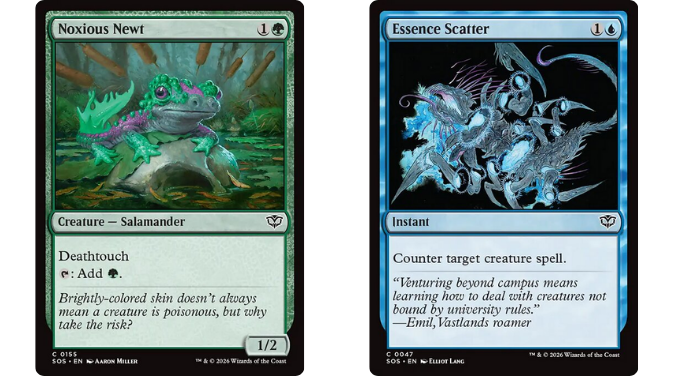
BLUE: Deluge Virtuoso, Banishing Betrayal, Landscape Painter, Essence Scatter
BLACK: Last Gasp, Wander Off, Cheerful Osteomancer, Burrog Banemaker
RED: Tome Blast, Unsubtle Mockery, Strife Scholar, Heated Argument
GREEN: Shopkeeper’s Bane, Noxious Newt, Mindful Biomancer, Burrog Barrage

Tom’s fate was sealed in 7th grade when his friend lent him a pile of commons to play Magic. He quickly picked up Boros and Orzhov decks in Ravnica block and has remained a staunch white magician ever since. A fan of all Constructed formats, he enjoys studying the history of the tournament meta. He specializes in midrange decks, especially Death & Taxes and Martyr Proc. One day, he swears he will win an MCQ with Evershrike. Ask him how at @AWanderingBard, or watch him stream Magic at twitch.tv/TheWanderingBard.