

Depending on what parts of the Magic community you tuned into over the past month, the most likely topics of conversation have been either the post-ban Standard format or Avatar: The Last Airbender.
My own articles have mostly been concerned with ATLA, discussing the set’s Limited format and how it fulfills the promise of Universes Beyond. But just as I was preparing to pivot back towards the competitive Standard side of things, those two discussions unexpectedly collided into one!

A surge of tournament results have proved the new set to be far more widely influential on the metagame than first expected – culminating in a Worlds field that was defined by Avatar characters and mechanics. In one week, we’ve gone from an unrefined and backwards-facing format to what looks like the blueprint for the next few months of Standard gameplay. Today, let’s take a look at how the power of Avatar has re-defined the top of the metagame.
BOOMERANG BASICS BEHIND BLUE’S BOUNCE BACK
Blue has re-emerged as the best color of the current Standard format, with a mix of old and new cards providing the foundation for an impressively diverse list of archetypes. It seems like virtually everything in blue is viable, from classic UW or Jeskai control to Simulacrum Synthesizer artifact decks, to creature combo and multiple flavors of aggressive UR and UG deck.
Almost all those lists are powered by the common core of Stormchaser’s Talent and Boomerang Basics. It’s an incredibly efficient and flexible engine which can create a tempo and life lead early game, hard-to-disrupt card advantage midgame and enable infinites or spot interaction late.

Arguably no deck shows their potential better than the revamped form of Esper Pixie, a deck which triumphed in my big hometown tournament this weekend. It really drives home how crazy these new cards are to see Boomerang Basics be arguably an upgrade of This Town Ain’t Big Enough – a card which just got banned to try and slow this deck down.
Your recurring card advantage/discard ETBs let you grind with the best of them, while your extremely low mana values help you win the interaction war against similar blue decks (and break up combos) while applying steady pressure with flyers.
Boomerang Basics is just the latest of many bounce spells which have shaped the last year or two of Standard. The worth of these effects continues to increase as the ambient amount of card advantage increases, since they generate a massive tempo gain and can interact with almost any opposing line – and the only downside is going “down a card” relative to the opponent.
Esper Pixie can’t take maximal advantage of bouncing the opponent’s cards because its stream of tiny spells don’t achieve enough in the one-turn window those plays open up. The decks which DO take full advantage are the various flavors of UR Tempo. I think my favorite build is the one which seems to have crystallized around Frostcliff Siege – playing bigger bodies like Tiger-Seal and Quantum Riddler with the +1/+0 trample and haste buff from that enchantment’s “Temur” mode.
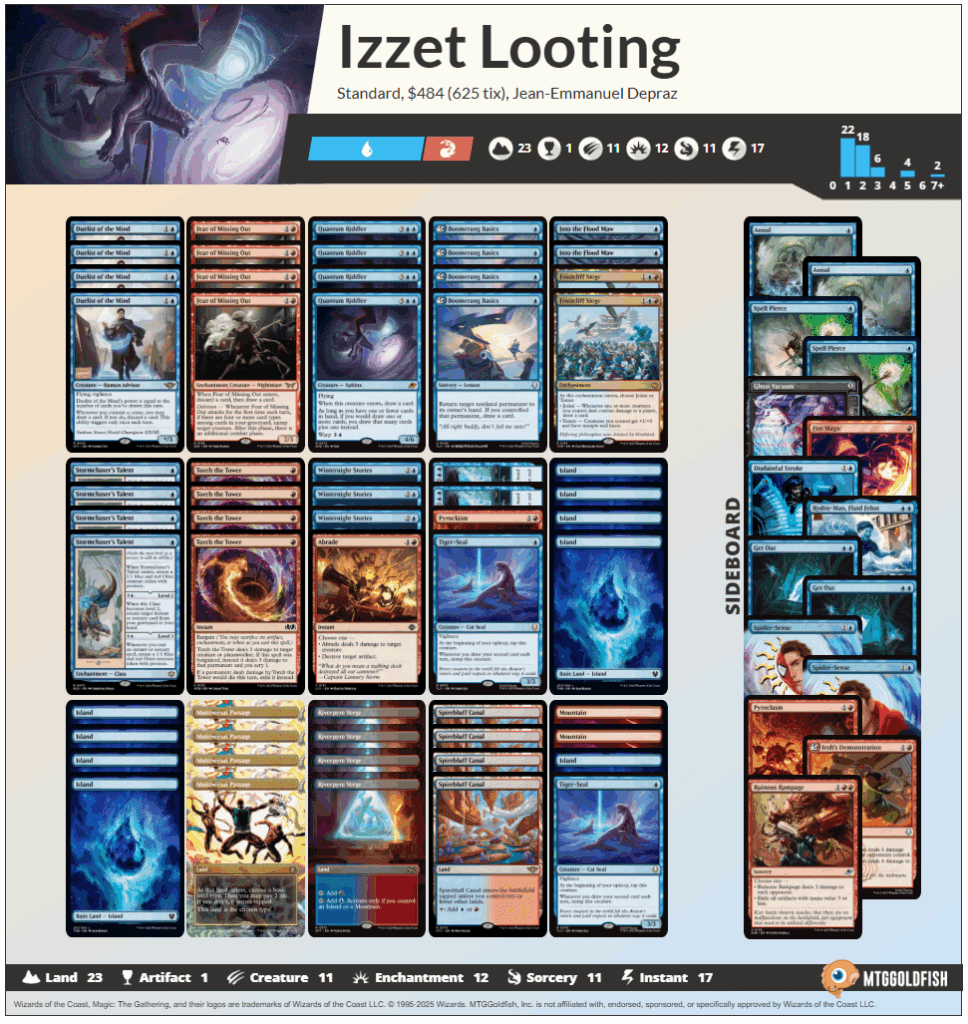
Such a deck ended up narrowly losing to Pixie in the finals of the event I mentioned, and it didn’t even necessarily feel like the UR deck was in its final evolution. The ability to warp in a hasty Quantum Riddler, draw two cards, and immediately use one of them to bounce the opposing blocker out of the way (for a total of three mana) just felt totally overwhelming for Standard decks.
But somehow that wasn’t even the most successful UR deck to hit tournaments over the weekend…
TEACH THEM A LESSON WITH TOP-TIER COMBO DECKS
The ATLA set didn’t only provide Standard players with hyper-efficient interaction and a touch of card draw. There were also some new awesome (and flavorful) wincons!
Monument to Endurance has had obvious potential since its release in Aetherdrift. But pre-ban UR had better things to do, and there were questions about the quality of discard enablers. Now, after this deck broke out huge in the last week of Standard and ultimately paid off with an 8-0 for Seth Manfield at Worlds, we can say those questions are probably answered – thanks to a most unlikely heroine.
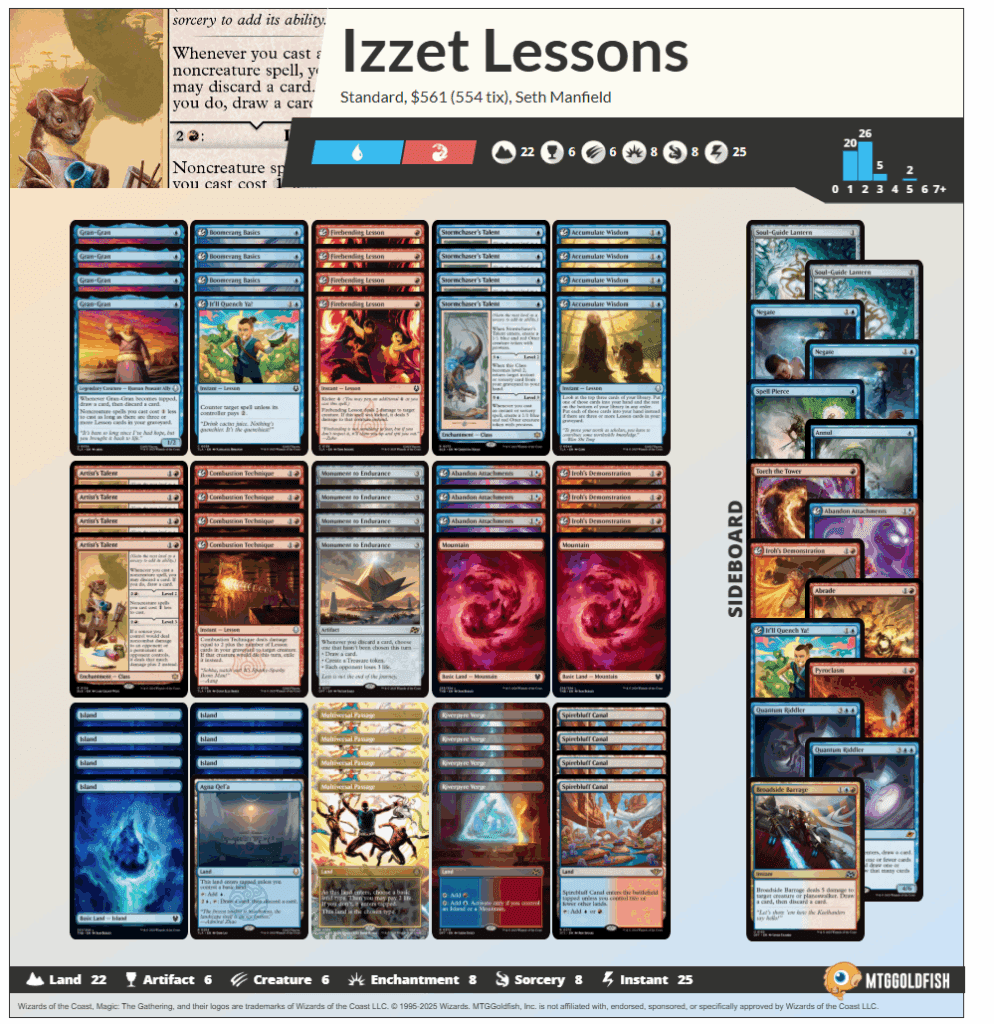
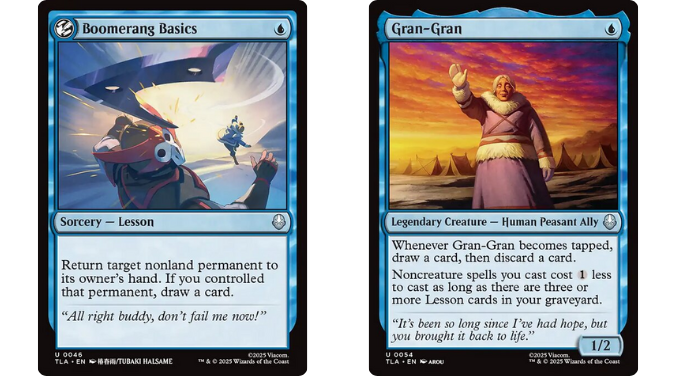
The unassuming Gran-Gran, backed by a suite of surprisingly synergistic Lessons, enables a consistent stream of discard without having to accept a downgrade in your interaction suite. The wily old waterbender is so cheap to cast that she almost never impacts your ability to hold up mana; in fact, she almost immediately discounts every other spell in the deck, including your main win condition in Monument.
Given the core of Lessons are so cheap and flexible in what they answer, I don’t see how this deck slips from the top tier anytime soon. There is some stuff you can target in post-sideboard games: turning off the graveyard hurts Gran-Gran and stops Accumulate Wisdom doing its Ancestral Recall impression.
Likewise, it seems totally worthwhile to bring in removal like Abrade to destroy the big-ticket engine card in Monument. But even if you apply both those counters, the Lessons deck will still function as a reasonable midrange list – a trait it shares with the two other ATLA-centric combo lists doing numbers right now.
EARTH AND WIND ARE BOTH FIRE
Maybe my favorite bit of ATLA discussion in the prior weeks was the new element-bending mechanics and how they all showed such verve and versatility of potential usage. But even I stopped short of predicting that bending would open up multiple new top-tier Constructed combos.
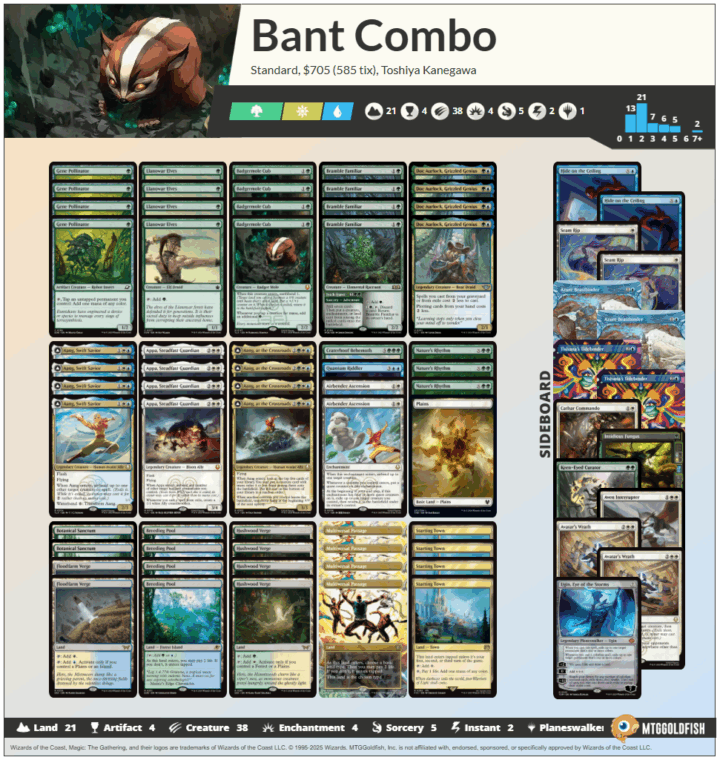
Bant Airbending is probably the most Avatar deck there will ever be in Magic the Gathering. You get to win games with Aang, Swift Savior, Appa and ally tokens, interact with Aang’s Iceberg and Boomerang Basics, even dig for more combo hits off another Aang (Aang, At The Crossroads). How much more lore-accurate goodness could you want?
The final, decidedly-un-Avatar puzzle piece is Doc Aurlock from Outlaws of Thunder Junction, who makes it free to cast any of your own cards exiled with airbending and allows the deck to go properly infinite. Yes, a four-piece creature combo is finicky to assemble in theory, but being able to play most of the pieces at instant speed and dig aggressively towards others helps make this list highly consistent.
It helps you can often piece together accidental combo-like turns from random parts thanks to the raw power of cards like Badgermole Cub. It’s no wonder the Cub is actually plan A for two other combo (or combo-like) top decks.
Most people who dabble in Standard will be familiar with the Simic Ouroboroid aggro deck by now It was already a player in the format pre-ATLA, using multiple one-mana dorks to power out threats which then scaled off having a bunch of cheap creatures on board, not least its namesake four-drop from EOE.
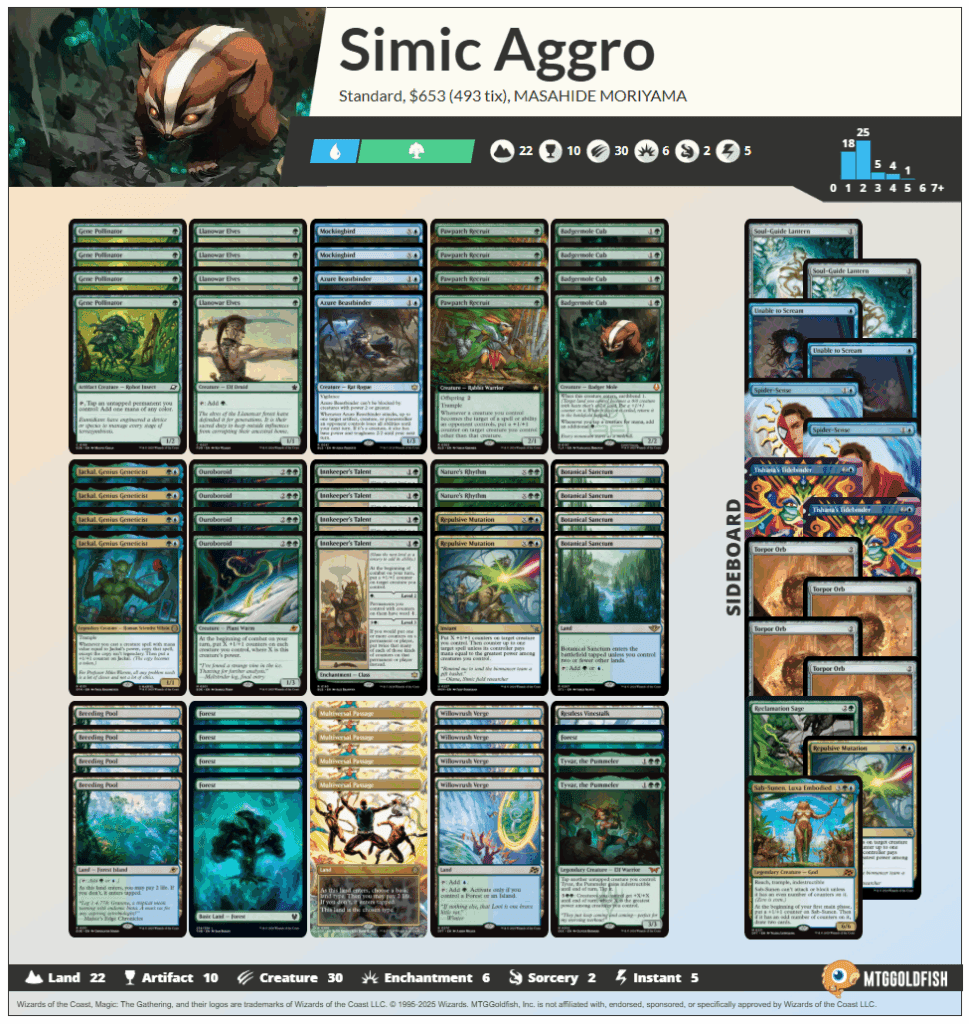
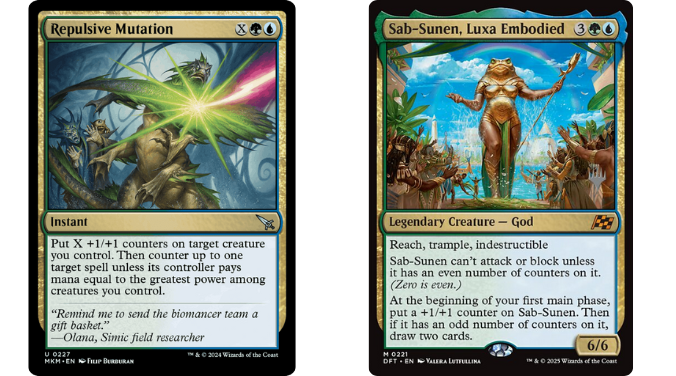
It’s such an ideal fit for Badgermole Cub, seeing as it both accelerates mana and adds two bodies to the board. Newest versions of the deck fit in multiple subtle ways to cash in on any surplus mana generation: Nature’s Rhythm is as good for combo as you’d expect of a tutor you can cast twice, and Repulsive Mutation is templated beautifully to allow maximum usage in any scenario, defensive or offensive
Mockingbird is an amazing choice for increasing the effective density of your signature creatures, all of which stack in multiples. There’s even a few flex slots you can fill with one-off haymakers to tutor up in specific matchups, like the indestructible Sab-Sunen to bully control.
All of the current creature-combo decks are running Badgermole Cubs to help expand their options and accelerate their gameplan this way. But only with the Earthbending Sacrifice deck does the Cub actually factor into its primary win condition. Based in GB, this deck attempts to assemble a combo of Umbral Collar Zealot (or another sac outlet) and Beifong’s Bounty Hunters, plus one or more Bloodghast (which can start in the graveyard).

Sacrificing Bloodghast (or another nonland creature) will cause the Bounty Hunters to earthbend. You can then sacrifice that land to bring it back into play tapped, which will trigger the Bloodghast and bring it back into play. This minimal loop doesn’t end any game on its own, but if you’re saccing with Umbral Collar Zealot then you’ll eventually be able to surveil an additional copy of Bloodghast into the yard. From there, you can use the earthbend triggers from sacrificing these additional Bloodghasts to make all your lands enormous and hopefully smack your opponent out of the game in your combat phase.
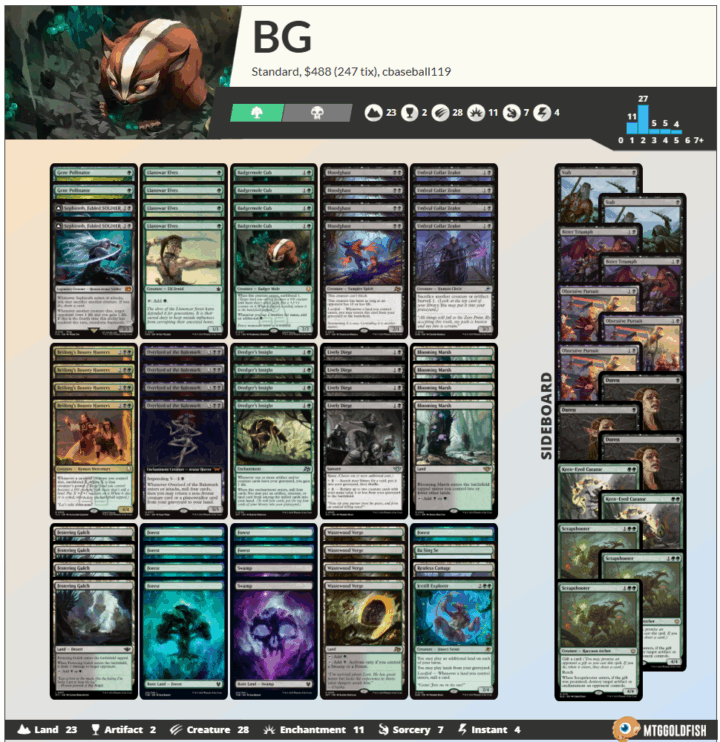
What I love about this deck (other than the ability to feasibly start the combo with two cheap cards) is how it leans into the power of tutors plus Badgermole mana. Not only do you get to cast Nature’s Rhythm even after milling it into the yard early game, but you also have the chance to resolve a fully-moded Lively Dirge – capable of putting a Bloodghast etc. into the yard at the same time as you reanimate the Bounty Hunters to complete the combo.
We may see the already-narrow gap between the UG and UB decks erode further if one approach proves dominant over the other and the post-Shockland manabase is capable of supporting it. But even if that happens, the presence of Airbending combo and the resurgence of Valley Floodcaller (“Otterstorm”) decks means there will still be plenty of options for combo-loving readers to choose from.

GOING OUT WITH AN AANG
After surveying this Standard domination, you might well ask, why are these Avatar cards so powerful? It seems like this set really pushed the envelope on raw mana efficiency, at a time when the meta already focused on mana advantage (a.k.a. tempo) over card advantage.
Badgermole Cub costs just two mana and might immediately return that investment while being nigh-impossible to answer cleanly. Gran-Gran has an ability to generate extra resources advantage-building matched only by all-time one drops like Ragavan or flip-Tamiyo, and her lesson clause makes these already-efficient UR decklists even moreso. Boomerang Basics is an insane draw engine and provides every recursion effect its new best-case scenario, as well as a force-multiplier for other mana-efficient plays.
Efficiency isn’t just about being cheap, it’s about being able to use your available mana effectively each turn. But being able to recur other cheap effects and draw cards coming AND going is what ensures you’ll always have those efficient plays to make!

Tom’s fate was sealed in 7th grade when his friend lent him a pile of commons to play Magic. He quickly picked up Boros and Orzhov decks in Ravnica block and has remained a staunch white magician ever since. A fan of all Constructed formats, he enjoys studying the history of the tournament meta. He specializes in midrange decks, especially Death & Taxes and Martyr Proc. One day, he swears he will win an MCQ with Evershrike. Ask him how at @AWanderingBard, or watch him stream Magic at twitch.tv/TheWanderingBard.