

The marquee release of Marvel Super Heroes is fast approaching, but there’s one aspect in particular that has me hyped more than any other: the attached Jumpstart set!
I’ve been a huge fan of Jumpstart since the first set in 2020, always buying at least a couple of booster boxes with each release. But why am I so enamored with this beginner-friendly, “Limited-lite” version of Magic to start with?
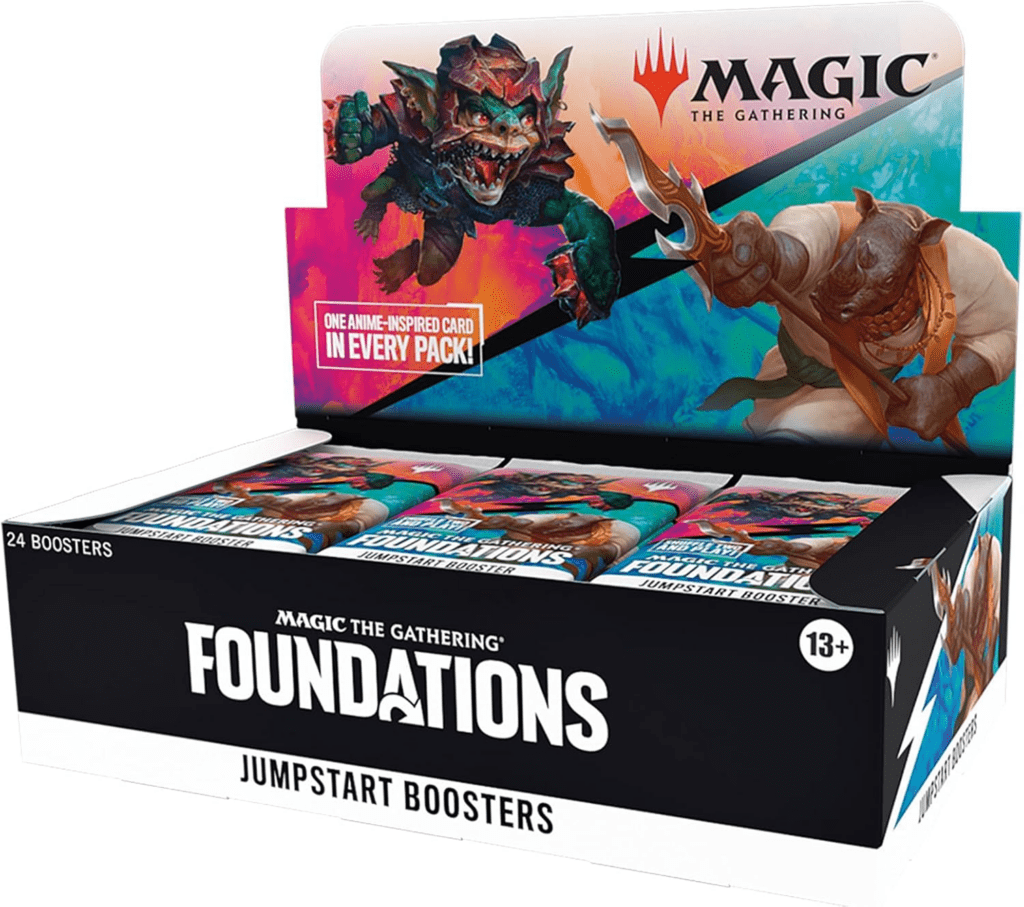
As a 20-year veteran of the game who likes the more competitive side of things, I’m clearly not the intended target demographic. But it’s because of who JumpStart sets are designed for, and how well they succeed in those goals, that I find them to be so essential.
LOOK BEFORE YOU JUMP
If you’re not as familiar with the premise, JumpStart booster packs are very different to the Play and Collector Boosters from other sets. Normally, the cards in a booster pack have nothing to do with each other besides being from the same set: you’re just getting a random mix of commons, uncommons, rares and mythics.
But a JumpStart booster is like a miniature precon deck! There’s still a mix of rarities, but all the cards come from the same color and share the same theme. You might open a white booster with all Dog cards, while another pack might have a “Doctor” theme with lifegain and damage prevention cards.
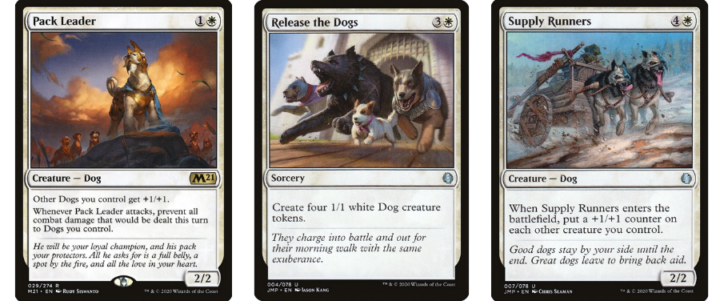
The spells form a balanced mana curve, with a mix of creatures, interaction and lands. It’s everything you need to play a fundamental game of Magic in one booster – and that’s how it’s designed to be used. You and an opponent can each crack a JumpStart pack (two or three each, if you want to make things more advanced), shuffle them up, and have your opening hands drawn mere seconds after someone says “yeah, I’ve got time for a quick game”!
Each JumpStart set features 46 different booster themes, offering tons of variety and keeping things interesting even if you’re cracking a lot of these mini-decks in a row. There’s also often more than one “variant” decklist for each theme – featuring most of the same cards but with a new rare, or a different set of uncommons which subtly change how your JumpStart pile plays.
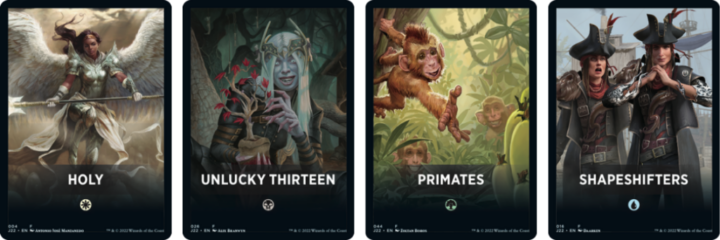
Most of the cards in JumpStart are reprints from across Magic history, chosen because they’re a fit for that pack’s theme. But there is also at least one completely new card included: these are Eternal legal and have a strong track record of becoming mainstays in Commander or other formats.
Mill maestro Bruvac the Grandiloquent and boss rat Ashcoat of the Shadow Swarm are examples of popular Commanders found in JumpStart, while Allosaurus Shepherd and Muxus, Goblin Grandee have proven powerful in Constructed.
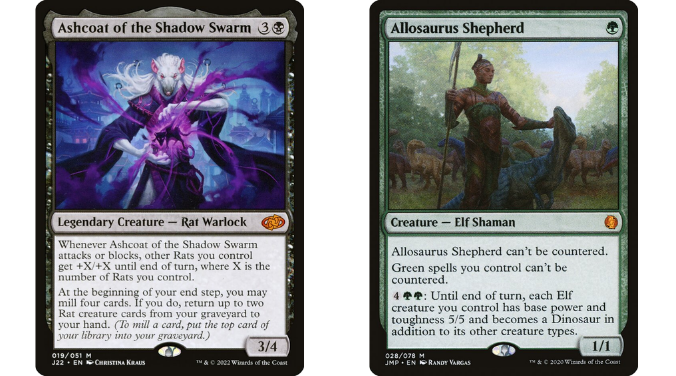
Along with important reprints and new alternate artworks, these unique cards ensure that JumpStart boosters have a lasting value on top of providing entertainment. But that’s not really the main selling point of these sets. The true appeal of Jumpstart is how it solves one of the most enduring fundamental problems with Magic as a game.
JUMPING OVER BARRIERS
My hot take is that Jumpstart boosters are Magic’s first – and only – really good introductory product.

Some of you might be skeptical: after all, not having JumpStart around for the first 30 years didn’t stop Magic from attracting millions of fans and becoming the world’s largest CCG. And admittedly, I didn’t need JumpStart to get me hooked on the game back in the early 00’s.
But even something successful can still have its weaknesses or flaws. Magic grew and thrived in spite of not really knowing how to offer potential neophytes a leg up over its numerous barriers to entry. I was lucky enough to start playing at the same time as a bunch of classmates and peers, at an age where sheer excitement to play Magic was enough to bulldoze right past such minor obstacles as “not knowing the rules” or “not owning any land cards”.

But looking at it objectively, the things that make Magic so good once you’re already bought in – the intricate depths of its mechanics, the self-expression of deckbuilding, the social connections it fosters – are not necessarily positives when it comes to a first-time experience.
Just communicating the basic rules and turn structure of Magic is already an intense crash-course for most people. But then what deck, what cards should they use for their first slew of games? You can’t really learn deckbuilding principles until you play; I’d argue it’s actually several big steps ahead on the learning curve.
A lot of new players start with some kind of preconstructed deck, which is a good idea in theory. But most precons (especially the pnes marketed to newcomers) are very low-power compared to the decks most players actually use. Trying to play them outside of a precon-only intro game is going to either make someone think that they must be the worst Magic player ever, or make them realize that their initial investment into MTG hasn’t really dealt them into the game the way they expected.
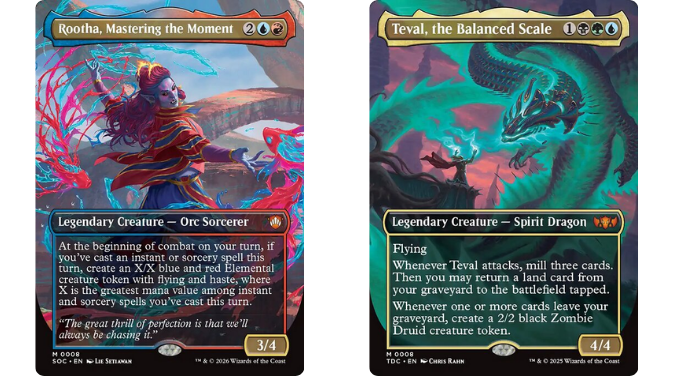
The Commander precons of the last few years have gotten much, MUCH better in this regard. But trying to start learning the game from scratch with a Commander deck you didn’t build is basically doubling or tripling the challenge of a game that’s already difficult to learn!
Even if you buy a reasonable starting deck (or borrow one off a friend) and manage to go through the motions of a first game, that’s still only one strategy, one color combination that you’ve experienced. I’ve known plenty of people who bounce off of Magic until they eventually hit on a playstyle that speaks to them. But there’s no easy, affordable way to quickly test drive all the colors and archetypes in Constructed or Commander (and Limited is an even higher level test of evaluation and deckbuilding that new players are not prepared for).

That’s where JumpStart comes in so clutch! Your deck is already built for you, with a strong theme to help you understand the choices. Your opponents can also just use JumpStart boosters instead of their usual decks, ensuring matches are balanced and interesting. You can rapidly test drive a bunch of different archetypes and color combinations to learn more about what you like, because you’re only investing in booster packs that cost a fraction of a Commander precon deck.
It’s a very well thought-out product providing an accessible, low-risk way of playing Magic. And it works! I’ve taught plenty of friends, family, and even strangers the game using Jumpstart sets, and they almost always walk away a fan. The coolest part is seeing how quickly new players get attached to these funny little Jumpstart decks – and I’m pretty sure I know why.
THREE INGREDIENTS FOR A GOOD TIME
I post about my theorized “requirements for a fun Magic deck” on this blog every couple of years, but let’s revisit them to save you a trip through the archives.
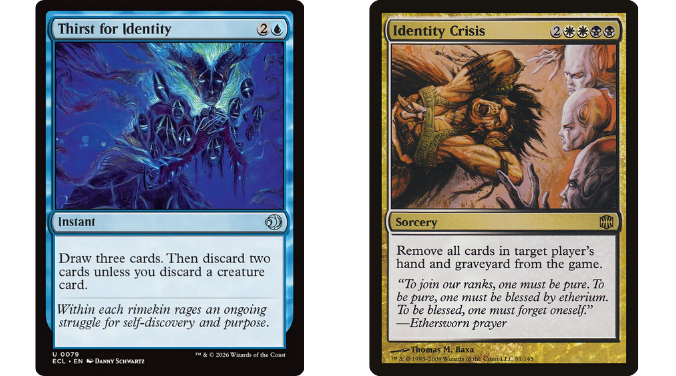
Firstly, a fun deck has an identity. I’m not saying nobody has ever smiled playing a big stack of random draft chaff at their kitchen table. But a good mechanical/aesthetic theme gives a deck personality, and especially for new players it highlights what cards and abilities they should train their focus on.
Just consider the kinds of archetypes which stand out in our collective memory, which become sub-communities because players get so attached. How many of them are built around a specific creature type, like Elves or Merfolk? Or a single recognizable engine which defines the rest of your deckbuilding and gameplay?
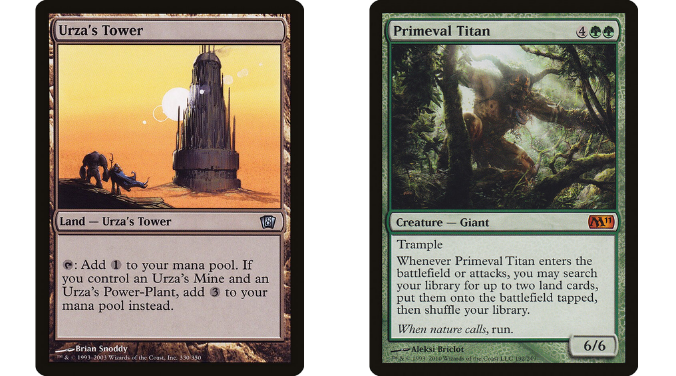
Even a “good cards” deck like classic Modern Jund is defined by a handful of iconic threats which people still associate with the archetype a decade after its heyday. I certainly believe that the way Commander instantly gives every deck a strong identity through its “main character” is a huge reason for its status as the most popular format.
Jumpstart likewise gives players a strong theme to latch onto. Even someone who has never seen a Magic card before will probably be able to guess what a deck combining “Dogs” and “Swords” boosters will have for a gameplan! But identity alone isn’t enough.

Players also need to feel a certain level of ownership over the deck they’re playing to properly enjoy themselves.
In the past I’ve tried lending, selling, or simply giving away decks I built to new players, trying to help them find a head start. But when players don’t understand the logic and choices behind deck construction, the whole “puzzle” of playing Magic loses its zest. Either they feel like they can’t possibly figure out the correct situational plays and their time’s being wasted, or it feels like they’ve copied someone else’s homework (or their personal brand?) and it stops them getting emotionally invested.
I see this as the sneaky genius of JumpStart. Even when I hand out boosters to two new players from my personal stash, because they get to open them fresh themselves, those players will invariably see their JumpStart cards as “my deck”. And because the themes are so easy to grasp, and reinforced on every card in the pack, players can easily grasp them without needing to be told – also a big deal for this.

The last requirement for a deck to be fun is potency: that is, it should be powerful enough to be a relevant threat in most matches.
Most people, especially when they’re learning, will insist that they don’t mind if they win or lose. Some of them are even being honest! But being stomped into the ground or easily toyed with by more veteran foes is still not going to offer an exciting first experience. Even if you just love the deck you’re on and your only goal is to share the cool things it does with the other players, you need to generate enough resources – and survive long enough – to show those off in-game.
Luckily, JumpStart works around this by encouraging both sides to play with equivalent booster packs. My experience shows that making it demonstrably a fair fight (with “their own deck”) is the best way to get new players really fired up and thinking about their possible lines of play… and from there, all the greatness of Magic can take hold of them.
UNIVERSE JUMPING
I’ve been talking a lot about Jumpstart sets in general, since the traits that set them apart from the rest of Magic are a much bigger deal than the differences between the different versions of Jumpstart. But Marvel Super Heroes Jumpstart is continuing to move the series in a new direction – as the name itself makes clear.
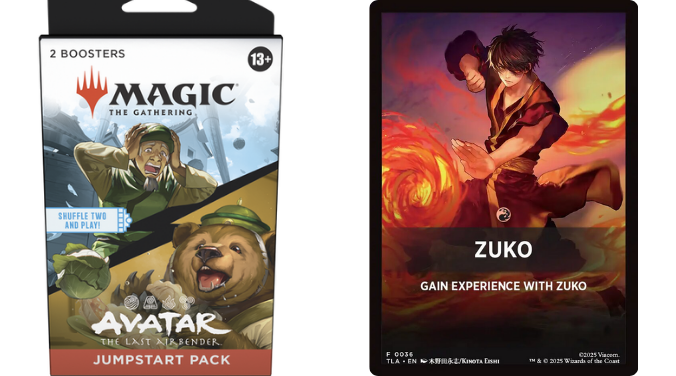
Starting last year with Avatar: The Last Airbender, the Jumpstart series is now closely tied to Universes Beyond sets. It makes a lot of sense: every UB release brings in a fresh audience of crossover fans, who need something like Jumpstart to help them make the leap into actually playing games of Magic.
Even as a veteran of the game, I’m looking forward to seeing all the new Jumpstart themes: designing each pack around a specific hero or villains should ensure some new ideas and exciting chances for top-down design. Marvel Super Heroes and Jumpstart seems like a perfect team-up, and it will no doubt become the origin story for many, many new Magic players.

Tom’s fate was sealed in 7th grade when his friend lent him a pile of commons to play Magic. He quickly picked up Boros and Orzhov decks in Ravnica block and has remained a staunch white magician ever since. A fan of all Constructed formats, he enjoys studying the history of the tournament meta. He specializes in midrange decks, especially Death & Taxes and Martyr Proc. One day, he swears he will win an MCQ with Evershrike. Ask him how at @AWanderingBard, or watch him stream Magic at twitch.tv/TheWanderingBard.