

It is the year 2026. Commander has become more or less synonymous with Magic as a whole, and a great many players exclusively learn and experience the game through that format. Yet when we talk about the game and its sub-communities, Commander still feels isolated.
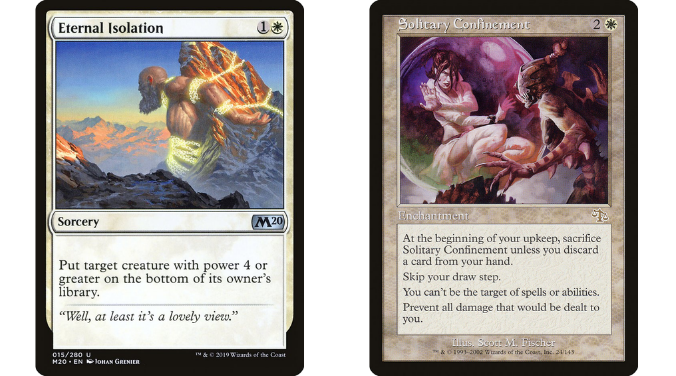
That’s easy to understand. The things fans love about it – commander rules, multiplayer politics and casual atmosphere – aren’t reflected in any of Magic’s other major supported formats. But they are not unique!
If we look beyond the mainstream of Standard and Modern, there are other formats out there which capture some of the same traits which make Commander great. Use them for a change of pace, or as a first stepping stone towards something more foreign.
Pauper Commander
Familiar gameplay, unfamiliar cards
Pauper Commander has the same card pool and deckbuilding rules as normal Commander, with one big exception: you can only use cards of common rarity. No uncommons, no rares, no mythics!
There are two exceptions to this “only commons” rule. Firstly, you can bend the rule and choose an uncommon card to be your commander (but no rarer!).
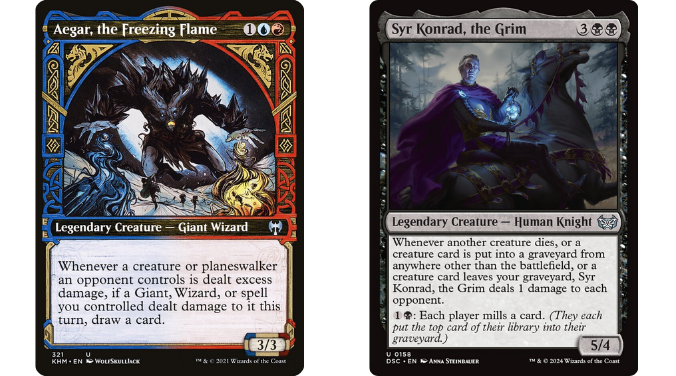
Secondly, a card that appears at common once is a common forever – even if the version in your deck has a different rarity. This applies both to old rares like Mortician Beetle that get “downshifted” to common, and old commons which are reprinted at higher rarity, like… Rhystic Study. You can use a Magic search engine like Scryfall to find these sneaky commons more easily.
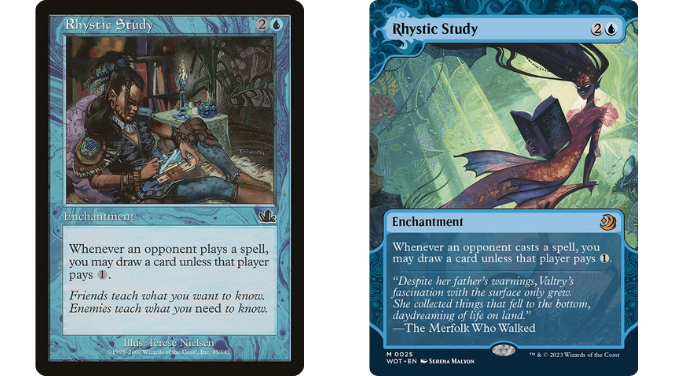
(Note that Rhystic Study is specifically banned by the largest Pauper Commander community, along with Mystic Remora.)
Besides making the decks cheaper to build and forcing players to build without some ubiquitous Commander staples, the Pauper rule does have a more subtle and far-reaching effect on gameplay. Common cards are much less likely to have game-changing effects on their own, so building in positive synergies between all your cards becomes even more essential than in regular Commander.
Also, while the best threats in Magic are almost always rare, many of the best removal spells are actually commons. As a result, games tend to move a little slower and it’s harder to build up an insurmountable lead (though you can still combo kill people). This is why Pauper Commander lowers the starting life total from 40 to 30 and the threshold for lethal commander damage from 21 to 16.
Oathbreaker
Similar deckbuilding and multiplayer politics, but with extra twists!
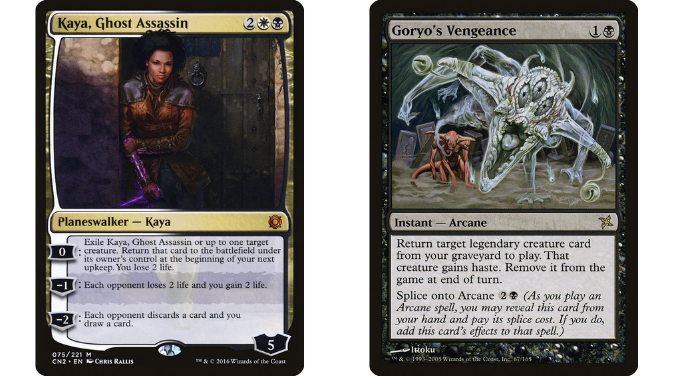
Oathbreaker is another format that sounds very similar to Commander in many ways, but when you dig into it turns out to have its own unique play patterns and metagame.
The big difference is that your chosen commander (or “oathbreaker”) MUST be a planeswalker, not a creature or any other card type. Note that you can use any planeswalker card, not just those which are normally commander-eligible, so there’s still plenty of options.
Once you’ve selected your oathbreaker, you also get to choose a “signature spell” that will join them in the command zone. The signature spell can be any instant or sorcery card that is in your oathbreaker’s color identity. Both cards are counted towards your required deck size (like Commander) which is 60 (unlike Commander).

In-game, you can cast your oathbreaker from the command zone just like you would any other commander. Their signature spell can also be cast from the command zone, but only while your oathbreaker is on the battlefield – it’s their spell after all!
The signature spell will always return to the command zone when it leaves the stack (whether or not it resolved), allowing you to cast it repeatedly so long as your oathbreaker is in play. The oathbreaker itself can return to the command zone when it dies or is exiled like a normal commander. Both the oathbreaker and the signature spell are subject to the “commander tax” rule from the second cast onwards, tracked separately for each card.
Always starting with two extra cards in the command zone gives Oathbreaker decks a high floor for power and consistency. Planeswalkers aren’t usually very explosive commanders, only contributing one activation per turn cycle, but having access to signature spells completely changes that.

Luckily you can still attack opposing oathbreakers to remove the threat, making board control extremely important even from the opening turns. Since your oathbreakers aren’t usually contributing directly to killing your opponents (and in fact tend to soak up a lot of damage that might otherwise go face), Oathbreaker sets the starting life for players to 20.
The low life total and smaller deck size make aggro and burn strategies more potent. In theory you could even ignore the whole “oathbreaker” part and try beating opponents down without using your command zone. Though even then, I’d prefer playing Tibalt with Boltwave as a signature spell or Wrenn and Six with Atarka’s Command to really heat things up!

Archenemy
A different take on thematic, multiplayer fun

Archenemy is perhaps the only way to make Magic more “like a board-game” than Commander already is. Instead of a free-for-all multiplayer melee, Archenemy games are a 3-on-1 boss fight, with a team of “normal” players cooperating to take on one powered-up opponent.
To negate the numerical disadvantage, whoever plays the Archenemy gets access to a bonus deck of “scheme cards”, separate to the rest of their cards. At the beginning of their first main phase each turn, the Archenemy flips over the top card of this deck and “sets it in motion”, playing it immediately. Schemes are their own card type, printed on oversized cardbacks and included in previous Archenemy products; they’re essentially like overpowered, zero-cost sorceries.
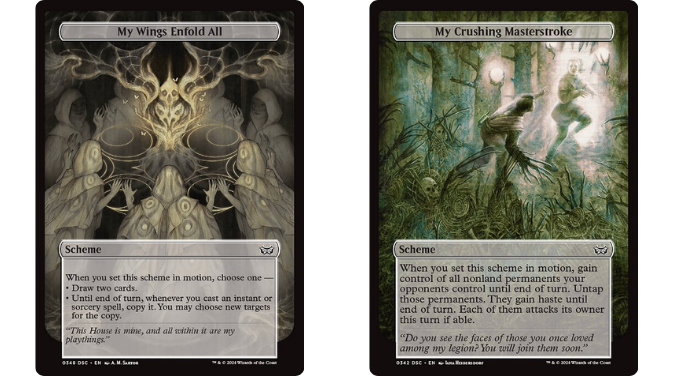
Both the Archenemy and the “hero” team start with 60 life. The heroes have a shared life total and can block for eachother like in Two-Headed Giant: they also take their turns simultaneously. The Archenemy always takes the first turn (another perk of the job).
The coolest part about Archenemy is that you can literally play it with your existing Commander decks! While originally designed for 60-card decks before Commander was a thing, Wizards has updated the rules and even included Scheme decks as a free bonus in Duskmourn Commander precons.
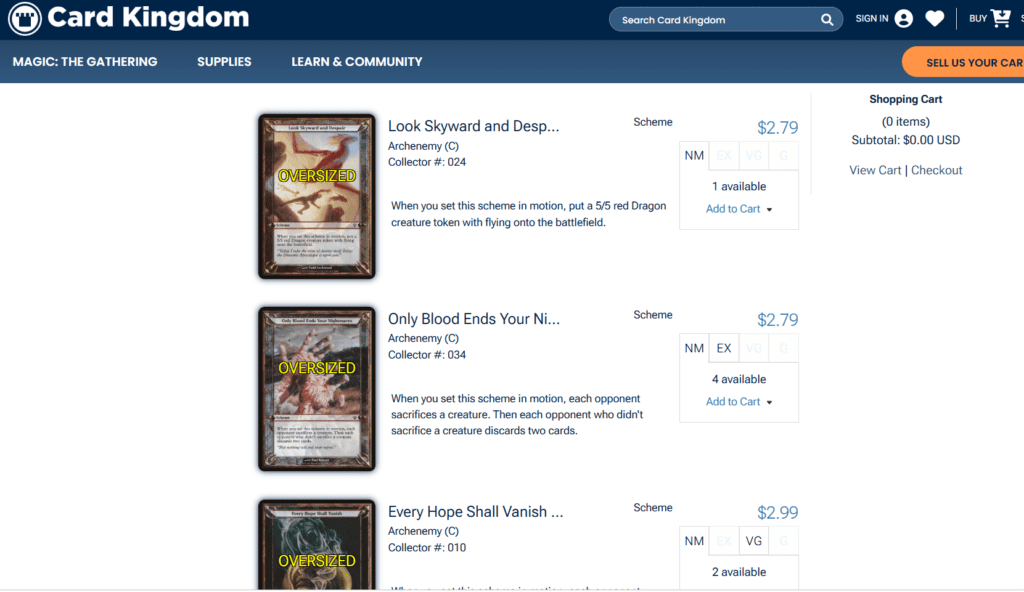
If you missed those, fear not: Card Kingdom actually does stock scheme cards from all past Archenemy products as singles! Just search for “scheme” as a card type and you can assemble a deck of fiendish machinations in no time.
Tiny Leaders
Speedy and slimmed-down 1-on-1 Commander duels!
It is in the nature of Commander to periodically spawn sub-communities which play slightly tweaked versions of the format, like smaller icebergs calving off a glacier. Tiny Leaders is one of the earliest and longest-lasting variants, first popularised around 2013 when Commander was only starting its rise to prominence.
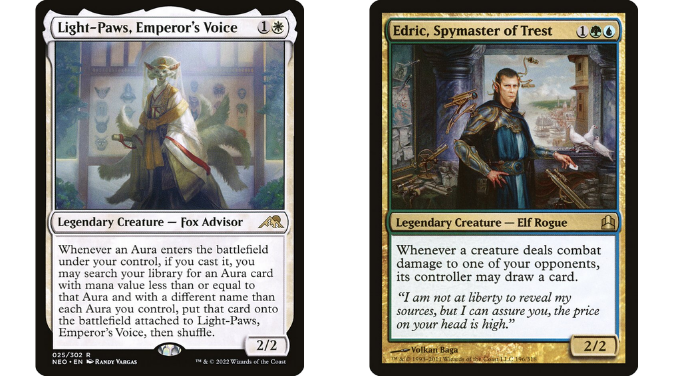
The players who designed Tiny Leaders wanted to play 1v1 Commander with a more competitive, efficient mindset, similar to mainstream Constructed formats. The rules they created reflect that, although there’s nothing stopping you from building a quirky off-meta deck or playing Tiny Leaders in a traditional 4-player pod if you want to!
The biggest change that sets Tiny Leaders apart from Commander is the “Tiny” part: every card in your deck, including commanders, must have a printed mana value of three or less. There are special rules for evaluating split cards, adventures, and other corner cases to determine if they are “Tiny” and therefore legal. Generally, a multi-sided card is Tiny so long as each side that can be cast from hand costs three or less to play. Alternative casting costs or modes (such as flashback) are ignored.

The 3-mana-or-less limit isn’t the only thing that’s Tiny about Tiny Leaders. The required deck size (including commanders) is a mere 50 cards, plus up to 10 sideboard cards. Adding sideboards is another nod towards 1v1 gameplay, but it also allows “wish” effects and other sideboard-dependent mechanics like Learn or Companion into the format.
Speaking of mechanics, there are a few gameplay changes specific to Tiny Leaders beyond the deckbuilding. The starting life total for each player is reduced to 20, and commander damage is not tracked separately. The other rules change is much is more specific: any player who has more than one commander in their command zone gets their opening hand size reduced by one card to compensate.

This penalty is applied by essentially treating the player’s starting hand as though they had already mulliganed to six: they draw a seven-card hand, then immediately choose one and put it on the bottom of their library. If that player then decides they need to take a “normal” mulligan afterwards, they’ll be down to a five-card keep (and so on from there).
It may seem harsh, but remember that having a second commander is like adding a guaranteed spell to your opening hand anyway: this rule just offsets some of the benefit so partner and background decks aren’t strictly better.
The Tiny rule also makes it much harder to draw “unplayable” hands (since your spells are all so cheap) unless you’re deliberately playing a very low land count or attempting a five-color deck.
KEY POINTS OF DIFFERENCE
If you’ve read to the end of this list, even if you only skimmed it, then I salute you. Most Magic players (myself included) have a natural resistance to the idea of new formats. Unless you’re already in the mood for new things, new formats mean building new decks (expensive), learning new rules and metagames (difficult), and potentially even finding new groups to play with (onerous).
But there are worthwhile rewards for those who surmount such barriers. Diversifying the formats you play lets you see more of Magic’s vast potentiality. You can use more different cards and understand their strengths in different contexts.

You can meet new people and even discover things about yourself. Perhaps with the right deck (and the familiarity of commander-like rules) you find you actually enjoy the intense, 1v1 competitive gameplay of Tiny Leaders. If so, maybe you take another tiny step across into formats like Canlander or 7-Point Highlander, and see whether those brands of Magic tickle your fancy.
Maybe you’ll always be totally satisfied and get everything you need from Magic just playing ordinary Commander. But if you ever find yourself format-curious, I hope you remember that it need not be a total break from what you know and love.

Tom’s fate was sealed in 7th grade when his friend lent him a pile of commons to play Magic. He quickly picked up Boros and Orzhov decks in Ravnica block and has remained a staunch white magician ever since. A fan of all Constructed formats, he enjoys studying the history of the tournament meta. He specializes in midrange decks, especially Death & Taxes and Martyr Proc. One day, he swears he will win an MCQ with Evershrike. Ask him how at @AWanderingBard, or watch him stream Magic at twitch.tv/TheWanderingBard.