
I write more than a few blogs on this site where I discuss deckbuilding and strategy for Commander. But I rarely focus on my own personal decks as an example for others to follow.
The way I see it, every Commander player has different priorities: I build my decks based on an idea I think is cool, and I tailor them to my specific tastes, but explaining them won’t necessarily help anyone else find what’s right for them. The process of figuring out what you want from a deck are is more valuable than where specifically you end up.
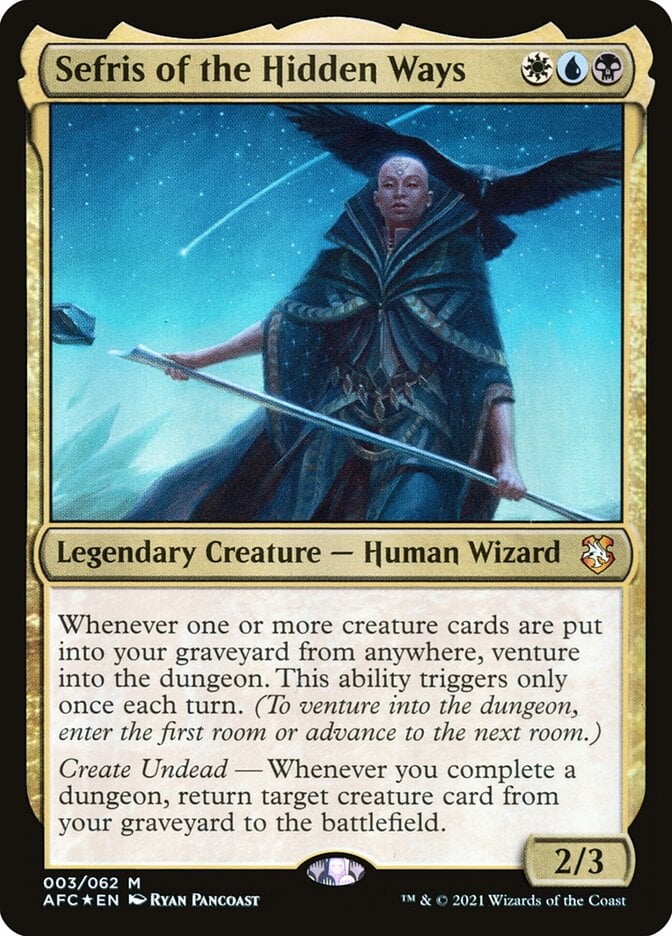
But Sefris of the Hidden Ways is an exception. Sefris was a deck built on a whim, from well outside my comfort zone of colors and strategies, and immediately derailed most of my initial ideas about how it would work.
I had been burnt out on Commander because I didn’t want to play a combo-centric, instant-speed blue deck just to feel competitive. The Sefris deck snuck up on me and somehow got me excited to play a deck which was exactly those things – just not the way I expected. So if you’re like me and you need a deck that can survive at efficient, interactive tables while still doing fun, weird, flexible things, read on and learn how to pull off an infinite-dungeons speedrun!
UNDEATH IS ONLY THE BEGINNING
As a commander, Sefris offers an almost unique potential for repeated, on-demand instant reanimation of any creature for no mana cost and requiring only minimal setup. The conditions to trigger her ability are open enough that just keeping her on the battlefield is enough to guarantee some value, but there’s also plenty of ways to build an engine around her to improve and control her output.

Any effect which can put a creature card into our graveyard can keep Sefris counting down towards her next reanimation. That countdown is represented by us moving through a dungeon card, with the reanimation going on the stack at the same time as the final room ability.
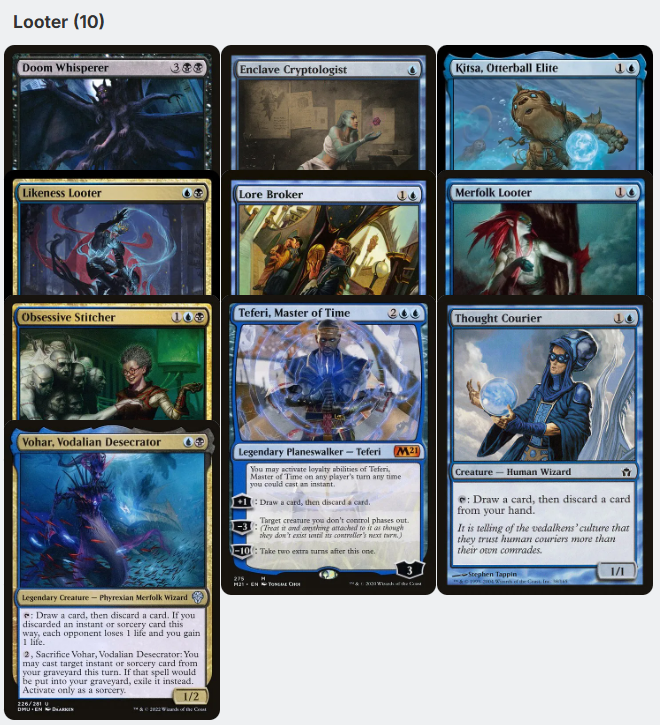
So long as we can consistently trigger Sefris on each player’s turn, that’s already a baseline of one free reanimate per turn cycle (since the “default” dungeon, Lost Mines of Phandelver, is four rooms long). The easiest way to do this is just take however many slots you would normally fill with two-cost mana rocks, and replace them with two-cost Merfolk Looter (and other creatures with similar draw-discard activated abilities).

With enough creatures cards in the deck, we should almost always be able to discard one when looting – simultaneously advancing Sefris, smoothing our draws, and sculpting our graveyard with the right reanimation targets. Being able to discard at instant speed also gives us a lot of control over exactly when we get that important last venture. Ideally we can respond to opposing plays by activating a looter, discarding a creature with a relevant effect, and immediately putting that into play to fizzle their plans!
Cards which generate their own “venture into the dungeon” triggers also speed us up, but most of them are just too costly and unreliable to be justified. You might be surprised that I’d lump the legacy-powerhouse initiative creatures in with Forgotten Realms draft chaff. However, I think the Initiative is arguably worse in Sefris than any other random Commander deck. The Undercity has much stronger room effects than the basic dungeons, but it’s longer than Lost Mines or Tomb of Annihilation, meaning we’re delaying our biggest payoff.

More importantly, putting the Initiative into the game means we are also giving our opponents a chance to access those same powerful abilities at zero cost! That doesn’t mean we’ll never enter the Undercity – we can also sequence so it triggers when we’re halfway through another dungeon, so it just moves us forward a room. But it’s enough downside for me to only take the most suitable options instead of slamming anything with the word Initiative on it.
THE THANKLESS ROLE OF TABLE-COP
If Sefris herself can only move through one room per turn, and most of the cards that would push her further are objectively bad, then our best way to speed up our gameplan is actually to slow everyone else down. Once our three-drop commander hits the table, we have the privilege of being able to make powerful plays while spending little or no mana.
Constantly showing opponents a full hand and untapped Islands shouldn’t make us the arch-enemy, but it does have a chilling effect on the game and especially makes them think twice about making moves which threaten us. Sefris is absolutely a control deck, and the ability to interact on the stack only gets more powerful once you get close to the end of a dungeon and have a graveyard full of powerful ETB triggers and static abilities to launch into play at instant speed!
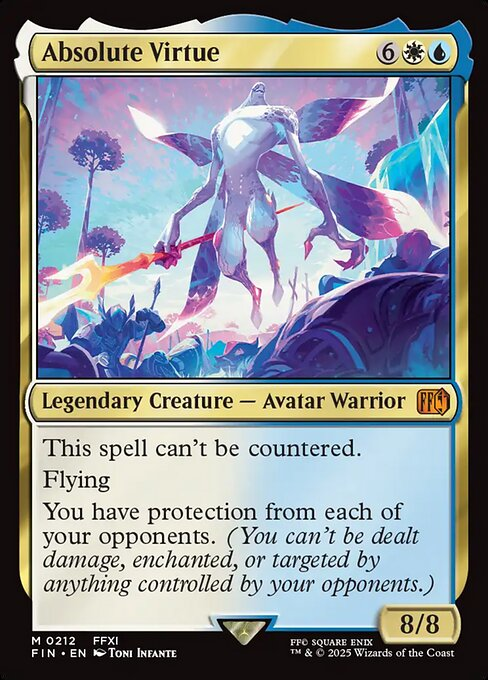
Playing draw-go control like this in Commander when your deck runs a lot of targeted, specific interaction (as opposed to static abilities or sweepers) naturally positions you in the role I like to call “Table Cop”. Trying to block any move any opponent makes is not economical, so you obviously have to prioritize stopping the most dangerous plays. Since in many cases the opponent who endangers one player is a threat to the whole table, and you are not making any rapid move to end the game yourself, you end up as a benign defender of the status quo — especially if someone else has a good start on a more proactive deck.
I don’t mind playing Table Cop decks like this when there’s unknown decks or players at the table, since you can help normalize any difference in power levels across the table without threatening to take over the game yourself. But holding up mana every turn means less opportunity to build an army or value engines, so come late game most Table Cops are doomed to end up as kingmaker rather than having the chance to win themselves.

I was thoroughly burnt out on Commander before building Sefris because I didn’t want to feel forced into the Table Cop role (and subsequent non-competitiveness) just to make sure games didn’t devolve into the same tutor chains and fast combo kills every time. The more effective way to slow down all your opponents equally is to play Stax, but I also didn’t want to make that a part of every game experience! Playing Sefris gave me an answer: a deck which could play table cop using more exciting tools than a handful of countermagic, while simultaneously building a boardstate that opponents can interact with.
SOLAR POWERED
I’ve always preferred to avoid decks where the main win condition is infinite combo, moreso at the time I built Sefris. My original plan was just to control the board and keep reanimating medium-to-large beasties until I could smash people in the combat step. But as soon as I started testing the precon, I realised that it already had the key piece for arguably the best combo kill a Sefris deck can pull off.
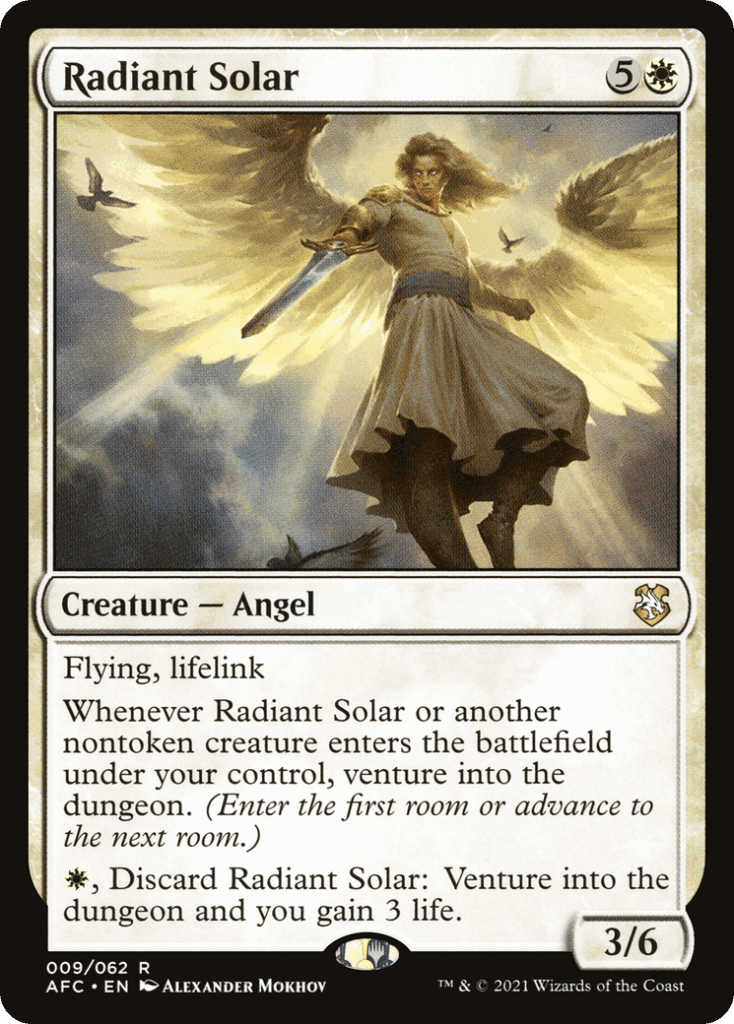
Radiant Solar is just leaps and bounds better than every other non-initiative dungeon card. One thing which really hamstrung that mechanic is how expensive it is to repeatedly trigger relative to the actual benefits of each room. Even Sefris with her reasonably easy trigger condition is capped at one trigger per turn unless you’re flickering or recurring her. But Radiant Solar has no such cap, and an even easier trigger condition: together, they create clear potential for an infinite-dungeons combo kill.
The Solar itself is easy enough to get into play – its pseudo-cycling ability gives you a guaranteed Sefris trigger for turn plus another venture on top for just one white mana, usually enough to complete the current dungeon and immediately reanimate the Solar. Upon entering the battlefield it generates a third venture trigger, getting you a head start on your next dungeon.

If you have any castable creatures in hand you may well be able to get another Create Undead trigger within the same turn. Keep in mind that besides all the huge expensive threats we’re planning to reanimate, the deck also runs a bunch of two-mana Merfolk Looters and one-mana Mother of Runes-type cards, so this is more likely than you might think! Another kind of creature card my Sefris deck plays a lot of Clones.
Reanimating clones as additional copies of Radiant Solar snowballs the game extremely fast. With two solars you’re now getting two ventures per creature that enters the battlefield – including that clone itself, so you’ll be able to hit the third one even faster. The shortest available dungeon is Tomb of Annihilation, which can be completed in just three ventures if you sacrifice a bunch of cards to pass through the Oubliette. It’s too punishing to be worth it on our first dungeon run or two, but once we reach this Radiant Solar stage of the game the shorter track makes all the difference.

With two clones and the original Solar in play, every nontoken creature which enters will give us enough triggers to complete a full run of the Tomb, at which point Sefris can reanimate a new creature, triggering all the Solars again to close the loop. We don’t run out of reanimation targets because we can sacrifice a random creature each time we pass through the oubliette – or we can feed it the Atropal token we get from the final room trigger each time. If we’re ahead on life total, we can simply repeat until everyone dies from the Trapped Entry triggers – otherwise, the goal is to make a fourth Solar and then loop through Lost Mines until we win with Dark Pool triggers.
DUNGEON-FINITY, AND BEYOND
So I ended up with a combo kill wincon after all, but at I at least find this one to be more exciting than most. It’s not widely used in other decks, so for most tables there’s a sense of novelty. It’s not a two-card combo, so there’s more opportunity to see the kill coming together and interact – and I fine even first-time opponents can understand the threat as soon as the option to clone Radiant Solar is visible. Lastly, the dungeons themselves lend a more dynamic element than you get from your average Niv-Mizzet + Curiosity kill.
They may not make much impression at any other point, but the varying lengths and effects of the available paths can offer a lot of options when you’re navigating that critical stage between two and four Solars. Using Tomb as a sac outlet or to attrit away opposing hands and boards, Mines to draw cards and amass Treasures, or even Dungeon of the Mad Mage to try and dig when I’m in danger of fizzling the combo turn – playing Sefris well requires an open mind about the possibilities of all your dungeons.

That includes being open minded about which cards might help you keep the loop going when you’re not able to find enough clones for the Solar. Flickering Sefris or otherwise having her re-enter the battlefield will let you squeeze extra ventures out of her “once each turn” trigger. This includes sacrificing and reanimating her, although it’s important to note there is no possible timing that lets you reanimate Sefris with her own effect.
Other ways to force a round of Solar triggers include creatures like Hostage Taker which can cause additional ETBs as they enter and leave the battlefield, or creatures which have an ability to enter the battlefield for zero mana, such as Solitude. The number and variety of possible interactions, combined with the inherent choices of picking reanimation targets from a full yard and some more from the wealth of tutor effects, make this a really rewarding and satisfying win condition – hopefully my opponents agree.
MEET THE TEAM
As I mentioned, I’ve gone out of my way to play creature cards in every slot possible for my Sefris list – both for the generic upsides I’ve discussed before on this blog, and to make my Looter engine ultra-reliable. The interaction between Sefris and those looters is essential, and we ideally want to get as many copies out as there are players in the game, so I’m pretty much going for every two-mana option available here:
Another essential subset of creatures here are the protectors. They fit our theme of holding up lots of interaction and the requirement to keep our commander in play and triggering.

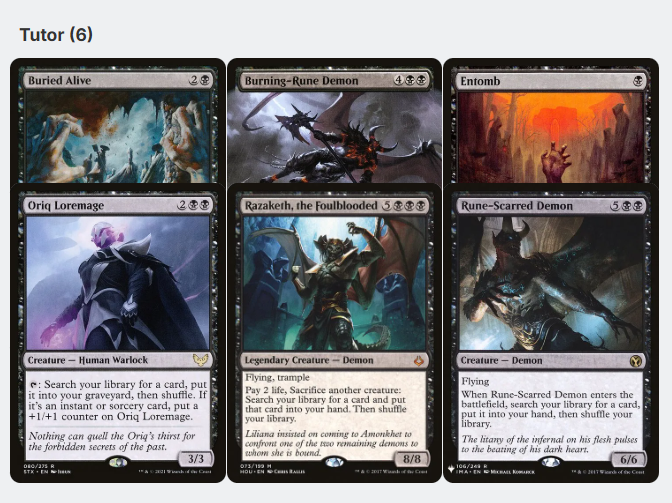
But what about our reanimation targets, the ones meant to provide a toolbox of potential interaction for Sefris? We have a selection of tutors (including graveyard tutors) to give us redundancy and access more gas when needed:
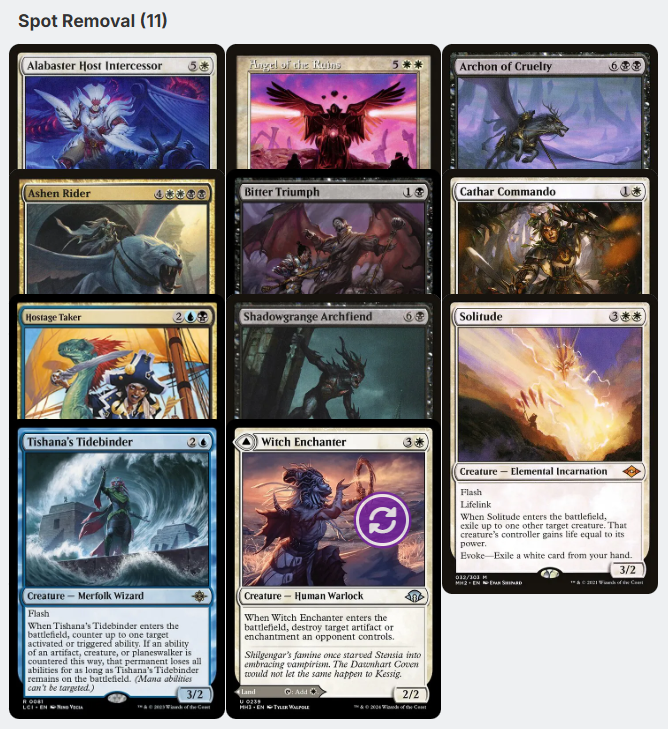
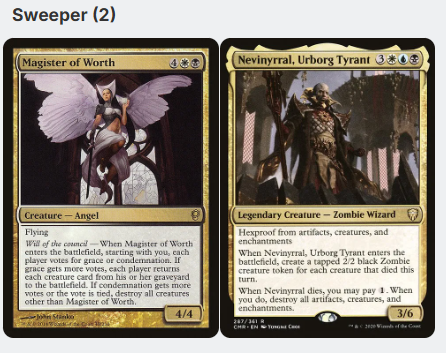
We have spot removal for different types of permanent, and sweepers:
We also have an amount of counter-magic and other preventative abilities to slow down opponents trying to rush their victory:

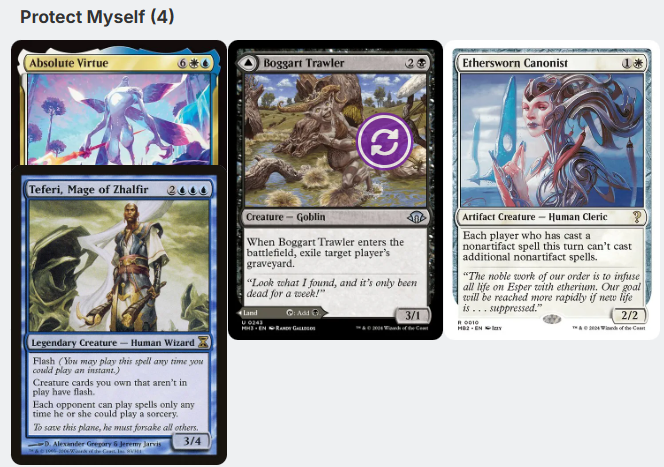
Between all of these options, plus our low-cost enabler creatures, this deck is very rarely short on plays and has the right tool somewhere in the box to cope with any situation.
BLOG POST OF THE MAD MAGE
If you’ve read all the way to the end, I really hope that means you’ve enjoyed this unusually personal deck tech fI write more than a few blogs on this site where I discuss deckbuilding and strategy for Commander. But I rarely focus on my own personal decks as an example for others to follow.

Tom’s fate was sealed in 7th grade when his friend lent him a pile of commons to play Magic. He quickly picked up Boros and Orzhov decks in Ravnica block and has remained a staunch white magician ever since. A fan of all Constructed formats, he enjoys studying the history of the tournament meta. He specializes in midrange decks, especially Death & Taxes and Martyr Proc. One day, he swears he will win an MCQ with Evershrike. Ask him how at @AWanderingBard, or watch him stream Magic at twitch.tv/TheWanderingBard.